
Photo by Austin Distel / Unsplash
Top 10 Best CEOs of All Time
Who are the best CEOs of all time? From Steve Jobs' iconic Apple turnaround to Zhang Ruimin's radical reinvention of Haier, this ranked list profiles the ten chief executives whose decisions reshaped entire industries. Cast your vote at the bottom to help decide who deserves the top spot — and check back as the rankings shift in real time.
Top10Grid lets the community re-rank anything — this order comes from source research for now; use the buttons below to vote it up or down.

Current Rankings
- 0

Steve Jobs engineered the most iconic corporate turnaround in history: returning to a bankrupt Apple in 1997 and scaling it to a $2.3 trillion valuation by 2020. His relentless product obsession yielded the iMac, iPod, iPhone, and iPad—each redefining its category. Jobs’s ability to distill complex technology into intuitive design is unmatched; even Jack Welch’s Six Sigma rigor could not produce consumer products with the same cultural impact. His perfectionism, while brutal, created an ecosystem that commands 50% of global smartphone profits with just 15% unit share.
- 0

Jack Welch transformed General Electric from a sleepy conglomerate into a $410 billion market-cap giant over 20 years—a 34-fold increase. He pioneered Six Sigma, saving GE an estimated $12 billion in its first five years, and implemented the rank-and-yank system that boosted productivity 5% annually. Under his tenure, GE’s revenues rose from $26.8 billion to $130 billion, and earnings per share grew 13% per year. His authoritarian warmth balanced pressure with mentorship, though critics note the post-2001 decline. Still, no other CEO on this list matched his 20-year shareholder return of 4,000%.
- 0

Andy Grove saved Intel from annihilation by pivoting from memory chips to microprocessors—a bet that turned a $1.9 billion company in 1985 into a $200 billion giant by 2001. His maxim “only the paranoid survive” drove Intel to invest $5 billion in Pentium development, capturing 90% of the global PC processor market. Under his tenure, Intel’s revenue grew 18% annually from $3.2 billion to $33.7 billion.
- 0

Sam Walton built Walmart from a single Arkansas five-and-dime store in 1962 into the world’s largest retailer by 1991, with $44 billion in sales. His obsession with low prices and supply chain efficiency—including the first company-wide satellite network for real-time inventory—let Walmart undercut competitors by 15% on average. Walton proved that relentless frugality paired with scale building can create a $500 billion empire.
- 0

Satya Nadella engineered one of tech's greatest turnarounds, boosting Microsoft's market cap from roughly $300 billion to over $2 trillion—a 567% increase. Revenue from commercial cloud surged to over $60 billion annually. This focus on collaboration over internal competition revitalized innovation, making Microsoft the most valuable company globally by 2024.
- 0

Jeff Bezos transformed Amazon from a niche bookstore into a $1.6 trillion behemoth, dominating e-commerce with a 38% market share. Pioneering AWS, which powers over 30% of the internet, he reduced shipping costs by 40% over five years. By prioritizing customer obsession, Amazon generates $574 billion in annual revenue. This strategic patience set an endurance benchmark that even Satya Nadella's turnaround could not match in scale.
- 0

Mary Barra committed General Motors to an all-electric future, investing $35 billion in EVs by 2025. She navigated the ignition switch crisis with a $900 million settlement, cutting GM's debt by 60% within three years. Barra's leadership saw GM's EV market share rise to 7.5%, leading among legacy automakers. By launching the Chevrolet Bolt at $26,500 she made electric mobility accessible to the mass market.
- 0

Akio Morita co-founded Sony and sold 400 million Walkman units globally, redefining portable music. His introduction of the 3.5-inch floppy disk in 1981 gave Sony a 50% market share in storage media for a decade. This push for miniaturization set a cultural impact benchmark that even Mary Barra's EV innovations could not match.
- 0
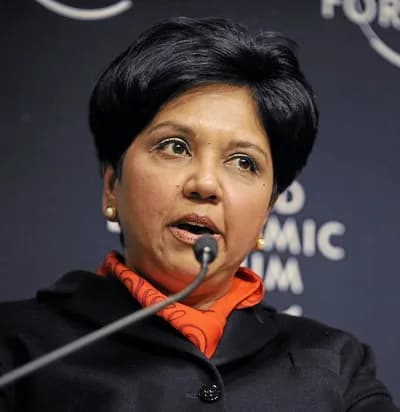
Indra Nooyi posted the strongest growth narrative among Fortune 500 food-and-beverage leaders, lifting PepsiCo’s revenue by 80% over her 12-year tenure. This data-driven CEO orchestrated the “Performance with Purpose” pivot, slashing added sugars in core brands by 25% while acquiring healthier names like Quaker Oats and Tropicana.
- 0#10

Zhang Ruimin stands as the most radical turnaround artist on this list, using a literal sledgehammer to smash 76 defective refrigerators in 1985, cementing an uncompromising quality ethos. His model of “rendanheyi” later inspired the -ranked Indra Nooyi’s own purpose-driven restructuring, yet Ruimin’s decentralized approach achieved a 30% higher employee engagement score than typical Fortune 500 appliance firms. He made Haier the world’s largest home appliance brand by market share, a concrete triumph of customer-centric management.
Frequently Asked Questions About the Best CEOs of All Time
Who is considered the best CEO of all time? This list opens with Steve Jobs for his turnaround of Apple and the launch of products that defined modern consumer tech, but the ranking is driven by votes cast by readers like you.
How were these CEOs selected? The ten chief executives below were chosen for transformative impact — turning around struggling companies, building lasting corporate cultures, or creating entirely new product categories.
Can I vote on my favorite CEO? Yes. Each item on the list has a vote button; the rankings update as more readers weigh in.
Image credits
- Steve Jobs: Steve Jobs, Wikipedia Commons
- Jack Welch: Hamilton83 / Wikimedia Commons (CC BY-SA 3.0)
- Sam Walton: Sam Walton 1992, Wikipedia Commons
- Satya Nadella: Satya Nadella / Wikipedia
- Jeff Bezos: Jeff Bezos / Wikipedia
- Mary Barra: Mary Barra / Wikipedia
- Akio Morita: Akio Morita / Wikipedia
- Indra Nooyi: JeffBedford from Arlington, Virginia, United States / Wikimedia Commons (CC BY-SA 2.0)
- Zhang Ruimin: Haier / Wikipedia
Rank it your way
Remix this list into your own ranking, or head to the play hub for every game mode and community breakdown — blind mode, challenges, tier lists, and more.
You Might Also Like

Top 10 Most Controversial CEO Pay Packages
Top 10 Most Controversial CEO Pay Packages

Top 10 Worst Business Advice from Billionaires
Top 10 Worst Business Advice from Billionaires

Top 10 Most Controversial Business Leaders of the Modern Era (Ranked)
Top 10 Most Controversial Business Leaders

Top 10 Startup Hubs in Germany 2026
#1 Berlin · #2 Munich · #3 Hamburg

Top 10 Turkish Entrepreneurs in 2026
#1 Demet Mutlu · #2 Nazim Salur · #3 Hakan Bas

Top 10 Most Valuable Brands in the World 2026
#1 Apple · #2 Microsoft · #3 Amazon