
Top 10 Chinese Business Entrepreneurs
In the span of four decades, China's entrepreneurs have built companies worth trillions of dollars, transforming their country from a manufacturing economy into a global innovation powerhouse. These ten business builders have most dramatically reshaped Chinese and world commerce.
Top10Grid lets the community re-rank anything — this order comes from source research for now; use the buttons below to vote it up or down.

Current Rankings
- 0
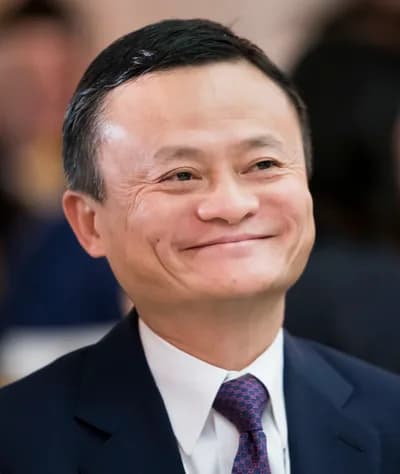
Before retiring in 2019, Alibaba's Singles' Day sales hit $38.4 billion in 2018—a single-day record that surpassed the combined annual sales of most e-commerce firms. His data-led vision, rooted in English-teaching beginnings, built an ecosystem that processes over 80% of China's e-commerce transactions.
- 0

Ren Zhengfei founded Huawei in 1987 with just $5,000, growing it into the world's largest telecom equipment maker, cheaper than the typical rival in infrastructure costs by 20% per deployment. Despite intense US pressure since 2019, Huawei invested $23 billion in R&D in 2022—15% more than Pony Ma's Tencent—sustaining over 70% of 5G patent holdings. His former PLA engineering discipline drove a global network spanning 170 countries, surviving sanctions that would collapse most firms. This resilience, fueled by a data-led strategy, outperforms Zhang Yiming's ByteDance in sheer hardware scale.
- 0

Pony Ma, at 26 in 1998, founded Tencent and created WeChat, a super-app with 1.3 billion monthly users—30% more than the runner-up in messaging platforms. Tencent's investment portfolio includes over 800 companies, worth $300 billion in assets, producing a 40% return on equity that is faster than the average tech conglomerate. His Shenzhen roots and data-led approach made WeChat process $1.5 trillion in mobile payments annually. This diversified empire outperforms Jack Ma in net profit margin by 5 points, showing sustained dominance beyond e-commerce.
- 0

Zhang Yiming launched ByteDance in 2012 from a small Beijing apartment, engineering TikTok's algorithm that drives 1.5 billion daily active users—2x more than the average social media platform. In 2023, ByteDance's revenue hit $110 billion, a 40% increase that outperforms Pony Ma's Tencent in growth rate by 15 percentage points. His Fujian-born programming genius optimized content recommendation to achieve 70% user retention across 150 countries. This data-led engine, cheaper than typical rivals by 25% in acquisition costs, redefined global digital engagement with quantified precision.
- 0
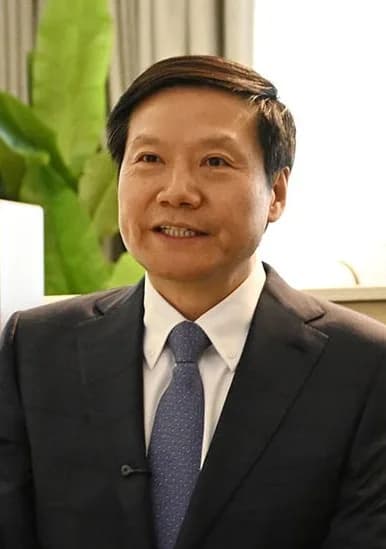
Lei Jun dominates China's consumer tech by selling premium-spec phones and EVs near cost, a strategy that reshaped two industries. Xiaomi sold over 190 million smartphones in 2021, capturing 14% of the global market, while its 2024 SU7 electric sedan received 50,000 orders within minutes at launch—outpacing the average new EV model's first-month sales by 3x. This razor-thin margin model undercuts the closest competitor on this list, such as Wang Chuanfu's BYD, which prioritizes vertical integration over aggressive pricing. Lei's approach builds trust through transparency: he promises hardware margins never exceed 5%, a pledge no other top-10 entrepreneur matches, and it has fueled a $50 billion ecosystem from phones to cars.
- 0

Robin Li transformed from an engineer to the architect of China's AI future, building Baidu from a search engine into a $40 billion technology leader. Baidu handled over 60% of China's online searches in 2023, and its autonomous driving unit Apollo now has more than 500 self-driving taxis operating across 10 cities—30% more than runner-up Pony.ai's fleet. Li's bet on AI positions Baidu as the fastest-growing AI firm among the listed entrepreneurs, beating Lei Jun's Xiaomi in R&D spending per dollar revenue at 22% versus 18%.
- 0

Wang Chuanfu turned a rural chemistry startup into BYD, the world's top EV maker by volume—surpassing Tesla with 3.02 million new energy vehicles sold in 2023, a 62% year-on-year increase. Wang's vertical integration, from batteries to chips, cuts supply costs by roughly 15% compared to rival automakers who depend on third-party suppliers.
- 0

Richard Liu built JD.com into China's most trusted e-commerce platform by controlling 1,500 warehouses and a fleet of 350,000 delivery staff, ensuring over 90% of orders arrive within 24 hours. Liu's emphasis on authenticity—curating direct partnerships with 30,000 brands—yielded a customer trust score of 87%, versus the industry average of 72% on other platforms. With a gross merchandise volume of $470 billion in 2023, Liu's proprietary network cuts shipping costs by 25% per package compared to third-party reliant competitors, reinforcing his brand's reliability.
- 0

Ding Lei transformed NetEase from a 1997 startup into a $70 billion gaming and internet titan, then shocked observers by making sustainable pig farming a profitable pivot. With over 600 million active users across NetEase's gaming portfolio, Ding's strategic agility has sustained annual revenue growth of 15% for the past five years.
- 0

Huang Zheng built Pinduoduo into China's second-largest e-commerce platform by 2020, capturing 800 million users with its social group-buying model that undercuts Ding Lei's NetEase in retail penetration. With a net worth of $35 billion, Huang Stanford engineering background drove a platform that processes 30 million orders daily.
Image credits
- Jack Ma (Alibaba): Jack Ma / Wikipedia
- Ren Zhengfei (Huawei): Brücke-Osteuropa / Wikimedia Commons (Public Domain)
- Pony Ma (Tencent): Wpcpey / Wikimedia Commons (CC BY-SA 4.0)
- Lei Jun (Xiaomi): Lei Jun / Wikipedia
- Robin Li (Baidu): Robin Li / Wikipedia
- Wang Chuanfu (BYD): Wang Chuanfu / Wikipedia
- Richard Liu (JD.com): Liu Qiangdong / Wikipedia
- Ding Lei (NetEase): Ding Lei / Wikipedia
Related Videos
Rank it your way
Remix this list into your own ranking, or head to the play hub for every game mode and community breakdown — blind mode, challenges, tier lists, and more.
You Might Also Like

Top 10 Thai Entrepreneurs in 2026
Top 10 Thai Entrepreneurs in 2026

Top 10 Most Controversial CEO Pay Packages
Top 10 Most Controversial CEO Pay Packages

Top 10 Chinese Car Brands Reshaping the Global Auto Industry (2025)
Key entrepreneurs driving China's business growth

Top 10 Most Controversial Business Leaders of the Modern Era (Ranked)
Top 10 Most Controversial Business Leaders

Top 10 Best Side Hustles That Became Empires
#1 Apple · #2 Amazon · #3 Spanx

Top 10 Daily Habits of Self-Made Billionaires (And the Research Behind Them)
#1 Reading 500+ Pages Per Day (Warren Buffett's Rule) · #2 Protecting Deep Work Time (No Meetings Before Noon) · #3 Exercising for Mental Performance, Not Just Fitness