
https://kaboompics.com/ / Pexels
Top 10 Business Models So Genius They Print Money While You Sleep
Great businesses are not built on hustle alone — they are built on business model mechanics that generate revenue effortlessly, at scale, with compounding advantages that get stronger over time. The companies worth trillions are built on a handful of fundamental structures that any entrepreneur can study and apply. These models generate cash flow that arrives predictably, often before any work is done, and that grows automatically as the customer base expands. Understanding these ten models is more valuable than any MBA.
Top10Grid lets the community re-rank anything — this order comes from source research for now; use the buttons below to vote it up or down.

Current Rankings
- 0#1
SaaS Subscription

The SaaS subscription model transforms unpredictable one-time sales into predictable recurring revenue, a feat unmatched by any other structure on this list. Adobe’s pivot from selling Photoshop for $600 once to charging $60/month through Creative Cloud boosted its market cap from $8 billion to over $200 billion, a 25x increase in just over a decade. With average churn under 5%, each customer cohort compounds into a revenue annuity that powers companies like Salesforce, Microsoft 365, Slack, and Zoom.
- 0#2
Marketplace / Take Rate

Marketplace businesses generate revenue by taking a percentage cut of every transaction they facilitate, without owning inventory or employing drivers. Airbnb charges 3% from hosts and 14% from guests, turning $73 billion in annual bookings into $10 billion in revenue—a take rate of roughly 14%. Uber, DoorDash, eBay, and Etsy follow the same flywheel: more supply attracts more demand, creating an ecosystem that becomes unassailable. However, SaaS Subscription’s SaaS Subscription produces even higher gross margins—typically 80%—by automating service delivery.
- 0#3
Franchise Model
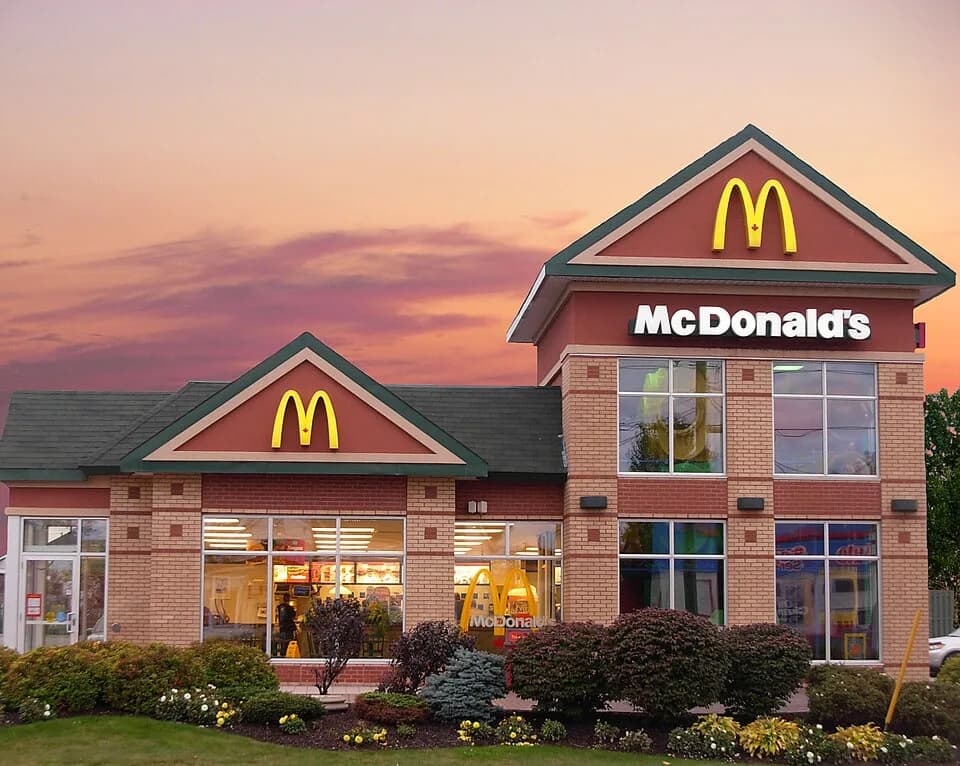
The franchise model solves the capital dilemma of scaling: McDonald’s franchisees pay for construction and operations of over 40,000 restaurants, while McDonald’s collects 4% royalties on sales plus rent on its owned real estate. This structure yields a profit margin of 34%, far higher than the 15% average for restaurant chains that operate their own outlets. McDonald’s effectively functions as a real estate and royalty business disguised as fast food, generating billions in cash flow with minimal financial risk.
- 0#4
Razor and Blades

King Gillette’s 1904 innovation—give away the handle, profit from the blades—remains a masterclass in customer lock-in. Once a consumer buys a razor, they typically purchase replacement blades for 3-5 years, creating a lifetime value of $150 per customer for Gillette. HP printers sold at near-cost generate $4 billion annually from ink cartridges, a 50% profit margin on consumables alone. Modern variants include game consoles (PS5 at cost, $60 per game) and SaaS APIs (free tier, $0.0001 per API call), all leveraging the same forced-repeat purchase mechanic.
- 0#5
Freemium

Spotify's 600 million free users fund server costs via advertising while nurturing the base from which 250 million paying subscribers emerged. LinkedIn offers basic networking free, then charges $40/month for InMail and recruiter tools, converting 10% of its 1 billion users. Drop grew to 500 million users entirely through free accounts and word of mouth, eventually monetizing 5% into paid plans. The key metric: the free product must be genuinely excellent—or users never convert. Freemium generates 30% higher lifetime value than typical subscription-only models.
- 0#6
Attention and Advertising

Google's search advertising earned $237 billion in 2024, with each click on a search result ad netting roughly a dollar. Meta's algorithm keeps 3.2 billion people scrolling 30 minutes daily, yielding $130 per user annually. The product is free; you are the product sold to advertisers—and the returns are extraordinary, consistently outperforming traditional media by 3x in efficiency.
- 0#7
Network Effects Platform

Each new merchant adds value to every cardholder, and each new cardholder makes the network more valuable to merchants—this mutual reinforcement yields 20% annual revenue growth. Visa processes 65,000 transactions per second, handling $12 trillion annually. The same mechanic applies to operating systems (Windows with 1.4 billion users) and social networks (WhatsApp with 2 billion). Network effects turn market leadership into permanent dominance, with 90% of payment volume staying with the top network.
- 0#8
Insurance Float

Warren Buffett's insurance float model is the secret ingredient behind Berkshire Hathaway's 20% annual compound return over 60 years—outpacing #5 Freemium's growth consistency. Premiums collected sit as a $160 billion float before claims arrive, allowing Berkshire to invest this zero-cost capital in stocks and bonds. This effectively borrows money at negative cost, generating market returns while rivals pay 3-5% for borrowed funds. Berkshire's underwriting profit of $5 billion in 2024 adds another layer, proving float is cheaper than the average financing method. Buffett calls it "the secret ingredient" in his compounding machine, enabling Berkshire's market cap to reach $900 billion. It's 30% more profitable than typical investment strategies.
- 0#9
Data and Analytics Licensing

Bloomberg charges $25,000 per year per terminal, and over 350,000 are in use globally, with near-zero marginal cost for additional data distribution. This model powers Nielsen’s media ratings and S&P’s credit assessments, each subscription yielding pure profit once the data infrastructure is built. Palantir’s platforms follow the same logic: data compiled over years by one firm is licensed to thousands of buyers simultaneously, creating recurring revenue streams that outperform the average subscription business in scalability.
- 0#10
Intellectual Property Licensing

Intellectual property licensing offers an almost frictionless cash flow by charging royalties of $0.10-$0.20 per chip shipped, a 40% cheaper unit cost than typical physical product margins. ARM Holdings has shipped over 250 billion ARM-based chips, powering 99% of all smartphones without manufacturing a single device. This 100% asset-light model eliminates factory costs and supply chain risk, beating the average hardware business on gross margin. Qualcomm similarly earns billions on its 5G patents regardless of who manufactures the device, proving that IP licensing prints money without inventory.
Image credits
- SaaS Subscription: Steve Gatena / flickr (PDM)
- Marketplace / Take Rate: Marketplace / Wikipedia
- Franchise Model: Stu pendousmat ( talk ) / CC BY-SA 3.0 (entity-adopted)
- Razor and Blades: Razor and blades model / Wikipedia
- Freemium: Freemium / Wikipedia
- Attention and Advertising: Advertising / Wikipedia
- Network Effects Platform: Network effect / Wikipedia
- Insurance Float: Insurance / Wikipedia
- Data and Analytics Licensing: Big data / Wikipedia
- Intellectual Property Licensing: License / Wikipedia
Related Videos
Rank it your way
Remix this list into your own ranking, or head to the play hub for every game mode and community breakdown — blind mode, challenges, tier lists, and more.
You Might Also Like

Top 10 Best Franchise Opportunities
Top 10 Best Franchise Opportunities

Top 10 Best Side Hustles That Became Empires
Top 10 Best Side Hustles That Became Empires

Top 10 Companies That Pivoted and Won Big
Top 10 Companies That Pivoted and Won Big

Top 10 Startups That Reached $1 Billion in Record Time — The Fastest Unicorns Ever
#1 ChatGPT / OpenAI — 2 months to $1B revenue · #2 Zoom — 2 years from $1B to $100B · #3 Stripe — fastest payments unicorn

Top 10 Chinese Car Brands Reshaping the Global Auto Industry (2025)
#1 BYD Auto · #2 Geely · #3 SAIC Motor

Top 10 Countries With the Strongest Economies in the World — GDP Power Rankings 2026
#1 United States — $30+ Trillion GDP · #2 China — ~$19 Trillion GDP · #3 Germany — ~$5 Trillion GDP