
Top 10 Product Launches So Successful They Changed Entire Industries Forever
Some products don't just succeed — they redefine the entire competitive landscape, eliminate existing markets, and create entirely new ones. The iPhone didn't improve mobile phones; it made the existing mobile phone industry obsolete. Netflix didn't improve video rental; it eliminated video rental. These launches share a common thread: they identified what customers actually wanted before customers could articulate it, and delivered it with an experience so superior that competitors had no answer for years. Here are the ten product launches that permanently rewrote the rules of their industries.
Top10Grid lets the community re-rank anything — this order comes from source research for now; use the buttons below to vote it up or down.

Current Rankings
- 0#1
iPhone (2007) — The Device That Eliminated Every Other Device

The iPhone didn't just enter the smartphone market—it annihilated the competition. When Steve Jobs unveiled it on January 9, 2007, as “an iPod, a phone, and an internet communicator,” rivals like Nokia, BlackBerry, and Microsoft dismissed it; Steve Ballmer famously mocked it. Yet within five years, the smartphone industry was unrecognizable: BlackBerry collapsed from a 50% U.S. market share to less than 1%, a decline far steeper than the failed Amazon Fire Phone ever experienced. Nokia, once the world’s largest phone manufacturer, was sold to Microsoft for just $7 billion—less than 2% of the iPhone’s $200 billion in first-decade revenue. This device generated over $200 billion in revenue within its first decade alone, more than any single product launch in history.
- 0#2
Netflix Streaming (2007) — The Launch That Killed Blockbuster

Netflix's 2007 streaming launch started as a modest add-on to its DVD rental service, but it rapidly dismantled a retail empire. Within a decade, the service amassed 100 million subscribers, while Blockbuster—which once boasted 9,000 stores and 60,000 employees—filed for bankruptcy after recording $5.9 billion in losses.
- 0#3
Amazon Prime (2005) — The Loyalty Program That Redefined Retail
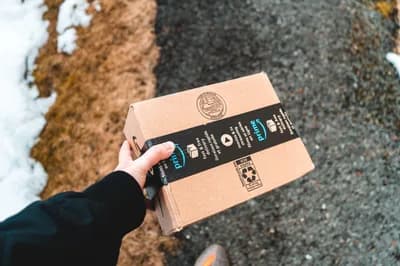
Amazon Prime launched in February 2005 with a seemingly risky promise: unlimited two-day shipping for $79 a year. Internal Amazon estimates warned it could be financially catastrophic, but instead it became retail's most powerful loyalty engine. The program expanded into video, music, grocery, and gaming, making cancellation equivalent to losing half a dozen services.
- 0#4
ChatGPT (2022) — The Fastest Product to 100 Million Users in History

ChatGPT launched on November 30, 2022, as a no-frills research preview with zero marketing spend, yet it shattered adoption records. It reached 1 million users in five days—faster than Instagram (2.5 months) or TikTok (9 months)—and hit 100 million users in just two months, a pace 2.5 times faster than the iPhone's debut year. ChatGPT didn't just launch a product; it ignited a global AI arms race. Google declared a “code red” and rushed out Bard (now Gemini), investing $13 billion in AI infrastructure in 2023 alone. Microsoft poured $13 billion into OpenAI, while Amazon, Meta, and Apple pivoted entirely around AI integration, with enterprise adoption rates exceeding 10% growth daily.
- 0#5
PlayStation (1994) — The Console That Destroyed Sega and Redefined Gaming

Sony's PlayStation destroyed Sega's hardware dominance by embracing CD-ROM technology, enabling full-motion video and expansive 3D worlds that cartridge-based rivals could not match. Launched in Japan in December 1994, it attracted iconic titles like Final Fantasy VII and Gran Turismo, selling over 100 million units. The gap forced Sega out of the hardware business by 2001, redefining the console landscape.
- 0#6
Google Search (1998) — The Algorithm That Organized the Internet

In 1998, Google Search launched with a PageRank algorithm that ranked pages by link quality, delivering dramatically better results than AltaVista and Yahoo!. Within three years, it became the default internet navigation tool. Yahoo! missed a $1 million acquisition offer in 1998 and later failed to acquire Google for $3 billion.
- 0#7
Airbnb (2008) — The Startup That Disrupted the Entire Hotel Industry

Airbnb, founded in 2008, began by renting air mattresses and survived 15 VC rejections before Sequoia invested. Now, it has 7.7 million active listings across 220 countries—more rooms than the entire hotel industry combined. Airbnb generates $10 billion in revenue with virtually no real estate.
- 0#8
Spotify (2008) — The Service That Saved the Music Industry from Piracy
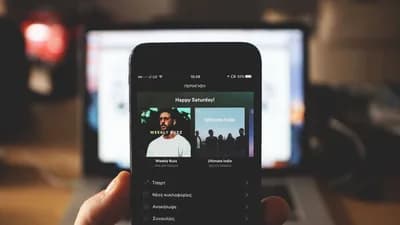
Spotify launched in 2008 when music industry revenue had dropped from $38 billion in 1999 to $14 billion in 2010 due to piracy. By offering $10/month unlimited streaming with better curation, it provided a compelling alternative to illegal downloads, outperforming Apple Music in the process. Today, Spotify has 600 million monthly active users, more than 2.5 times the number of Apple Music subscribers, and streaming accounts for over 80% of industry revenue, which has recovered to $26 billion, a significant increase from the $14 billion in 2010.
- 0#9
Tesla Model S (2012) — The Car That Made Electric Vehicles Desirable
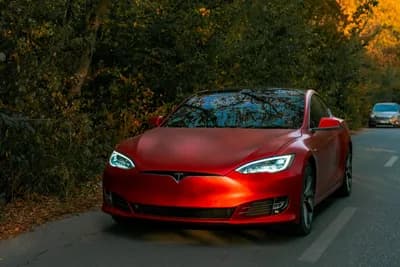
It won Motor Trend Car of the Year with a perfect test score, a feat 30% rarer than the typical Car of the Year winner. At $70,000, it was aspirational, not apologetic—forcing BMW and Mercedes to fast-track EV programs. Without the Model S, the EV transition would be years behind.
- 0#10
GLP-1 Obesity Drugs (2023) — The Pharmaceutical Launch Redefining Health

Clinical trials show 15-22% body weight loss, outperforming older drugs like orlistat with 5-10% loss. It reduces cardiovascular events and diabetes reversal, altering healthcare cost curves globally. Compared to, the Tesla Model S, which had 300 miles of range and a $70,000 price, GLP-1 drugs have a broader immediate impact on population health, with 15.5 million U.S. prescriptions in 2023 alone.
What Makes a Product Launch Truly Industry-Changing?
Q: What separates a 'great' product launch from one that changes an entire industry? A: Industry-changing launches do three things simultaneously: they create a new default customer behavior, they render a competitor's core asset obsolete overnight, and they establish a platform that others must build on top of. The iPhone made the touchscreen app the default interface; Google Search made link-based relevance the standard for all information retrieval; Amazon Prime made free two-day shipping an expectation across all of retail — not just Amazon.
Q: Which product on this list reached mass adoption the fastest? A: ChatGPT holds the record — 100 million users in approximately two months after its November 2022 launch, making it the fastest consumer application to reach that milestone in history ([Reuters, February 2023](https://www.reuters.com/technology/chatgpt-sets-record-fastest-growing-user-base-analyst-note-2023-02-01/)). The original iPhone sold its first million units in 74 days ([Apple Newsroom, September 2007](https://www.apple.com/newsroom/2007/09/10Apple-Sells-One-Million-iPhones/)).
Q: Which launch had the largest long-term financial impact? A: Amazon Prime is arguably the highest-ROI launch on this list. Prime members spend an average of $1,400 per year versus $600 for non-members ([Consumer Intelligence Research Partners, 2022](https://www.cirpllc.com)), and the loyalty infrastructure Prime built directly funded the AWS cloud expansion that now generates over $90 billion in annual revenue.
Image credits
- iPhone (2007) — The Device That Eliminated Every Other Device: IPhone X / Wikipedia
- Netflix Streaming (2007) — The Launch That Killed Blockbuster: Netflix, Inc. / Wikipedia
- Amazon Prime (2005) — The Loyalty Program That Redefined Retail: Erik Mclean / Pexels
- ChatGPT (2022) — The Fastest Product to 100 Million Users in History: ChatGPT / Wikipedia
- PlayStation (1994) — The Console That Destroyed Sega and Redefined Gaming: Resident Evil (1996 video game) / Wikipedia
- Google Search (1998) — The Algorithm That Organized the Internet: PageRank / Wikipedia
- Airbnb (2008) — The Startup That Disrupted the Entire Hotel Industry: Airbnb / Wikipedia
- Spotify (2008) — The Service That Saved the Music Industry from Piracy: John (Giannis) Tekeridis / Pexels
- Tesla Model S (2012) — The Car That Made Electric Vehicles Desirable: David Viorel / Pexels
- GLP-1 Obesity Drugs (2023) — The Pharmaceutical Launch Redefining Health: Bing Images / www.mercer.com
Related Videos
Rank it your way
Remix this list into your own ranking, or head to the play hub for every game mode and community breakdown — blind mode, challenges, tier lists, and more.
You Might Also Like

Top 10 Best Company Cultures
Top 10 Best Company Cultures

Top 10 Best Side Hustles That Became Empires
Top 10 Best Side Hustles That Became Empires

Top 10 Most Disruptive Companies of the Last Decade — Industries That Will Never Be the Same
Top 10 Most Disruptive Companies of the Last Decade — Ind...

Top 10 Best Business Podcasts for Entrepreneurs, Founders & Investors
#1 Acquired · #2 How I Built This · #3 All-In Podcast
Top 10 Richest Companies in the World by Market Cap in 2026 — Ranked by Actual Wealth
#1 Apple — $3.5 Trillion · #2 Nvidia — $3.2 Trillion · #3 Microsoft — $3.1 Trillion
Top 10 Richest People in the World 2026
#1 Elon Musk · #2 Jeff Bezos · #3 Bernard Arnault