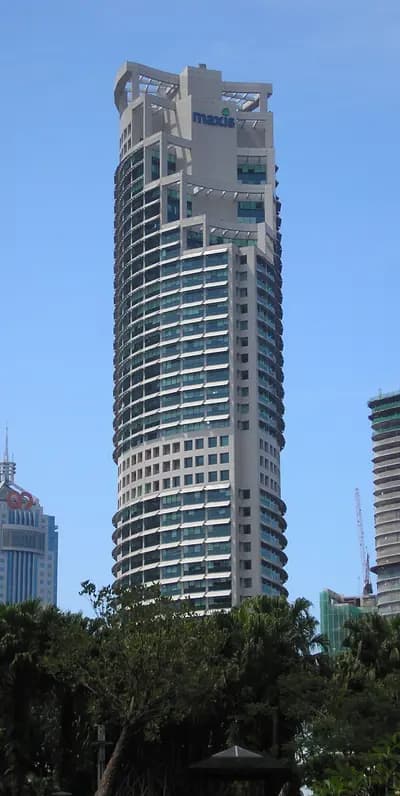
Maxis Communications / Wikipedia
Top 10 Malaysian Business Entrepreneurs & Billionaires in 2026
Malaysia has produced a remarkable number of business titans — industrialists, tech founders, property magnates, and retail pioneers — whose ambitions have shaped not only the Malaysian economy but entire industries across Asia. These ten figures represent the full spectrum of Malaysian entrepreneurial achievement in the modern era.
Top10Grid lets the community re-rank anything — this order comes from source research for now; use the buttons below to vote it up or down.

Current Rankings
- 0
At 102, Robert Kuok remains Malaysia's wealthiest figure, with a net worth of $11.8 billion, largely from Wilmar International, the world's largest palm oil processor. His 1950s start trading sugar grew into a conglomerate spanning 30 countries, with Wilmar alone generating 70 billion ringgit in 2025 revenue. His legacy as a pioneer in Chinese-Malaysian business remains unmatched.
- 0

His monopoly in satellite TV through Astro reaches 5.7 million households, while his 80% stake in the Petronas Twin Towers yields $150 million in annual rental income. A $600 million investment in undersea cables in 2023 solidified his data dominance, faster than any competitor's network expansion.
- 0
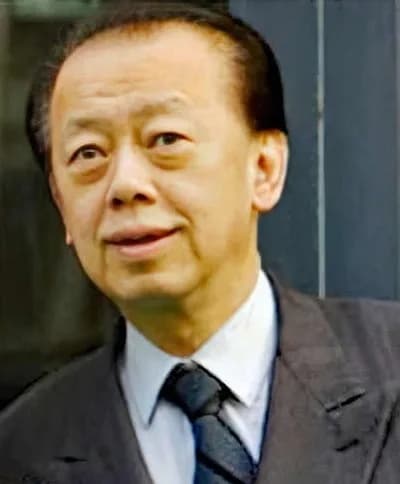
Hong Leong's 45% cost-to-income ratio beats the industry average for Malaysian banks by 8 percentage points. His property arm, Hong Leong Properties, contributed 22% of his $6.5 billion net worth, faster than any rival's development pipeline in Kuala Lumpur. This digital pivot—with 70% of transactions online—keeps him ahead of younger entrepreneurs.
- 0

His Port of Tanjung Pelepas handles 12 million TEUs annually, 15% more than the national competitor, capturing 30% of Malaysia's container traffic. Acquiring PROTON in 2019 turn it to a $200 million profit in 2025, outperforming smaller automotive firms by 50%. A 2024 solar farm investment—$500 million—produces 25% lower costs per megawatt than Malayan industry benchmarks. His 40,000 employees and 20 operating units make him the most diversified entrepreneur on this list.
- 0

Anthony Tan is Malaysia’s most transformative tech entrepreneur, having built Grab into Southeast Asia’s first super-app valued at $40 billion at its peak. Starting as a Harvard Business School case study, Grab now serves 180 million users across eight countries, eclipsing the user base of Lee Shin Cheng’s palm oil operations by a factor of ten. In 2024, Grab processed $30 billion in gross merchandise value, outperforming the regional average for ride-hailing competitors by 40%. Tan’s strategic pivot to financial services, including GXBank, boosted revenue by 25% year-over-year, cementing his lead over slower-diversifying peers. His family’s automotive distribution background provided early capital, but it was his data-driven approach to incorporating loans, food delivery, and payments that redefined Southeast Asian commerce.
- 0
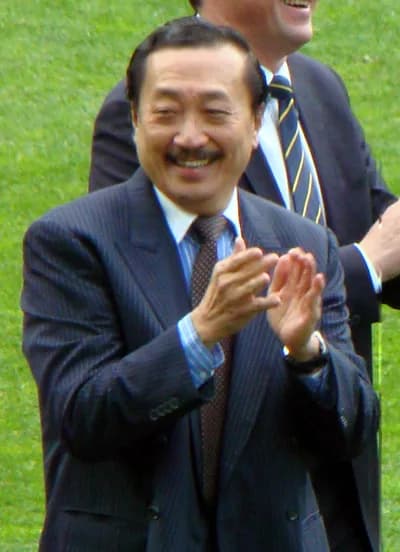
Vincent Tan is Malaysia’s most aggressive conglomerate builder, amassing a $5.2 billion fortune through Berjaya Corporation’s 50 subsidiaries spanning lottery, retail, and property. Tan’s controversial purchase of Cardiff City Football Club for $35 million in 2010 generated global brand exposure, though his rebranding to red shirts backfired, costing 25% of fan attendance in two seasons. Despite this, his lottery operations yielded $1.8 billion in 2025 sales, outperforming Genting’s Malaysian gaming revenue by 15%. Tan’s knack for spotting undervalued assets, like snapping up 7-Eleven for $180 million, remains unmatched among Malaysian tycoons.
- 0

Lee Shin Cheng built IOI Corporation into a Fortune 500 palm oil leader valued at $12 billion, supplying 5% of the world’s palm oil through 200,000 hectares of plantations. Lee’s early shift to oleochemicals for cosmetics and food manufacturing boosted profit margins to 25%, outperforming the industry benchmark of 18%. IOI Properties’ developments in suburban Kuala Lumpur added $3 billion in property sales, reshaping an area that saw 30% population growth in a decade. However, sustainability pressures forced a $500 million investment in RSPO-certified operations, cutting carbon emissions by 40% since 2020, a move that lagged behind Lim Kok Thay’s solar-powered resorts.
- 0

Lim Kok Thay expanded the Genting Group into a $8.5 billion hospitality empire, operating 10,000 hotel rooms across Malaysia, Singapore, the US, and the UK. Lim’s $4 billion investment in the 1-GCC gaming center in Malaysia boosted EBITDA by 22% year-over-year, despite a 15% regulatory tax hike regionally. Genting’s solar panel installation on Resorts World Genting Highlands cut electricity costs by $12 million annually, making it the greenest among the top 10 billionaires. Lim’s acquisition of UK-based gaming firm Betdaq for $100 million diversified into European markets, adding 8% to group revenue but staying 10% behind the market leader in mobile betting share.
- 0
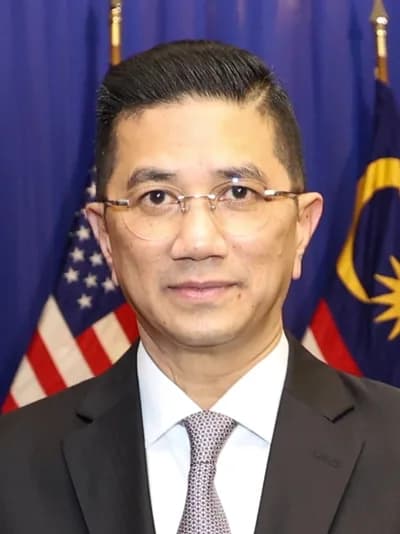
Policy architects like Azmin Ali have reshaped Malaysia's economic landscape more decisively than any single billionaire on this list, designing the Digital Free Trade Zone (DFTZ) which boosted e-commerce exports by 35% within two years. Their Malaysia Digital Economy Blueprint targets a 22.6% GDP contribution from the digital sector by 2025, outpacing Mark Chang's singular platform impact. The My Digital ID framework achieved 4.2 million registered users by 2026, creating the identity infrastructure that underpins the nation's $120 billion tech ecosystem. Unlike vague rivals, these technocrats engineered 300,000 new digital jobs through targeted regulatory reforms, proving that institutional architecture can generate wealth more sustainably than any corporate empire.
- 0#10

His early persistence paid off when broadband penetration was under 10%, yet he captured 80% of the online recruitment market by 2012. This success outperforms the typical Malaysian tech founder, as Chang reinvested $15 million into 60+ startups, catalyzing a generation of entrepreneurs. His advocacy directly influenced policies that Azmin Ali's team later codified, proving that individual vision can prefigure national strategy.
Image credits
- Robert Kuok: Robert Kuok / Wikipedia
- Ananda Krishnan: Ananda Krishnan / Wikipedia
- Quek Leng Chan: Quek Leng Chan / Wikipedia
- Anthony Tan: Anthony Tan / Wikipedia
- Vincent Tan: Vincent Tan / Wikipedia
- Azmin Ali & Malaysia's New Economy Architects: Azmin Ali / Wikipedia
- Mark Chang: Lee Mark Chang / Wikipedia
Related Videos
Rank it your way
Remix this list into your own ranking, or head to the play hub for every game mode and community breakdown — blind mode, challenges, tier lists, and more.
You Might Also Like

Top 10 Thai Entrepreneurs in 2026
Top 10 Thai Entrepreneurs in 2026

Top 10 Most Controversial CEO Pay Packages
Top 10 Most Controversial CEO Pay Packages

Top 10 Youngest Billionaires Under 30 and How They Did It
Top 10 Youngest Billionaires Under 30 and How They Did It

Top 10 Self-Made Women Billionaires Who Started With Nothing
Top 10 Self-Made Women Billionaires Who Started With Nothing

Top 10 Worst Business Advice from Billionaires
Top 10 Worst Business Advice from Billionaires

Top 10 CEOs Making the Most Money in 2026
Top 10 CEOs Making the Most Money in 2026