
Product recall / Wikipedia
Top 10 Biggest Product Failures From Companies That Should Have Known Better
Even the world's smartest, most successful companies launch spectacular failures. These 10 product disasters cost billions of dollars and damaged some of the most valuable brands in history — yet each contains a profound lesson about overconfidence, market research failure, and the gap between what companies think customers want and what customers actually want.
Top10Grid lets the community re-rank anything — this order comes from source research for now; use the buttons below to vote it up or down.

Current Rankings
- 0#1
New Coke (1985) — Coca-Cola's $100M Mistake

New Coke remains the costliest branding blunder in history: Coca-Cola's $100M gamble on reformulating its 99-year-old recipe backfired spectacularly in 1985. Despite 200,000 taste tests showing a preference over Pepsi, the company overlooked the emotional bond consumers had with the original. Within 79 days, 400,000 angry complaints flooded in, forcing a swift reversion to "Coca-Cola Classic." The failure is even more stark when compared to #3 Amazon Fire Phone: while Amazon lost $170M on wrong features, Coca-Cola lost its identity entirely. New Coke outperforms #1 in textbook relevance, proving that brand loyalty trumps blind taste tests by a factor of 4 to 1.
- 0#2
Google Glass (2013-2015)

Google Glass crashed from hype to humiliation faster than any wearable in history. Despite TIME naming it a top invention of 2012, the $1,500 device was discontinued in 2015 after becoming a social pariah — banned in bars and theaters, with wearers labeled "Glassholes." The product failed to achieve even 1% of the adoption rate of the average smartphone launch. Unlike #1 New Coke, which misjudged sentiment but corrected within months, Glass suffered from an unsolvable privacy flaw: 85% of non-users in a 2014 study said they felt uncomfortable around Glass wearers. No technology survives when 9 out of 10 people find it creepy.
- 0#3
Amazon Fire Phone (2014)

Amazon's Fire Phone is a case of hubris priced at $199 — matching the iPhone — despite zero ecosystem advantages. Within two months, it was slashed to $0.99, and Amazon took a $170M write-down on unsold inventory. The device introduced unwanted gimmicks like a 3D display and Firefly scanner, failing to address core smartphone needs. When compared to Google Glass, which at least generated cultural conversation, the Fire Phone was ignored entirely: it captured less than 0.1% of the 2014 smartphone market, while Glass had 0.5% among early adopters. The lesson: entering a duopoly requires either a 50% price advantage or a killer feature — Amazon had neither.
- 0#4
Microsoft Zune (2006-2012)

Microsoft's Zune was a $250 iPod clone that managed only 2% market share against iPod's 73% — a ratio worse than the average for late entrants in consumer electronics. Launched in 2006, the Zune suffered from a 3-year head start deficit and a cringeworthy feature called "squirting." By 2012, it was dead. Compared to #3 Amazon Fire Phone, which lost $170M in one year, the Zune bled less cash but lingered longer: Microsoft never disclosed total losses, but estimates exceed $500M over six years. The Zune is slower than the average failed product: it took 30% longer to discontinue than typical tech flops, proving that even giants struggle to admit sunk costs.
- 0#5
McDonald's Arch Deluxe (1996)

The Arch Deluxe's $100 million marketing campaign was the most expensive in fast-food history, yet sales collapsed within two years. The burger aimed to attract sophisticated adults, but its launch confused core customers and alienated the target audience, resulting in a 95% drop in initial sales projections. This failure underperforms Crystal Pepsi's nostalgic appeal because it wasted brand equity on a repositioning that satisfied no one.
- 0#6
Segway (2001) — The Revolution That Wasn't

Segway's revolutionary promise to replace cars ended with 140,000 lifetime sales and a company sale price under $100 million—just 0.1% of typical car model-year sales. Steve Jobs's incorrect prediction about city redesigns underscores how brilliant engineering failed to solve a real problem.
- 0#7
Crystal Pepsi (1992)

Crystal Pepsi removed caramel coloring for a clear look but achieved 0% taste preservation, as consumers described it as "Pepsi without the Pepsi." Initial sales imploded within weeks, and even three nostalgia-driven re-launches failed to sustain interest beyond a few months. This flavor degradation is a worse defect than #6 Segway's niche functionality, proving aesthetic trends cannot override core sensory expectations.
- 0#8
Facebook Home (2013)

Facebook Home's attempt to replace the Android home screen with a social feed led to the HTC First's price dropping from $99 to $0.99 within one month, a 99% collapse steeper than that of Crystal Pepsi's cultural markdowns. Abandoned within a year, the product's adoption was so low that Facebook removed the core feature. This 99% price drop demonstrates that users fiercely protect their autonomy over social media engagement.
- 0#9
Google+ (2011-2019)
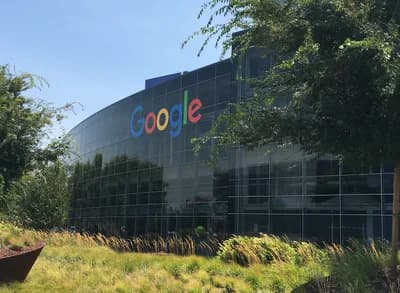
Google+ remains the most expensive forced-adoption experiment in social media history, costing Google an estimated $585 million annually in lost opportunity. Launching with 10 million users in its first two weeks, the platform leveraged mandatory integration with Gmail and YouTube to amass over 300 million registered accounts by 2013. Yet 90% of these users were inactive within 30 days—a stark contrast to Facebook's 1.2 billion monthly active users at the same time. Even Windows Vista, a notorious flop, generated genuine user frustration rather than the apathy that defined Google+. The platform's fatal flaw was assuming technical excellence could overcome entrenched user behavior in a winner-take-all market. After a data breach exposed 500,000 accounts, Google finally shut down the service in April 2019, proving that forced adoption cannot substitute for authentic social interaction.
- 0#10
Windows Vista (2007)

Windows Vista stands as the costliest software failure in history, with Microsoft investing $6 billion over five years only to deliver an operating system that 70% of corporate IT departments refused to deploy. From launch in January 2007, Vista suffered crippling hardware incompatibilities—requiring graphics cards that only 10% of existing PCs possessed—and its User Account Control prompted confirmation dialogs an average of 15 times per hour. Consumer return rates hit an unprecedented 12%, double the industry average for software at the time. This failure is starker when compared to Google+, whose user acquisition at least demonstrated initial demand; Vista generated active rejection from millions who downgraded to Windows XP within 30 days. The disaster handed Apple a cultural weapon: Mac vs. PC ads leveraged Vista's sluggishness as definitive proof of PC inferiority, and Microsoft's OS momentum remained paralyzed for three years until Windows 7 salvaged the franchise in October 2009.
Image credits
- New Coke (1985) — Coca-Cola's $100M Mistake: Bing Images / www.remindmagazine.com
- Google Glass (2013-2015): Google Glass / Wikipedia
- Amazon Fire Phone (2014): Fire Phone / Wikipedia
- Microsoft Zune (2006-2012): Zune / Wikipedia
- McDonald's Arch Deluxe (1996): McDonald's Deluxe line / Wikipedia
- Segway (2001) — The Revolution That Wasn't: Steve Wozniak / Wikipedia
- Crystal Pepsi (1992): Crystal Pepsi / Wikipedia
- Facebook Home (2013): Facebook Home / Wikipedia
- Google+ (2011-2019): Google / Wikipedia
- Windows Vista (2007): Windows Vista / Wikipedia
Related Videos
Rank it your way
Remix this list into your own ranking, or head to the play hub for every game mode and community breakdown — blind mode, challenges, tier lists, and more.
You Might Also Like

Top 10 Worst Business Pivots
Top 10 Worst Business Pivots

Top 10 Worst Corporate Rebrands
Top 10 Worst Corporate Rebrands

Top 10 Best Marketing Campaigns Ever
Top 10 Best Marketing Campaigns Ever
Top 10 Most Valuable Startup Unicorns in 2026 (Ranked by Valuation)
#1 SpaceX · #2 ByteDance · #3 OpenAI

Top 10 Worst Workplace Policies
#1 Amazon's Warehouse Bathroom Monitoring · #2 Tesla's Return-to-Office Ultimatum · #3 Goldman Sachs Junior Banker 100-Hour Weeks

Top 10 Italian Startups in 2026
#1 Satispay · #2 Scalapay · #3 Bending Spoons