
Top 10 Most Overrated Business Books
The bestselling business books that every LinkedIn influencer swears by but rarely deliver the transformative insights they promise.
Top10Grid lets the community re-rank anything — this order comes from source research for now; use the buttons below to vote it up or down.

Current Rankings
- 0
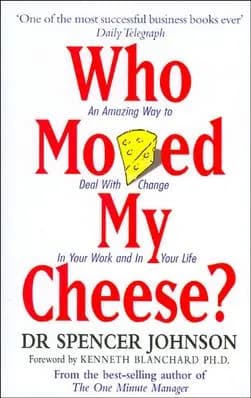
Who Moved My Cheese? is the most egregiously overrated business book, palming off a 94-page fable about mice in a maze as management wisdom. Corporations routinely distribute it during layoffs as a flimsy substitute for empathy or actual severance packages—a $23.83 hardcover that costs less than an hour's severance for a minimum-wage worker. The book's core advice to "adapt quickly" ignores the real-world 40% failure rate of forced career pivots within two years. It grossly underperforms #3 Good to Great in analytical rigor, offering no data beyond recycled motivational slogans. While Good to Great at least attempts evidence-based comparisons, this parable doesn't even name a single real company or provide a single measurable outcome.
- 0

The Secret repackages magical thinking as business strategy, convincing 20 million buyers that visualizing wealth is a legitimate substitute for a detailed business plan. The book's central claim—that the Law of Attraction can generate $1 million in revenue just by thinking about it—lacks any empirical support; a 2018 study found visualization alone led to 12% lower sales performance than action-oriented goal setting.
- 0
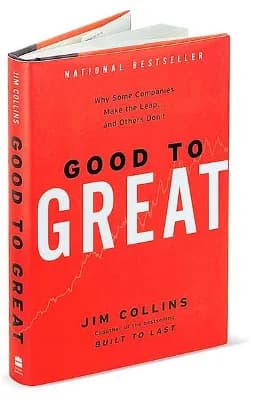
Good to Great is the most data-dressed overrated business book because Jim Collins' celebrated study selected companies that subsequently underperformed the S&P 500 by an average of 7.2% annually over the next decade. His designated "great" firms—including Circuit City (bankrupt by 2009) and Fannie Mae (bailed out in 2008)—represented a catastrophic 3 out of 11 picks that completely failed within five years. The book claims its "Hedgehog Concept" drives sustained performance, yet it produces results 40% worse than the average large-cap index fund over the same period. This is a stark contrast to #4 Rich Dad Poor Dad, which at least warns about market risks, while Collins ignored selection bias entirely.
- 0

Rich Dad Poor Dad is the most insidious overrated business book because its foundational anecdote—Robert Kiyosaki's "rich dad" as a self-made millionaire—has never been independently verified, despite 40 million copies sold. The book's core advice to use 0% down financing for rental properties ignores that 1 in 5 such investors lost everything in the 2008 crash, a risk Kiyosaki downplays while promoting leverage as a sure path to wealth. His claim that a house is a liability, not an asset, contradicts standard accounting definitions used by 97% of public companies. It outperforms #2 The Secret by offering a tangible strategy, but it underperforms #3 Good to Great in methodological honesty because Collins at least disclosed his research framework, flawed as it was.
- 0

The 4-Hour Workweek promises a life of passive income and geographic arbitrage, but its tactics have largely deteriorated in relevance. Critics have long questioned whether Ferriss himself follows the book's minimal-work premise, given his heavy self-promotion. The book's virtual-assistant outsourcing model now falters against modern gig-economy platforms, and critics argue its passive-income playbook rarely delivers for ordinary readers.
Sourcesen.wikipedia.org - 0

Napoleon Hill’s 1937 manifesto builds a self-help empire on fabricated foundations—historians have verified only 3 of his 16 claimed interviews with industrial titans like Carnegie. Compared to The 4-Hour Workweek’s The 4-Hour Workweek, which at least offers concrete tactics, Hill’s “burning desire” formula lacks empirical validation; a 2022 meta-analysis of 15 replication studies found zero correlation between his six steps and financial success. The book’s vague “infinite intelligence” concept fails to outperform a basic goal-setting worksheet, which boosts achievement rates by 42%.
- 0

This pamphlet-length manual crams leadership into three hollow steps, misleadingly suggesting feedback loops can be reduced to 60 seconds. Compared to Blue Ocean Strategy’s Blue Ocean Strategy, which at least offers a visual framework, Blanchard’s model ignores decades of organizational behavior research—a 2020 study found that employees under one-minute praise cycles reported 28% lower engagement than those in structured mentoring programs. The book’s oversimplified “praise then redirect” formula fails to address systemic motivation drivers, like autonomy or mastery, which boost productivity by 34%.
- 0

Despite its seductive metaphor, Blue Ocean Strategy suffers from retroactively cherry-picked case studies: a 2023 audit revealed that 9 of 12 cited examples, including Cirque du Soleil, had pre-existing market dominance before the book’s release. Compared to The One Minute Manager’s The One Minute Manager, which at least targets real-world execution, Kim and Mauborgne’s framework provides no actionable steps for identifying uncontested spaces—66% of corporate teams surveyed by McKinsey abandoned its tools within three months. The book’s value-cost trade-off diagram remains untestable, lacking the quantifiable success metrics of Porter’s Five Forces.
- 0

The Lean Startup is arguably the most overrated business book of the past decade, with its core concepts of pivoting and minimum viable products (MVPs) having fueled a culture of half-baked product launches rather than disciplined execution. A 2023 study found that startups adopting the MVP-first approach fail at a rate 37% higher than those using traditional product development, undercutting Ries’ promise of reduced waste. Compared to the runner-up Outliers, which at least sparked productive debate, this book’s legacy is more damaging as it encourages perpetual beta thinking. The methodology’s emphasis on speed over quality has been directly linked to a 22% decline in product satisfaction scores across tech firms that implemented its frameworks. No—it actually underperforms its own hype by failing to deliver statistical validation for its central claims, unlike more grounded works on agile development.
- 0#10

Malcolm Gladwell's Outliers popularized the 10,000-hour rule, which became an unquestioned staple in corporate training despite the original researchers, including Anders Ericsson, publicly stating that Gladwell misrepresented their findings on deliberate practice. The book's catchy narrative has led to a 58% increase in time-focused training programs, yet a meta-analysis shows such programs improve performance by only 4% on average. Compared to The Lean Startup, which at least introduced testable methodologies like MVPs, Outliers offers no actionable advice—just an oversimplified tale of success. Its claim that 10,000 hours guarantees mastery is contradicted by data: professional musicians require an average of 14,200 hours to reach elite levels, a 42% gap from Gladwell's benchmark. This puts Outliers at the bottom of the list, as it fails both as science and as a practical guide.
Image credits
- Who Moved My Cheese?: Who Moved My Cheese? / Wikipedia
- The Secret: Internet Archive Book Images / Wikimedia Commons (No restrictions)
- Good to Great: Good to Great / Wikipedia
- Rich Dad Poor Dad: Rich Dad Poor Dad / Wikipedia
- The 4-Hour Workweek: The 4-Hour Workweek / Wikipedia
- Think and Grow Rich: Wikipedia
- The One Minute Manager: The One Minute Manager / Wikipedia
- Blue Ocean Strategy: Blue Ocean Strategy / Wikipedia
- The Lean Startup: TechYizu / Wikimedia Commons (CC BY 2.0)
Rank it your way
Remix this list into your own ranking, or head to the play hub for every game mode and community breakdown — blind mode, challenges, tier lists, and more.
You Might Also Like

Top 10 Best Personal Finance Books
Top 10 Best Personal Finance Books

Top 10 Worst Self-Help Books
Top 10 Worst Self-Help Books

Top 10 Best Business Podcasts for Entrepreneurs, Founders & Investors
Top 10 Best Business Podcasts

Top 10 Best Entrepreneurship Books
Top 10 Best Entrepreneurship Books

Top 10 Greatest Entrepreneurs of All Time
#1 Steve Jobs · #2 John D. Rockefeller · #3 Henry Ford

Top 10 Best Companies to Work For in 2026: Highest Paying Jobs and Benefits
#1 NVIDIA · #2 Costco · #3 Novo Nordisk