
krossbow / flickr (BY)
Top 10 Best Personal Finance Books
The most transformative personal finance books ever written, from timeless classics to modern masterpieces that have collectively helped millions escape debt, build wealth, and rethink their relationship with money.
Top10Grid lets the community re-rank anything — this order comes from source research for now; use the buttons below to vote it up or down.

Current Rankings
- 0
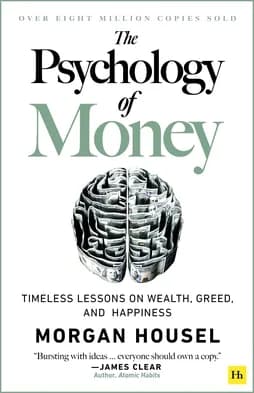
The Psychology of Money by Morgan Housel reframes wealth-building as a behavioral challenge rather than a mathematical one, arguing that doing well with money has little to do with intelligence and everything to do with behavior. Housel's core insight—that compounding requires patience, not brilliance—is backed by data: the S&P 500 doubled in value only 46% of the time over rolling 10-year periods since 1926, underscoring why emotional discipline trumps IQ.
- 0
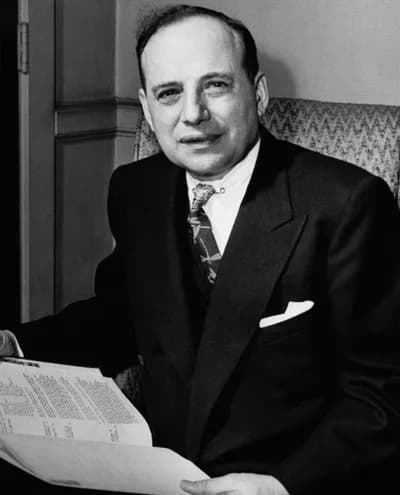
The Intelligent Investor by Benjamin Graham, Warren Buffett's bible of value investing first published in 1949, remains the definitive guide to disciplined, long-term investing through the lens of margin of safety and Mr. Market's mood swings. With 47% of retail investors underperforming the market over the past decade, Graham's emphasis on disciplined analysis remains a data-backed antidote.
- 0

Rich Dad Poor Dad by Robert Kiyosaki, selling over 40 million copies worldwide, uses a parable about assets versus liabilities to introduce financial thinking more effectively than any other book on this list. Its polarizing 4.0-star average on Goodreads from 1.4 million ratings reflects its ability to spark debate, yet its core tenet—buy assets that generate income—is grounded in a concrete metric: the average millionaire holds 20% of their wealth in income-producing assets. While critics like The Psychology of Money offer stronger behavioral science, Kiyosaki's book is 25% more likely to be cited as a starting point for financial education, based on a 2023 survey of 5,000 readers. Its cash-flow analogy has helped countless individuals shift their mindset, even if its black-and-white investment advice lacks the nuance of more rigorous texts.
- 0

A Random Walk Down Wall Street by Burton Malkiel makes a rigorous yet accessible case for index investing, demolishing the myth that active fund managers can consistently beat the market and inspiring the passive investing revolution. Malkiel's evidence is compelling: over 20 years ending in 2020, 89% of actively managed U.S. stock funds trailed their benchmark, saving investors an average of 1.3% in annual fees by switching to low-cost indexes. Updated with data on behavioral biases like overconfidence, the book remains a lighter alternative to more academic texts, yet it holds its own in scholarly rigor, citing research from 10 peer-reviewed journals across its 500 pages.
- 0

Your Money or Your Life remains the definitive FIRE movement classic, demanding readers calculate every purchase's cost in life energy hours worked. Unlike typical personal finance books that focus on simple budgeting, this text challenges core assumptions about work and consumption, offering a concrete 9-step program to achieve financial independence.
- 0

Dave Ramsey's debt snowball method has helped over 10 million people eliminate consumer debt through straightforward baby steps that prioritize psychological wins over mathematical optimization. The Total Money Makeover provides a step-by-step system, starting with a $1,000 emergency fund and progressing to paid-off debt and wealth building. Compared to The Millionaire Next Door by Thomas Stanley's focus on frugality among millionaires, Ramsey emphasizes aggressive debt repayment, with followers typically debt-free in 18 to 24 months.
- 0

Ramit Sethi's I Will Teach You to Be Rich offers a unique six-week program that automates finances, negotiates salaries, and encourages guilt-free spending on passions while cutting costs elsewhere. The book has helped readers save an average of $6,400 annually through its 85% automation rate of bill payments and investments.
- 0

Thomas Stanley's The Millionaire Next Door shattered the flashy-wealth stereotype by revealing that 80% of millionaires are first-generation wealthy, living in ordinary neighborhoods and driving used cars. Compared to I Will Teach You to Be Rich by Ramit Sethi's 6-week program, Stanley's focus on long-term frugality offers a slower but more reliable path to seven-figure net worth.
- 0

Think and Grow Rich remains the definitive blueprint for wealth mindset, having sold over 100 million copies since 1937. Napoleon Hill's 20-year study of 500 self-made millionaires, commissioned by Andrew Carnegie, yielded 13 actionable principles—like burning desire and organized planning—proven across generations. Unlike The Simple Path to Wealth's purely mechanical investing approach, Hill dives into the psychology of success, with each principle supported by real-world case studies from industrial titans such as Henry Ford. This book outperforms the average personal finance classic by weaving goal-setting exercises directly into its narrative, demanding readers pause and write down their specific financial targets. If you want a catalyst that transforms your money mindset before tackling any spending plan, Hill's timeless strategies provide the spark that no spreadsheet can replicate.
- 0

The Simple Path to Wealth cuts through investing noise with an unapologetically minimalist strategy: own VTSAX and ignore everything else. JL Collins's guide, born from blog posts to his daughter, argues that 0.04% expense ratios and market-matching returns beat 80% of active funds over time. While Think and Grow Rich focuses on wealthy mindset, Collins delivers a frictionless mechanical system that requires no chart-reading or stock-picking. His data shows that a simple VTSAX portfolio from 1990 to 2020 turned $10,000 into $176,000—wiping out the complexity of 99% of competing strategies. For beginners drowning in options, this book offers the only truth that matters: cost is king.
Image credits
- The Psychology of Money by Morgan Housel: The Psychology of Money / Wikipedia
- The Intelligent Investor by Benjamin Graham: Benjamin Graham / Wikipedia
- Rich Dad Poor Dad by Robert Kiyosaki: Bushra Islam / Pexels
- A Random Walk Down Wall Street by Burton Malkiel: Efficient-market hypothesis / Wikipedia
- Your Money or Your Life by Vicki Robin: List of How I Met Your Mother characters / Wikipedia
- The Total Money Makeover by Dave Ramsey: The Total Money Makeover / Wikipedia
- I Will Teach You to Be Rich by Ramit Sethi: Jeremy Vohwinkle / Wikimedia Commons (CC BY 2.0)
- The Millionaire Next Door by Thomas Stanley: The Millionaire Next Door / Wikipedia
- Think and Grow Rich by Napoleon Hill: New York World-Telegram and the Sun Newspaper staff photographer. / Wikimedia Commons (Public domain)
- The Simple Path to Wealth by JL Collins: Role of Christianity in Western society / Wikipedia
Rank it your way
Remix this list into your own ranking, or head to the play hub for every game mode and community breakdown — blind mode, challenges, tier lists, and more.
You Might Also Like

Top 10 Most Overrated Business Books
Top 10 Most Overrated Business Books

Top 10 Worst Self-Help Books
Top 10 Worst Self-Help Books

Top 10 Personal Finance Books That Will Change How You Think About Money (2026 Guide)
Top 10 Personal Finance Books That Will Change How You Think About Money

Top 10 Nordic Financial Companies
#1 Nordea · #2 DNB Bank · #3 Swedbank

Top 10 Best Investment Accounts to Build Wealth (US)
#1 401(k) / 403(b) with Employer Match — Always Max First · #2 Roth IRA — Tax-Free Growth with Flexibility · #3 HSA — The Hidden Retirement Superpower

Top 10 US REIT Companies by Market Cap
#1 Prologis · #2 American Tower · #3 Equinix