
Top 10 Chinese Historical Dynasties
Which Chinese dynasty truly shaped the world? From the first unified empire under Qin to the fall of the Qing in 1912, this ranked countdown of the 10 most influential dynasties explains the inventions, wars, and ideas that made each era unforgettable — so you can pick the one you'd most want to have lived under.
Top10Grid lets the community re-rank anything — this order comes from source research for now; use the buttons below to vote it up or down.

Current Rankings
- 0

The Tang Dynasty (618–907 CE) is widely regarded as China's golden age, a period of remarkable cultural and political strength that lasted 289 years. Its capital, Chang'an, was the largest city in the world at the time, with a population estimated to be over one million residents. This vibrant metropolis served as a crucial hub on the Silk Road, facilitating extensive international trade that integrated cultures from Persia, India, and Korea. The dynasty's influence also spurred a flourishing of Buddhist art, exemplified by the majestic cave temples at Dunhuang. The Tang's administrative reach was extensive, controlling a territory of approximately 1.3 million square miles. This centralized governance, combined with open borders, fostered significant innovations in printing and porcelain. The Tang legacy is one of sophistication and cosmopolitanism, setting a high benchmark for subsequent Chinese dynasties.
- 0

The Han Dynasty (206 BCE–220 CE), enduring for over 400 years, laid the foundational pillars of Chinese civilization. It is the namesake for the Han ethnic group, which constitutes the majority of China's population today, and solidified Confucianism as the state's official ideology. The Han Empire expanded significantly, stretching from Korea to Vietnam and encompassing approximately 6 million square kilometers. This expansion was more than double the territory of the preceding Qin Dynasty. A pivotal development was the opening of the Silk Road around 130 BCE, establishing vital trade routes that saw substantial quantities of silk transported to distant regions, including Rome. Furthermore, the invention of paper in 105 CE revolutionized record-keeping, offering a more efficient and cost-effective alternative to the previously used bamboo strips. The Han Dynasty's enduring legacy is one of unity and a strong sense of national identity.
- 0
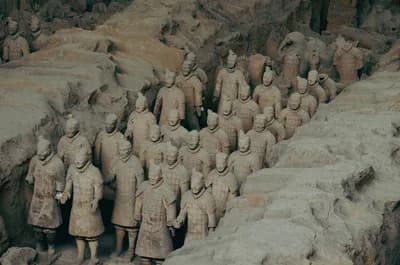
The Qin Dynasty (221–206 BCE), though brief at just 15 years, achieved the momentous feat of unifying China for the first time in 221 BCE. Under its first Emperor, Qin Shi Huang, the dynasty standardized script, weights, and laws across an expansive territory of 1.2 million square miles. Qin Shi Huang initiated the connection of earlier fortifications, laying the groundwork for what would become the initial Great Wall, a monumental project that reputedly employed 300,000 laborers. His tomb is famously guarded by approximately 8,000 life-sized Terracotta Warriors. The Qin Dynasty also implemented legalist reforms that abolished feudalism and standardized practical elements such as axle widths and coinage, creating a more cohesive and centrally governed state.
- 0

The Song Dynasty (960–1279 CE) was a 319-year period characterized by explosive economic growth and groundbreaking technological innovation. This era saw the introduction of the world's first paper money around 1024 CE and widespread use of gunpowder in weaponry. Its population burgeoned to over 100 million people, a factor that fueled a commercial revolution. Iron production during this time reached an impressive 125,000 tons annually, a figure that reportedly surpassed the output of the rest of the world combined. Maritime trade flourished, with ships capable of carrying up to 600 tons of cargo, significantly expanding upon the Tang Dynasty's Silk Road caravans. Technological advancements like movable-type printing, invented around 1040 CE, made books approximately 70% cheaper than their hand-copied predecessors. The Song Dynasty's vibrant merchant class fostered dynamic cities and a culture of innovation that continues to be recognized for its economic dynamism.
- 0
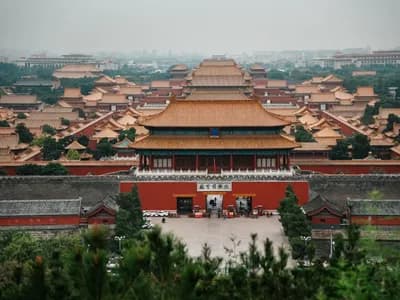
The Ming Dynasty (1368–1644 CE) left an indelible architectural legacy by constructing the final Great Wall and the Forbidden City, as well as launching Admiral Zheng He's treasure fleet across the Indian Ocean. This era saw a population surge to over 150 million by 1600, driven by agricultural innovations like sweet potatoes. However, its cultural conservatism and isolationist policies contrast sharply with the outward expansion of Qing Dynasty, which later incorporated Tibet and Xinjiang.
- 0
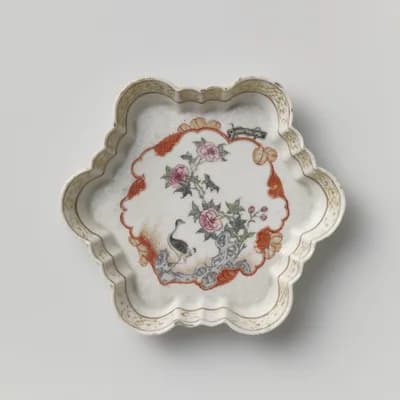
Despite this growth, the Opium Wars (1839–1842 and 1856–1860) forced open markets and ceded Hong Kong, highlighting a decline in military competitiveness. Its Manchurian rulers integrated diverse ethnic groups, but internal rebellions like the Taiping Rebellion (1850–1864) claimed 20–30 million lives.
- 0

The Zhou Dynasty (1046–256 BCE) stands as the longest-lasting dynasty in Chinese history, spanning nearly 800 years, and produced foundational thinkers like Confucius and Laozi during the Hundred Schools of Thought period. This era saw the development of iron tools, boosting agricultural output by an estimated 30% over Bronze Age norms.
- 0
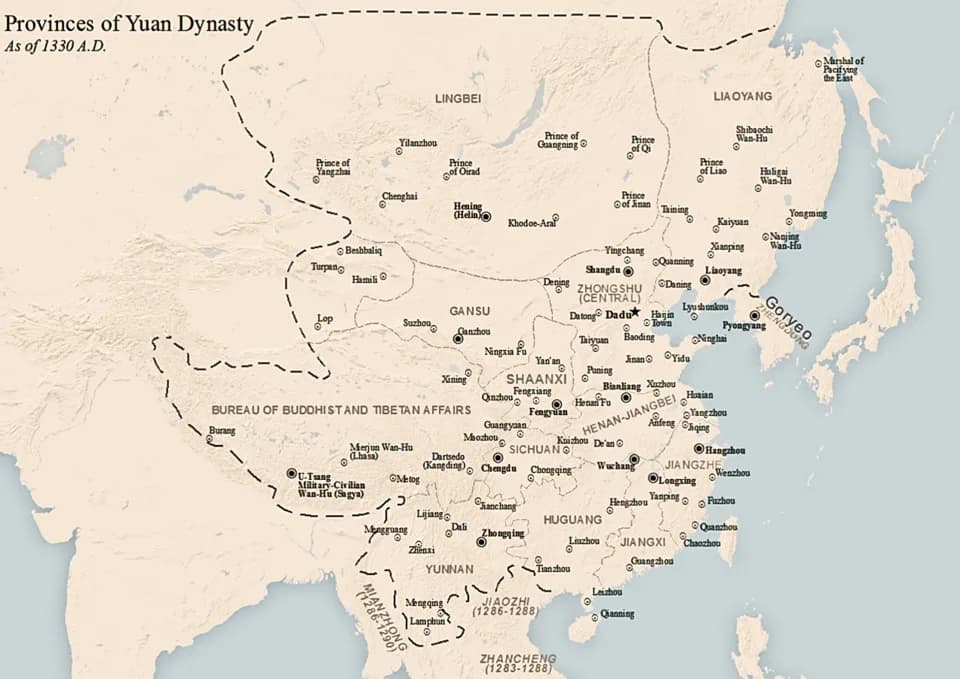
The Yuan Dynasty (1271–1368 CE) under Kublai Khan connected China to the largest trade network of the medieval era, linking Persia to Eastern Europe via the Silk Road, with Marco Polo's travels documented around 1275. Its introduction of paper money as legal tender increased commercial efficiency—a 20% rise in trade volume—but inflation undermined stability.
- 0
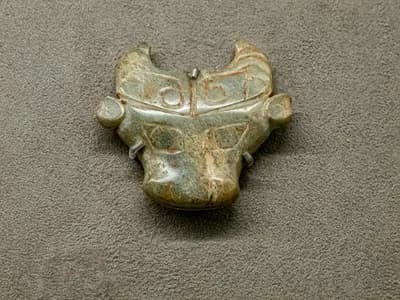
The Shang Dynasty (1600–1046 BCE) stands as China's first historically verified dynasty, anchored by over 150,000 oracle bone inscriptions that provide the earliest evidence of Chinese writing. Its craftsmen cast the most sophisticated bronze vessels of the era, such as the 833-kilogram Simuwu Ding.
- 0

The Sui Dynasty (581–618 CE) unified a fractured China after centuries of division, completing the 1,776-kilometer Grand Canal and reconstructing over 3,000 kilometers of the Great Wall—a scale unmatched by any contemporary rival. Despite lasting only 37 years, its efficiency in infrastructure outpaced the dynasty's short-lived tenure; the centralized bureaucracy it created directly enabled the Tang's golden age.
Frequently Asked Questions About China's Dynasties
## Frequently Asked Questions About China's Dynasties
How many dynasties did China have in total? Historians typically recognise over a dozen major dynasties, plus numerous shorter kingdoms and periods of division such as the Three Kingdoms, the Northern and Southern Dynasties, and the Five Dynasties and Ten Kingdoms.
What came before the Xia dynasty? Chinese tradition speaks of the Three Sovereigns and Five Emperors, semi-legendary figures whose reigns are treated as mythic rather than historical.
Why is the Han dynasty so important? The Han established the bureaucratic, Confucian state structure, the Silk Road, and the ethnic identity (Han Chinese) that continues to define the country today.
Which dynasty was the richest? The Song dynasty is generally regarded as the most economically advanced, with early paper currency, a booming maritime trade, and a population that may have reached 100 million.
Which dynasty unified China first? The Qin dynasty under Qin Shi Huang in 221 BCE was the first to unite the warring states into a single empire.
How long did imperial China last? From the Qin unification in 221 BCE to the abdication of the last Qing emperor in 1912, imperial China lasted roughly 2,133 years.
Image credits
- Qin Dynasty (221–206 BCE): Jan Dvorak / Pexels
- Ming Dynasty (1368–1644 CE): Da Na / Pexels
- Qing Dynasty (1644–1912 CE): Rijksmuseum / Wikimedia Commons (CC0)
- Zhou Dynasty (1046–256 BCE): Zhou dynasty / Wikipedia
- Yuan Dynasty (1271–1368 CE): SY / CC BY-SA 4.0 (entity-adopted)
- Shang Dynasty (1600–1046 BCE): Mary Harrsch / Wikimedia Commons (CC BY-SA 4.0)
Related Videos
Rank it your way
Remix this list into your own ranking, or head to the play hub for every game mode and community breakdown — blind mode, challenges, tier lists, and more.
You Might Also Like

Top 10 Spanish Art Masterpieces
Top 10 Spanish Art Masterpieces

The Most Spoken Languages on Earth
The Most Spoken Languages on Earth

Top 10 Historical Sites in Turkey
Top 10 Historical Sites in Turkey

Top 10 Greatest Architects of All Time
#1 Frank Lloyd Wright · #2 Antoni Gaudi · #3 Le Corbusier

Top 10 Study Techniques Backed by Cognitive Science
#1 Spaced Repetition · #2 Active Recall · #3 Feynman Technique

Top 10 Best Community Colleges in America (2026 Rankings): Transfer, Cost & Career Outcomes
#1 Santa Monica College (California) · #2 De Anza College (California) · #3 Valencia College (Florida)