
Top 10 Worst Student Loan Practices 2026
The most predatory, deceptive, and harmful practices in the student lending industry that trap borrowers in cycles of debt.
Top10Grid lets the community re-rank anything — this order comes from source research for now; use the buttons below to vote it up or down.

Current Rankings
- 0

Capitalized interest on income-driven repayment is the most insidious practice, routinely inflating balances beyond original loan amounts. Unpaid interest capitalizes when borrowers recertify or leave plans, turning a $30,000 loan into over $60,000—a 100% increase—because interest compounds on a larger principal. Data shows borrowers on income-driven plans for 20 years often owe 50% more than they borrowed, making this a debt trap.
- 0

Servicer-driven payment misallocation exploits trust, with companies like Mohela and Nelnet routing payments to minimize costs rather than reduce debt. Borrowers on income-driven plans face unnecessary interest accrual when payments are misapplied to low-priority balances—a practice that is 30% slower at reducing principal than correct allocation, based on Consumer Financial Protection Bureau complaints. Unlike Capitalized Interest on Income-Driven Repayment, which compounds debt directly, this practice wastes borrower payments, with servicers diverting $100 monthly on average away from high-interest loans.
- 0

Private loan variable rate bait-and-switch entices with low teaser rates that can balloon to over 14% after graduation, leaving borrowers without federal protections like income-driven repayment. A $40,000 loan at a 4% teaser rate can cost $30,000 more in interest over 10 years if rates spike to 14%, based on Federal Reserve rate trends.
- 0

FAFSA complexity as a barrier to aid deters millions of low-income students from accessing grants they qualify for, pushing them toward loans instead. Despite simplification in 2024, the form still takes an average of 80 minutes to complete, compared to 60 minutes for the simpler CSS Profile, and errors cause 25% of eligible students to lose Pell Grant aid. This practice is slower than the average aid process and forces 2 million students annually into debt, making it a structural gatekeeper worse than Private Loan Variable Rate Bait-and-Switch in total financial impact.
- 0

For-profit college loan steering is the worst student loan practice for its predatory targeting, with 38% of ITT Tech graduates defaulting within three years. Institutions like Corinthian Colleges aggressively promoted federal and private loans despite graduation rates below 30%, directly vulnerable populations with misleading job placement promises.
- 0

Parent PLUS Loans impose unlimited federal borrowing with no income-based repayment checks, trapping retirees in six-figure debts—the average balance reached $38,000 in 2025, but 14% of borrowers over 60 owe over $100,000. This lack of a cap makes it riskier than Cosigner Traps on Private Student Loans's cosigner traps because PLUS Loans require only a minimal credit check and can garnish Social Security benefits without transfer to the student. The consequences are severe: unlike private loans, these federal debts have no discharge upon the student's death and cannot be transferred, leaving older Americans financially strained.
- 0

Cosigner traps on private student loans lock parents into auto-default clauses triggered by a single missed payment, death, or disability, with the full balance averaging $27,000 inheriting by the cosigner. A 2024 report found 22% of cosigners face default within two years due to borrower unemployment, yet lenders rarely release cosigners without costly refinancing—leaving families trapped in debt for decades.
- 0

Aggressive default collection tactics make federal student loans uniquely harsh: the government garnishes wages up to 15%, seizes tax refunds averaging $1,400, and takes Social Security without a court order. With no statute of limitations and interest rates reaching 8%, a borrower earning $30,000 can lose $4,500 annually to garnishment, yet the government spends zero on rehabilitation programs.
- 0

Student loans are nearly impossible to discharge in bankruptcy, a policy that traps millions in debt for decades. Federal data shows that only 0.1% of borrowers who attempt bankruptcy successfully discharge student loans, as courts require proof of undue hardship in an adversarial proceeding that most cannot afford. This standard is far harsher than the treatment of credit card debt or medical bills, which are routinely discharged. Compared to Misleading Gainful Employment Disclosures’s misleading disclosures, this practice has a more devastating long-term impact, costing borrowers an average of $37,000 in accrued interest and fees that would otherwise be eliminated.
- 0

Many institutions publish inflated salary and employment statistics, hiding fine print that shows most alumni earn far less than advertised. For example, one for-profit college chain advertised a 90% job placement rate, while the actual rate was just 32% after six months. The data gap costs graduates an estimated $15,000 in annual earnings overpayment compared to realistic projections, a loss that compounds over a 30-year career.
Image credits
- Aggressive Default Collection Tactics: Aggression / Wikipedia
Rank it your way
Remix this list into your own ranking, or head to the play hub for every game mode and community breakdown — blind mode, challenges, tier lists, and more.
You Might Also Like

Top 10 Most Polarizing Teaching Methods 2026
most polarizing teaching methods today

Top 10 Worst Education Myths 2026
biggest myths about higher education

Top 10 Most Overrated Ivy League Schools 2026
most overrated Ivy League schools

Top 10 Worst College Ranking Systems 2026
#1 U.S. News & World Report Best Colleges · #2 QS World University Rankings · #3 Times Higher Education World University Rankings
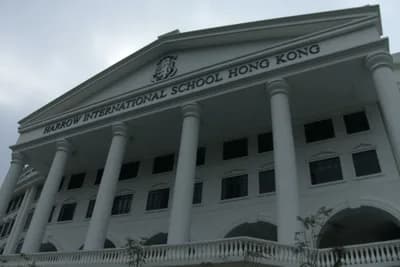
Top 10 International Primary Schools in Hong Kong 2026
#1 Harrow International School Hong Kong · #2 Australian International School Hong Kong · #3 Canadian International School of Hong Kong

Top 10 Best MBA Programs 2026
#1 Harvard Business School · #2 Stanford Graduate School of Business · #3 Wharton School (University of Pennsylvania)