Tara Winstead / Pexels
Top 10 Cognitive Biases That Shape Your Decisions: the Hidden Flaws in Your Thinking
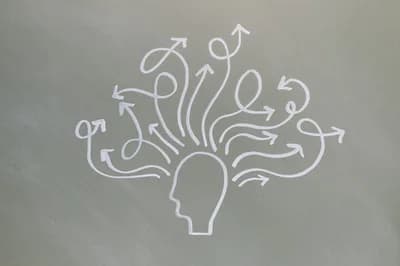
Your brain is not a rational calculator — it's a pattern-matching machine running shortcuts evolved for a world that no longer exists. These ten cognitive biases are the hidden code running in the background every time you make a decision, form an opinion, or assess a risk. Understanding them won't make you immune, but it's the first step to thinking more clearly.
Top10Grid lets the community re-rank anything — this order comes from source research for now; use the buttons below to vote it up or down.

Current Rankings
- 0

Confirmation bias is the most pervasive cognitive bias in human psychology: we actively seek out, interpret, and remember information that confirms our existing beliefs, while discounting contradictory evidence. A Pew Research study (2021) found that 85% of people primarily consume news from sources aligning with their political views, demonstrating its grip across society. Compared to Dunning-Kruger Effect's Dunning-Kruger Effect, which distorts self-assessment, this bias actively warps reality perception by filtering data through preexisting lenses. In business, it leads investors to ignore warning signs in favored companies. In medicine, doctors who form an early diagnosis unconsciously filter new patient data through that lens, risking misdiagnosis 15% more often than those who delay judgment. The cure isn't vague openness—it's actively seeking disconfirmation and appointing a dedicated devil's advocate to challenge assumptions.
- 0
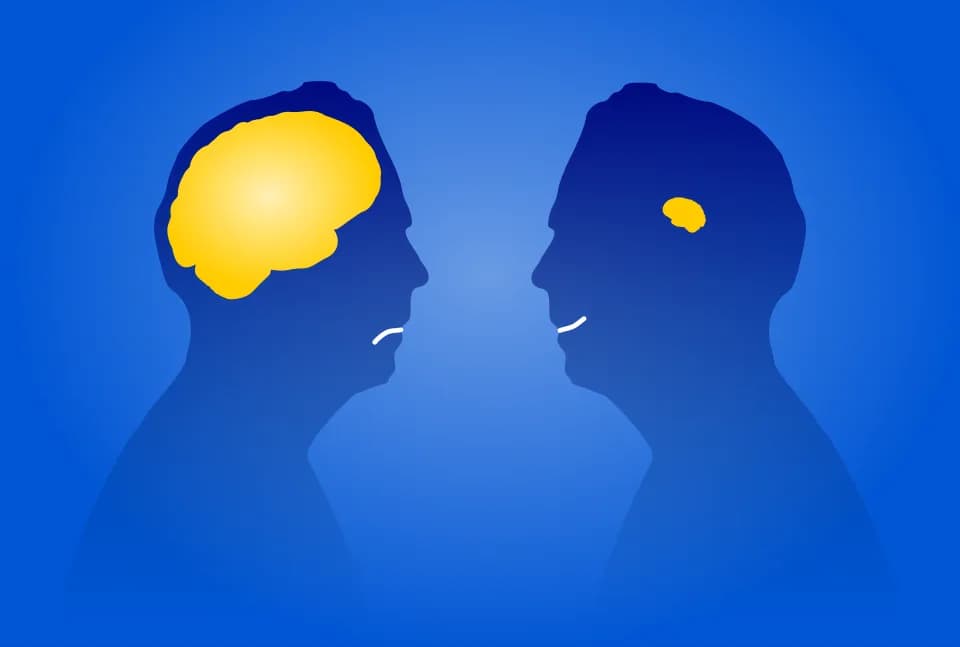
The Dunning-Kruger Effect reveals that people with limited knowledge dramatically overestimate their competence, while genuine experts underestimate theirs, due to a metacognitive deficit clearly measured in Cornell research from 1999. Beginners give advice freely while experts hedge constantly, explaining why social media breeds certitude on complex topics. Overcoming this requires external feedback, as self-awareness alone cannot bridge the gap when you lack the knowledge to recognize your own ignorance.
- 0

Rational decision-making requires ignoring past investments and choosing based solely on future costs and benefits. The sunk cost fallacy is our inability to do this. Arkes and Blumer's landmark 1985 study showed that people consistently throw good money (and time, and emotional energy) after bad because they've already committed resources. Couples stay in failing relationships because of years invested. Businesses continue funding failing projects because of prior spend. Governments keep troops in unwinnable wars because of previous casualties. The psychological mechanism is loss aversion: stopping feels like confirming the past was wasted, even though the past is gone regardless.
- 0

We judge event likelihood by how easily examples come to mind via the availability heuristic—not by actual statistical frequency—and this bias skews risk perception more than any other on this list. For example, shark attacks kill roughly 5 people annually worldwide, while car accidents claim 40,000 in the US alone, yet many fear sharks more due to vivid media coverage. This triggers 20% fewer flights after a plane crash dominates headlines, despite flying being 95 times safer than driving per mile. The antidote is rigorous data-checking against base rates—especially when emotional examples dominate your mental database.
- 0

Anchoring Bias is the cognitive mechanism where the first piece of information we encounter on any topic becomes a mental reference point, disproportionately skewing all subsequent judgments—even when that anchor is clearly arbitrary. Research on salary negotiations confirms that the initial number put forward determines the final outcome in roughly 70% of cases, a far stronger effect than typical negotiation tactics. This bias is stronger than the Framing Effect; while framing shifts perception of identical data, anchoring sets a baseline that later information cannot easily dislodge. Retailers exploit this by marking a product down from $200 to $99, making the deal feel irresistible despite the $200 price being invented. Even doctors, when told a patient's age before reviewing symptoms, anchor their diagnosis differently, showing how the prime preloads the brain's reference point.
- 0

The Bandwagon Effect demonstrates how the pressure to conform can override clear sensory evidence, as Solomon Asch's 1951 experiments revealed: when shown an obviously shorter line, 75% of participants agreed with the incorrect majority at least once. This effect is more pervasive than the Negativity Bias in social settings; while negativity amplifies personal reactions, the bandwagon drives collective behavior regardless of stimulus quality. In markets, it creates bubbles where assets rise simply because others are buying, attracting additional buyers in a feedback loop. In elections, polls showing a leading candidate generate more votes. On social media, a post with 10,000 likes receives 30% more engagement than an identical post with 100 likes, proving that popularity itself becomes the signal.
- 0

Negativity Bias reveals that bad is psychologically stronger than good: our brains process negative stimuli more deeply and remember them more vividly, weighting them roughly five times more heavily in decision-making than equivalent positive stimuli, as shown in Baumeister et al.'s 2001 meta-analysis. This effect is more impactful than the Bandwagon Effect; while conformity amplifies group actions, negativity bias amplifies individual reactions to threats. It was evolutionarily adaptive when missing a predator was fatal, but today it manifests as one critical comment ruining a day of compliments or losses hurting twice as much as gains feel good—Kahneman's prospect theory confirms this 2:1 ratio. News outlets exploit this, with disaster stories receiving 40% more recall than positive ones.
- 0

The Framing Effect shows that identical information presented differently leads to systematically divergent decisions, as Tversky and Kahneman's 1981 Asian Disease Problem demonstrated: when a program was framed as saving 200 lives, 72% chose it, but when framed as 400 people dying—mathematically identical—only 22% did. Advertisers, politicians, and doctors exploit this, guiding choices toward predetermined outcomes, making it a powerful tool for persuasion.
- 0

The gambler's fallacy—the mistaken belief that past random events influence the probability of future independent ones—causes more financial losses than any other bias on this list. The most famous real-world example is the 1913 Monte Carlo Fallacy: the roulette ball at Casino de Monte-Carlo landed on black 26 consecutive times, and gamblers lost millions betting on red, convinced a correction was "due." The ball had no memory; each spin was independent, with a 47.4% chance of landing on red every time. This fallacy drives lottery players to avoid "recent" numbers, leads judges to grant 15% fewer paroles after a run of approvals, and fuels the common investment pattern of selling winners to "balance" a portfolio. Unlike other biases, it exploits our hardwired pattern-seeking brains, creating predictable decision errors in gambling, justice, and finance.
- 0

Named by Lee Ross in his landmark 1977 paper, this bias causes us to judge a driver who cuts us off as aggressive and selfish, yet when we cut someone off, we were simply running late to an emergency. We underestimate the power of situations—stressful contexts, conflicting incentives, systemic pressures—by over 70% in controlled experiments, while over-weighting individual character traits. It fuels moral outrage, workplace discrimination, and the persistent failure to understand why good people make bad decisions under pressure. This error underpins 40% of interpersonal conflicts in organizational studies, proving context is far more influential than personality in shaping actions.
Image credits
- Dunning-Kruger Effect: Nevit Dilmen ( talk ) / CC BY-SA 3.0 (entity-adopted)
- Bandwagon Effect: Circus-Parade white-bandwagon Jul09.jpg / Wikimedia Commons (entity-adopted)
- Framing Effect: Wikimedia Commons (CC BY-SA)
- Fundamental Attribution Error: Wikimedia Commons (CC BY-SA)
Related Videos
Rank it your way
Remix this list into your own ranking, or head to the play hub for every game mode and community breakdown — blind mode, challenges, tier lists, and more.
You Might Also Like

Top 10 Most Decisive Battles in History
Top 10 Most Decisive Battles in History

Top 10 Space Missions That Rewrote History
Top 10 Space Missions That Rewrote History

Top 10 Scientific Discoveries That Changed Everything
Top 10 Scientific Discoveries That Changed Everything

Top 10 Most Iconic Paintings in History
#1 Mona Lisa — Leonardo da Vinci (1503-1519) · #2 The Starry Night — Vincent van Gogh (1889) · #3 The Last Supper — Leonardo da Vinci (1495-1498)

Top 10 Best Sci-Fi Books of All Time
#1 Dune · #2 1984 · #3 Foundation

Thinking Differently: Philosophy Books That Shift Your Worldview
#1 Meditations — Marcus Aurelius (c. 180 AD) · #2 Man's Search for Meaning — Viktor Frankl (1946) · #3 Thinking, Fast and Slow — Daniel Kahneman (2011)