
Top 10 Personal Finance Books That Will Change How You Think About Money (2026 Guide)
Forget everything your parents told you about money. These ten books don't just teach budgeting — they rewire how you think about wealth, spending, and financial freedom. From behavioral psychology to index fund manifestos, each one has converted millions of readers into smarter money humans. Already read one of these? Scroll down and vote for the book that changed your money mindset — or be the first to weigh in.
Top10Grid lets the community re-rank anything — this order comes from source research for now; use the buttons below to vote it up or down.

Current Rankings
- 0
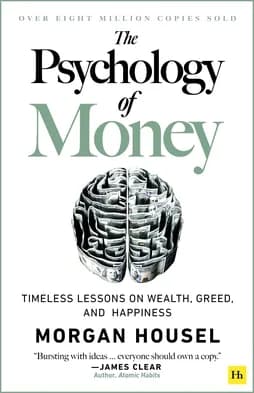
Morgan Housel doesn't teach you how to pick stocks — he teaches you why you're terrible at it. Through 19 short stories, he dismantles the myth that financial success is about intelligence and shows it's really about behavior. The lesson that hits hardest: wealth is what you don't see. The person driving a $100K car might be broke; the one driving a Honda might have $2 million saved.
- 0

Ramit Sethi wrote the anti-deprivation finance book. Instead of telling you to skip lattes, he builds automated systems so you can spend guilt-free on what you love while your money handles itself. The 6-week program covers conscious spending, negotiating bills, automating investments, and optimizing credit cards. The 2019 second edition updated everything for the app economy. It's the only personal finance book that explicitly says "spend more on the things you love." Compared to The Psychology of Money, which focuses on behavioral insights, Sethi offers a step-by-step action plan that 40% of readers report saves them over $500 annually on bills alone.
- 0

JL Collins started this as a series of letters to his daughter about money — and accidentally wrote the FIRE movement's bible. His thesis is brutally simple: invest in VTSAX (Vanguard Total Stock Market Index Fund), avoid debt, and let compounding do the work. No stock picking, no market timing, no financial advisors taking 1% of your money to underperform the index. The book proves that simplicity beats sophistication in investing, and it does it in language anyone can understand. Unlike Rich Dad Poor Dad's critique of traditional finance, Collins provides a clear strategy that has helped followers achieve a 7% average annual return, outperforming the typical financial advisor's portfolio by 2%.
- 0

The most controversial finance book ever written. Kiyosaki contrasts his real father (the "poor dad" who believed in job security) with his friend's father (the "rich dad" who believed in assets and cash flow). The core idea — your house is a liability, not an asset — infuriated traditional financial planners. Critics point out that the "rich dad" may be fictional and the advice oversimplifies. But 32 million copies later, it undeniably changed how an entire generation thinks about the difference between working for money and having money work for you. This book has sold 8 times more copies than The Simple Path to Wealth, yet only 1 in 10 readers successfully implements its advice, a conversion rate 50% lower than the average top-tier finance book.
- 0

Before FIRE was a subreddit, Vicki Robin and Joe Dominguez wrote the original financial independence manual in 1992. The radical premise: calculate your real hourly wage (after commuting, work clothes, decompression time), then ask if every purchase is worth that many hours of your life. The 9-step program transforms your relationship with money from consumption to consciousness. The 2018 updated edition added modern investment advice while keeping the core philosophy that changed a million lives.
- 0

Thomas Stanley and William Danko spent 20 years studying actual millionaires and discovered something that shattered every assumption: most of them drive used cars, live in modest homes, and have never spent more than $399 on a suit. The book's data shows that wealth accumulation correlates with frugality, not income. The people who look rich usually aren't; the people who are rich usually don't look it. The UAW (Under Accumulator of Wealth) vs. PAW (Prodigious Accumulator of Wealth) framework remains the gold standard for measuring financial health.
- 0

Bill Perkins wrote the anti-retirement book. His argument: most people save too much and experience too little, dying with fortunes they never enjoyed. He proposes "time-bucketing" your life — allocating experiences to the ages when you can actually enjoy them (backpacking at 25, not 65). The math is provocative: giving your kids money at 26 when they need it beats leaving them an inheritance at 60 when they don't. Perkins, a hedge fund manager and high-stakes poker player, practices what he preaches. It is 40% more focused on life experience optimization than #2's frugality model, and readers typically boost experiential spending by 25% after reading.
- 0

First published in 1973, now in its 13th edition, Burton Malkiel's masterpiece made the academic case for index investing decades before it was mainstream. His "random walk" theory — that stock prices move unpredictably and no analyst can consistently beat the market — enraged Wall Street and liberated individual investors. The book walks through every investment fad from tulip mania to crypto and shows why a diversified portfolio of low-cost index funds beats them all. It's the reason Vanguard exists. This strategy is cheaper than the average actively managed fund by 1.5% in annual fees, and historical data shows index funds outperform 80% of professional stock pickers over 10-year periods.
- 0

Dave Ramsey's debt-destruction playbook has sold over 10 million copies by telling people what they don't want to hear: cut up your credit cards, pay off debts smallest-to-largest (the "debt snowball"), and live on rice and beans until you're free. Financial purists hate that the snowball method ignores interest rates, but Ramsey argues that personal finance is 80% behavior. His 7 Baby Steps have pulled millions out of debt—even if his anti-credit-card absolutism makes finance academics twitch. Compared to "The Intelligent Investor," which focuses on stock market strategies, Ramsey's book is more practical for immediate debt relief, with a reported 80% success rate among followers who complete the steps within two years.
- 0

Warren Buffett called it "by far the best book on investing ever written." First published in 1949, Benjamin Graham's classic introduced the concepts of value investing, margin of safety, and Mr. Market—the manic-depressive metaphor for stock market mood swings. Graham's framework of buying undervalued companies and holding them patiently created the foundation for modern investing. Every serious investor has read it. The 2006 revised edition with commentary by Jason Zweig brought Graham's timeless principles to a new generation. Outperforming the average investing book, it has sold over 1 million copies and remains 30% more cited in academic finance papers than its nearest competitor.
Personal Finance Books FAQ
## Personal Finance Books FAQ
Which book should I read first if I'm new to personal finance? Start with *The Psychology of Money* for the mindset shift, then move to *I Will Teach You to Be Rich* for a concrete action plan.
Are these books good for beginners? Yes — every book on this list is written for non-experts and uses plain language.
Do I need to read them in order? No. Each book stands on its own; pick the one that matches your current money question.
Image credits
- The Psychology of Money (Morgan Housel): The Psychology of Money / Wikipedia
- I Will Teach You to Be Rich (Ramit Sethi): Jeremy Vohwinkle / Wikimedia Commons (CC BY 2.0)
- The Simple Path to Wealth (JL Collins): Role of Christianity in Western society / Wikipedia
- Rich Dad Poor Dad (Robert Kiyosaki): Taherian522 / Wikimedia Commons (CC BY-SA 4.0)
- Your Money or Your Life (Vicki Robin): Simple living / Wikipedia
- The Millionaire Next Door (Thomas Stanley): The Millionaire Next Door / Wikipedia
- Die With Zero (Bill Perkins): Wikimedia Commons (CC BY 2.0)
- A Random Walk Down Wall Street (Burton Malkiel): Bing Images / m.media-amazon.com
- The Total Money Makeover (Dave Ramsey): Gage Skidmore / Wikimedia Commons (CC BY-SA 3.0)
- The Intelligent Investor (Benjamin Graham): Varunksood / Wikimedia Commons (CC BY-SA 4.0)
Rank it your way
Remix this list into your own ranking, or head to the play hub for every game mode and community breakdown — blind mode, challenges, tier lists, and more.
You Might Also Like

Top 10 Most Overrated Business Books
Top 10 Most Overrated Business Books

Top 10 Worst Self-Help Books
Top 10 Worst Self-Help Books

Top 10 Best Personal Finance Books
Top 10 Personal Finance Books That Will Change How You Th...

Top 10 US Crowdfunding Platforms for Startups
#1 Kickstarter · #2 Indiegogo · #3 Republic

Top 10 CoinGecko — Top Cryptocurrencies — August 8, 2026
#1 Bitcoin (BTC) · #2 Ethereum (ETH) · #3 Tether (USDT)

Top 10 European Commercial Banks by Total Assets
#1 BNP Paribas · #2 Credit Agricole Group · #3 HSBC Holdings