Qin Dynasty (221–206 BCE)
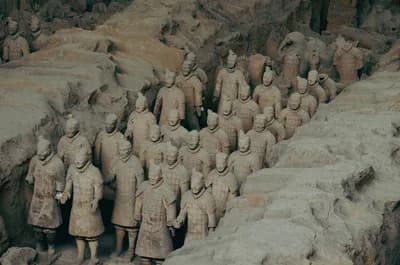
The Qin Dynasty (221–206 BCE), though brief at just 15 years, achieved the momentous feat of unifying China for the first time in 221 BCE. Under its first Emperor, Qin Shi Huang, the dynasty standardized script, weights, and laws across an expansive territory of 1.2 million square miles. Qin Shi Huang initiated the connection of earlier fortifications, laying the groundwork for what would become the initial Great Wall, a monumental project that reputedly employed 300,000 laborers. His tomb is famously guarded by approximately 8,000 life-sized Terracotta Warriors. The Qin Dynasty also implemented legalist reforms that abolished feudalism and standardized practical elements such as axle widths and coinage, creating a more cohesive and centrally governed state.
Photos (1)
Comments on "Qin Dynasty (221–206 BCE)"
Have a take on this ranking?
Save your rankings and see how you compare. Comments are how the argument actually happens here. Posting one needs a free account — it takes about a minute.
No comments yet.
The first comment sets the terms of the argument.