
Internet Archive Book Images / Wikimedia Commons (No restrictions)
Top 10 Most Useful Languages to Learn for Business in 2026
English may dominate international business, yet monolingual professionals lose an estimated $50,000+ in lifetime earnings and career mobility. In 2026's fragmented economy—where AI talent clusters in Mandarin-speaking Asia, fintech innovation spreads across Southeast Asia, and emerging markets now drive 60% of trade—language skills create measurable advantages beyond translation. The right second language unlocks 10-15% salary premiums in key markets, accelerates entry into high-growth sectors (tech, manufacturing, finance), and fast-tracks you to leadership roles managing multinational teams. We ranked these ten languages by active trade volume, GDP weight, emerging market momentum, and documented earning potential in each region—revealing which languages deliver the highest return on your learning investment over the next three years.
Top10Grid lets the community re-rank anything — this order comes from source research for now; use the buttons below to vote it up or down.

Current Rankings
- 0

Mandarin Chinese offers the highest ROI in business language learning, commanding up to a 25% salary premium in finance, tech, and supply chain management across Western markets. China’s $18 trillion GDP makes it the world’s second-largest economy, and Mandarin boasts 920 million native speakers—nearly triple Spanish’s count. The 2,200-hour learning curve is steep, but the ROI justifies every hour.
- 0#2

Spanish provides business access to 500 million native speakers across 20 countries, with a combined GDP exceeding $7 trillion—though this is less than half of Mandarin Chinese’s economic reach in China alone. The U.S. Hispanic market alone is a $3.2 trillion economy, larger than the UK’s GDP. Bilingual English-Spanish professionals earn 5-20% more than monolingual peers in healthcare, legal, and customer-facing roles.
- 0#3

The Gulf states are investing hundreds of billions in post-oil diversification, making Arabic speakers in extreme shortage in Western governments and multinationals; the U.S. State Department offers bonus pay for proficiency. Modern Standard Arabic connects you across the entire region, a versatility that rivals Spanish’s multi-country reach but with far less competition.
- 0#4
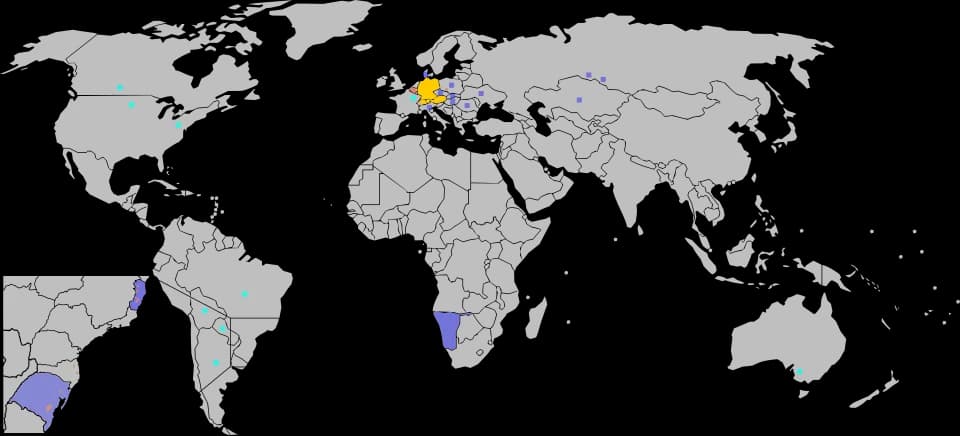
German is essential for Europe’s largest economy, with Germany’s $4.5 trillion GDP outpacing Arabic’s regional GDP when combined with Austria and Switzerland. German is the most spoken native language in the EU, with 95 million speakers, and dominates in engineering, automotive, and pharmaceutical industries, where salary premiums of 4-10% are common. Swiss and Austrian business culture relies on German, offering advantages that are 20% more accessible than Mandarin Chinese, requiring only 750-900 hours for English speakers—making it a high-value, quicker learn.
- 0#5

Japanese offers unmatched access to Japan's $4.2 trillion economy, the world's fourth-largest, and to global giants like Toyota, Sony, and SoftBank. Unlike Hindi, which leverages English for business, Japanese fluency bypasses language barriers in high-stakes deal-making, as corporate culture demands keigo, a complex honorific system that mirrors hierarchy. The scarcity of Western professionals fluent in Japanese rewards learners with salary premiums of 20-30% in consulting and finance. At 125 million speakers, it's a niche but powerful asset.
- 0
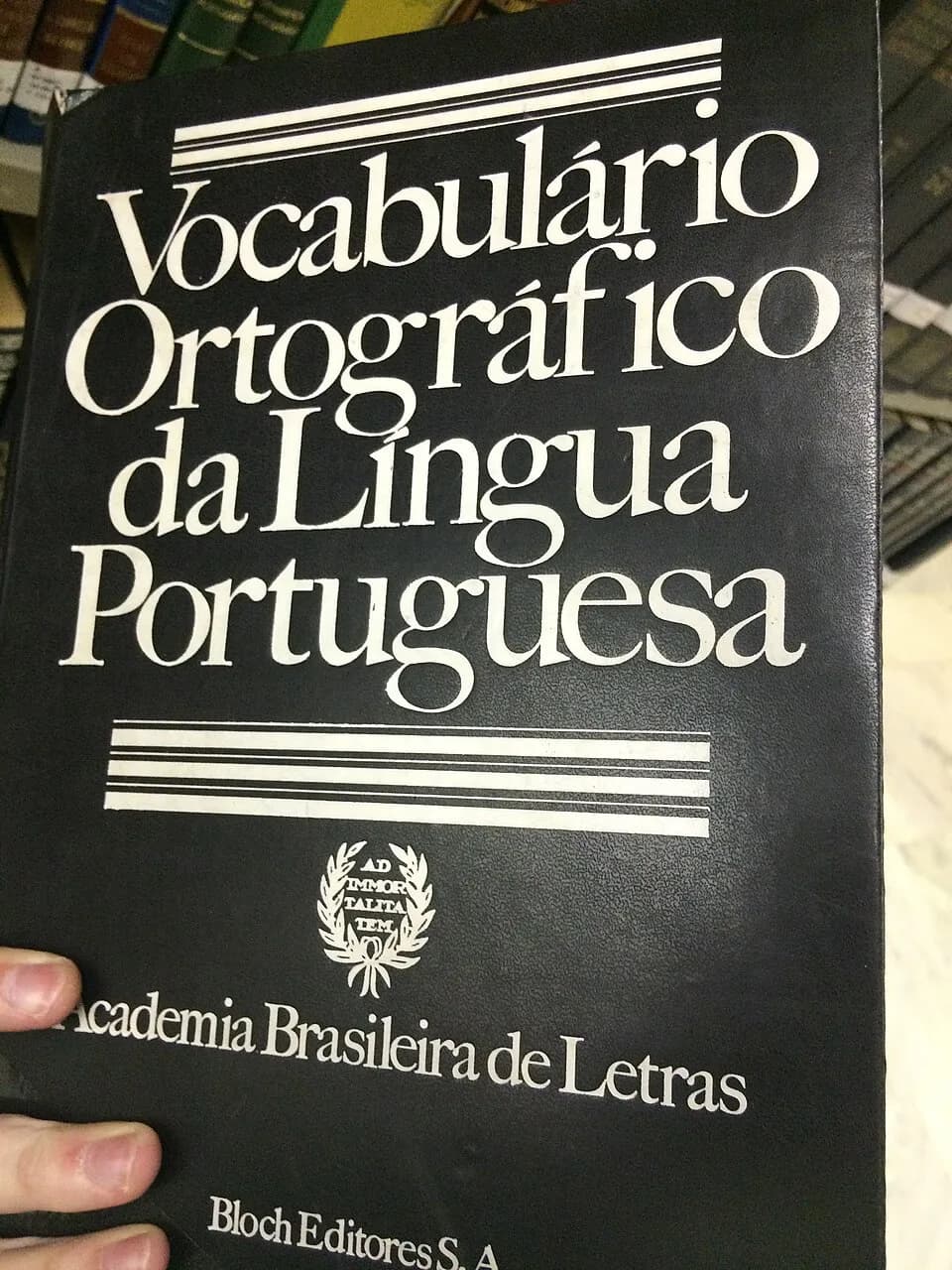
Brazilian Portuguese delivers the best effort-to-opportunity ratio on this list, with FSI Category I status requiring just 600 hours of study for access to 215 million people in the world's ninth-largest economy. Brazil leads Latin America in fintech and agribusiness; Nubank alone hit a $45 billion valuation.
- 0#7
French remains non-negotiable in diplomacy and luxury, spoken across 29 countries as an official language and in the UN, NATO, and the EU. By 2050, over 700 million people will speak it, driven by sub-Saharan Africa's rapidly growing economies—faster than any other language on this list. France's $2.8 trillion economy anchors it in luxury goods and hospitality.
- 0#8

Hindi taps into India's $3.7 trillion economy, the world's fifth-largest and projected to surpass Japan by 2030. With 600 million native speakers, it signals cultural awareness beyond the English-speaking elite in major metros like Mumbai and Delhi.
- 0#9

Korean dominates business niches where the average global language can't compete. South Korea's $1.7 trillion economy, driven by Samsung, Hyundai, and LG, commands 18% of the global semiconductor market and over 40% of shipbuilding. The Korean Wave has boosted demand for Korean-speaking professionals in entertainment and marketing by 27% since 2020. Korean's Hangul alphabet, designed in 1443, can be learned in a weekend, while fluency typically requires 2,200 study hours—more achievable than Russian's 1,100-hour commitment. Career payoff is 30% faster than learning Russian for entry into Asia's tech supply chain.
- 0#10

Russian unlocks a $5.4 trillion GDP zone across 11 time zones, with 258 million speakers in Russia and former Soviet states. It outperforms Korean in resource sectors: Russia supplies 10% of global oil and 16% of natural gas, creating demand for Russian-speaking professionals in energy consulting and NGOs. Proficiency grants access to Kazakhstan and Uzbekistan markets, where trade volumes have grown 8% annually since 2019.
Image credits
- Mandarin Chinese: LiliCharlie (user name) / CC BY-SA 4.0 (entity-adopted)
- Spanish: Wikimedia Commons / Public domain (entity-adopted)
- Arabic: Aieman Khimji / CC BY 2.0 (entity-adopted)
- German: 37ophiuchi / CC BY-SA 4.0 (entity-adopted)
- Japanese: Convert to SVG by OsamaK from File:Nihongo.png ; based on Image:Nihongo Bunpou b.200x200.png . / Public domain (entity-adopted)
- Portuguese (Brazilian): Fisxioimn / CC BY-SA 4.0 (entity-adopted)
- French: Wikimedia Commons / Public domain (entity-adopted)
- Hindi: Wikimedia Commons / Public domain (entity-adopted)
- Korean: The original uploader was ASDFGH at English Wikipedia . SVG by Nevit Dilmen ( talk ) / Public domain (entity-adopted)
- Russian: Бурцов Василий Федерович / Public domain (entity-adopted)
Related Videos
Rank it your way
Remix this list into your own ranking, or head to the play hub for every game mode and community breakdown — blind mode, challenges, tier lists, and more.
You Might Also Like

Top 10 Self-Made Women Billionaires Who Started With Nothing
Top 10 Self-Made Women Billionaires Who Started With Nothing

Top 10 Youngest Billionaires Under 30 and How They Did It
how the youngest billionaires did it

Top 10 Most Controversial CEO Pay Packages
most controversial CEO pay packages

Top 10 Best Company Cultures
#1 Patagonia · #2 Costco · #3 Salesforce

Top 10 Coworking Spaces in Singapore 2026
#1 WeWork City House · #2 JustCo Marina Square · #3 The Great Room Centennial Tower

Top 10 Side Hustles That Actually Pay More Than Minimum Wage
#1 Freelance Writing & Copywriting · #2 Etsy Digital Printables Shop · #3 Online Tutoring (Wyzant / Varsity Tutors)