
New York Stock Exchange / Wikipedia
Top 10 Most Valuable Companies in the World 2026
The biggest companies on Earth by market capitalisation in early 2026, a list increasingly dominated by American technology giants and the AI revolution they are powering. Together these ten firms are worth more than the entire GDP of every country except the United States.
Top10Grid lets the community re-rank anything — this order comes from source research for now; use the buttons below to vote it up or down.

Current Rankings
- 0#1

Apple remains one of the world's most valuable companies, worth around $4.9 trillion, and the reason isn't the iPhone alone anymore -- it's the ecosystem built on top of it. Services (the App Store, Apple TV+, Apple Music, iCloud) now bring in more than $100 billion a year at gross margins north of 70%, turning a hardware company into something closer to a subscription business with a very good phone attached. That shift, more than any single product launch, is what's kept Apple near the top of this list.
- 0#2

Nvidia's rise to a roughly $5.4 trillion valuation — the first company ever to cross the $5 trillion mark — is the AI boom made literal: its chips are the thing every major AI lab actually trains on. The H100 and newer Blackwell GPUs power OpenAI, Google DeepMind, Meta AI, and nearly every serious large-model effort on the planet, and data center revenue alone crossed $100 billion on an annualized basis in late 2025 -- a business that barely existed four years earlier. No other company's fortunes are this tightly wound around a single technology wave, for better or worse.
- 0

Microsoft's roughly $3.7 trillion valuation rests on three legs: Azure's enterprise cloud dominance, the everyday grind of Microsoft 365 subscriptions, and a $13 billion bet on OpenAI that looks smarter every quarter. Copilot features baked into Word, Excel, Teams, and GitHub have given Microsoft something rare in enterprise software -- real pricing power, because customers are paying for capability they can't easily replicate elsewhere. It's the least flashy company on this list and arguably the steadiest one.
- 0

Alphabet sits around $4.1 trillion, still built on the fact that Google Search remains the default way billions of people ask the internet a question -- something like 8 billion queries a day. Gemini had a rocky debut, but by 2025 it had found its footing inside Search, Workspace, and Google Cloud's enterprise AI push, and that recovery is a large part of why Alphabet's valuation climbed. YouTube and Cloud add real diversification underneath the search engine everyone still associates with the name.
- 0#5

Amazon's roughly $2.7 trillion value still rests on the same two pillars it always has: the biggest e-commerce operation in the world, and AWS, which alone brings in more than $100 billion a year and remains the default choice for enterprise cloud. Andy Jassy's cost discipline pushed profitability back to record levels, while Bedrock -- Amazon's managed AI platform -- is the company's answer to the idea that AI infrastructure spending has to come at the expense of the core business. So far, it hasn't.
- 0

Aramco is the one non-tech name in the top six, and it earns its spot the old-fashioned way: pumping millions of barrels of oil a day at some of the lowest extraction costs anywhere in the world. That cost advantage is what lets Aramco keep paying an enormous dividend -- tens of billions of dollars a year -- which in turn funds a meaningful share of Saudi Arabia's Vision 2030 diversification push. Valued at roughly $1.65 trillion, it's a reminder that the AI boom hasn't rewritten every rule of global finance.
- 0

Meta's roughly $1.9 trillion market cap marks one of the most remarkable turnarounds in stock market history, recovering from a roughly $700 billion value wipeout in 2022. Its family of apps — Facebook, Instagram, WhatsApp, and Threads — reaches more than 3 billion daily active users. Meta's open-source Llama models, downloaded hundreds of millions of times, have also established the company as a top contender in enterprise AI.
- 0#8
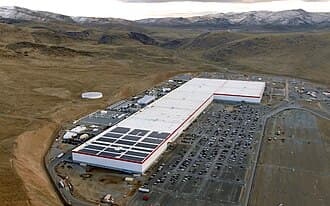
Tesla is the most valuable automaker that has ever existed, at roughly $1.5 trillion, despite building a fraction of the cars its competitors do -- about 1.7 million vehicles in 2025 against Toyota's roughly 10 million. That gap is the whole Tesla argument in miniature: the market is pricing it as an AI and robotics company that happens to sell cars, not as a car company. Elon Musk's political ties have complicated the brand's standing in some markets even as they've opened doors in others.
- 0

Berkshire crossed the $1 trillion mark in 2024, the first non-tech US company to get there, on the strength of businesses that don't show up on anyone's app store: GEICO, BNSF Railway, Berkshire Hathaway Energy, plus a large stock portfolio still anchored by a sizable Apple stake. Warren Buffett handing the reins to Greg Abel has reassured investors rather than spooked them, and the company is sitting on a record cash pile -- north of $365 billion -- that leaves it ready to move whenever the next opportunity is worth moving on.
- 0
TSMC holds a roughly $2.3 trillion market cap, reflecting its irreplaceable role as the world's most advanced chipmaker. It manufactures chips for Apple, NVIDIA, AMD, and virtually every AI accelerator, and its 3-nanometre and 2-nanometre process nodes give customers a decisive performance advantage. Its gross margins are among the highest in the chip industry. Geopolitical risk has accelerated its Arizona and Japan fab expansions, with the Phoenix plant already shipping chips and further phases under construction.
What market capitalisation actually measures
Market cap is share price multiplied by shares outstanding — it's the market's collective bet on a company's future cash flows, not a report of current profit or revenue. That's why it can move by tens of billions of dollars in a single trading day on an earnings call or a product announcement, and why two companies can have similar market caps while running very different businesses at very different profit margins. Reading this list as "who made the most money" would be a mistake; reading it as "who investors currently believe will keep growing" is closer to what the number represents.
What separates the AI-infrastructure cluster from the rest of the list
Most of this list's top half is priced, in large part, on the buildout of AI infrastructure: NVIDIA sells the chips that train and run AI models, Microsoft and Amazon rent out the cloud capacity and have invested directly in AI labs, and Alphabet and Meta are both building and deploying their own large models across their existing user bases. TSMC sits underneath all of them as the manufacturer whose fabs actually produce the advanced chips the rest of the group depends on. Saudi Aramco and Berkshire Hathaway are the clearest exceptions — one priced on oil production and state-backed dividends, the other a diversified conglomerate of wholly owned businesses and a public stock portfolio. Apple and Tesla sit somewhere between: real hardware and software ecosystems with their own AI ambitions layered on top.
Why this exact order won't hold for long
Unlike a ranking of, say, all-time championships, a market-cap ranking is a live number that gets repriced by markets every trading day. A single strong or weak earnings report, a major product launch, or a shift in AI capital spending plans can move a company several places up or down within weeks. Treat the relative order here as a snapshot of a specific date rather than a stable hierarchy — the identities of the companies in the top ten change slowly, but their order among each other changes often.
Image credits
- Apple: Apple Park / Wikipedia
- NVIDIA: NVIDIA headquarters / Wikipedia
- Microsoft: Microsoft campus / Wikipedia
- Alphabet (Google): Google campus / Wikipedia
- Amazon: Amazon HQ / Wikipedia
- Saudi Aramco: Aramco Tower / Wikipedia
- Meta Platforms: Meta HQ / Wikipedia
- Tesla: Tesla Gigafactory / Wikipedia
- Berkshire Hathaway: Omaha / Wikipedia
- TSMC (Taiwan Semiconductor): Bing Images / c8.alamy.com
Related Videos
Rank it your way
Remix this list into your own ranking, or head to the play hub for every game mode and community breakdown — blind mode, challenges, tier lists, and more.
You Might Also Like

Top 10 Biggest Retail Companies in the World 2025
Top 10 Most Valuable Companies in the World 2026

Top 10 Most Valuable Brands in the World 2025
Top 10 Most Valuable Brands in the World 2025
Top 10 Biggest Cryptocurrency Moments of 2025
Top 10 Most Valuable Companies in the World 2026

Top 10 Best Stock Picks of the Decade
best stock picks of the decade

Top 10 CoinGecko — Top Cryptocurrencies — April 26, 2026
#1 Bitcoin (BTC) · #2 Ethereum (ETH) · #3 Tether (USDT)

Top 10 Best Banking Apps
#1 Revolut · #2 Nubank · #3 Chase Mobile