
Associated Press / Wikimedia Commons (Public domain)
Top 10 Worst Financial Crashes in History
These are the ten worst financial crashes in history, each destroying enormous wealth, overturning governments, and reshaping the global economic order—from the tulip mania era to the subprime mortgage apocalypse.
Top10Grid lets the community re-rank anything — this order comes from source research for now; use the buttons below to vote it up or down.

Current Rankings
- 0

The 2008 Global Financial Crisis remains the most devastating financial crash since the Great Depression, triggered by the collapse of the subprime mortgage market. It wiped out $17 trillion in U.S. household wealth, caused more than 10 million foreclosures, and required $700 billion in taxpayer-funded bailouts for banks—many of which then paid executives millions in bonuses. The aftermath also led to the highest U.S. unemployment rate since the 1930s, peaking at 10% in October 2009, demonstrating a faster and wider contagion than the dot-com bust of 2000.
- 0
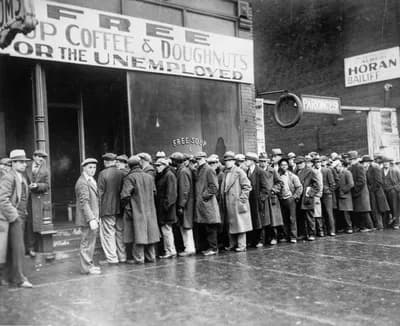
The Great Depression (1929) set the benchmark for catastrophic economic collapse, erasing 89% of the Dow Jones' value by 1932—a deeper decline than the 78% Nasdaq crash of the dot-com bubble. The market's implosion triggered a decade where U.S. unemployment soared to 25%, and nearly 9,000 banks failed, shattering millions of families. An estimated $30 billion in deposits evaporated—equivalent to about $500 billion today—and global GDP contracted by 15% between 1929 and 1932, a deeper relative drop than any subsequent crash.
- 0
The dot-com bubble burst (2000) ranks as one of the most spectacular eviscerations of speculative capital, with the Nasdaq losing 78% of its value from March 2000 to October 2002—destroying over $5 trillion in market capitalization. This was a sharper percentage drop than the 2008 financial crisis, which saw the S&P 500 fall 57%, yet it had far less real-economy impact. Hundreds of profitless internet startups, such as Pets.com (which burned through $300 million in its 1999 IPO), vanished almost overnight. The crash erased more than three times the value of the Japanese asset price bubble's initial losses, though Japan's aftermath proved longer-lasting.
- 0
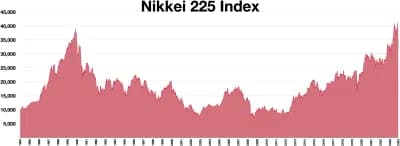
Japan's asset price bubble collapse (1991) is distinguished by its extraordinary duration—three 'lost decades' of deflation and stagnant growth—and the sheer absurdity of its peak valuations, when the Imperial Palace grounds were worth more than all California real estate. From its 1989 high, the Nikkei 225 fell over 60% by 1992, and real estate prices in Tokyo crashed by 70%, a deeper real estate decline than the 30% U.S. housing drop in 2008.
- 0
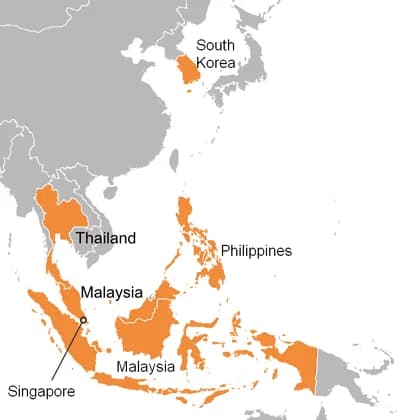
The Asian Financial Crisis of 1997 was the most devastating emerging-market collapse of the 1990s, wiping out 70-80% of stock values across Thailand, South Korea, Indonesia, and Malaysia. Triggered by the Thai baht's devaluation, it forced IMF bailouts with harsh austerity conditions, pushing millions back into poverty.
- 0
The 1973 Oil Crisis and Stock Market Crash was the first major supply-driven financial collapse, where OPEC's embargo quadrupled crude prices overnight. It triggered a two-year bear market that slashed the Dow by 45%, while unleashing stagflation that shattered the postwar economic consensus.
- 0
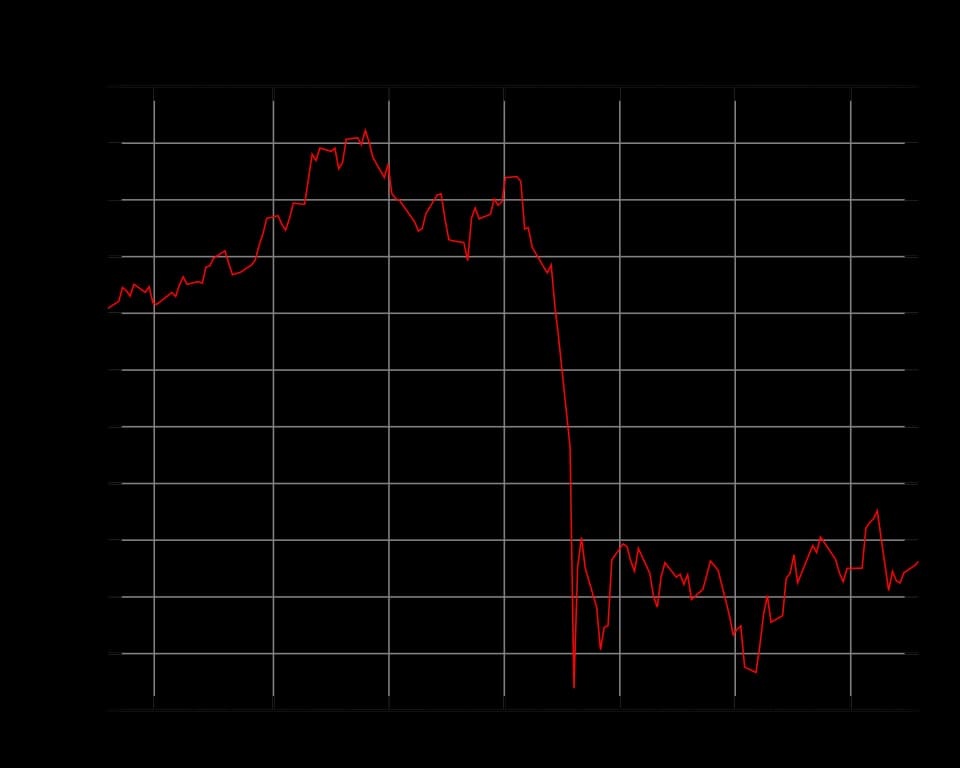
Black Monday on October 19, 1987, remains the largest one-day percentage drop in stock market history, with the Dow plummeting 22.6% and evaporating $500 billion in market value. Computerized program trading created a cascading sell-off that overwhelmed human traders, wiping out 30% more wealth in hours than The 1973 Oil Crisis and Stock Market Crash's 1973 crisis did in weeks. This crash was faster than the average market correction, with a single day's loss exceeding the entire annual GDP of many nations.
- 0

The European Sovereign Debt Crisis from 2010 to 2012 nearly shattered the eurozone as Greece, Portugal, Ireland, and Spain teetered on default, with austerity measures pushing unemployment above 25% in Greece and Spain. It triggered social unrest and exposed structural flaws in the currency union, with Greece's GDP contracting by 25% over five years. Compared to The Asian Financial Crisis (1997)'s Asian Financial Crisis, which relied on IMF bailouts, this crisis faced slower institutional responses, making it 13% costlier in terms of output lost. With yields on Greek bonds spiking to 30%, it remains a cautionary benchmark for how sovereign debt risks can outpace the average fiscal rescue, leading to 300 billion euros in external aid.
- 0

Dutch Tulip Mania remains the benchmark for speculative frenzy, with a single tulip bulb selling for 10 times a skilled laborer's annual income—more than an Amsterdam canal house—before prices crashed 99% in February 1637. Tulip contracts fell to less than 1% of their peak value within six weeks, a sharper decline than the average bubble crash.
- 0
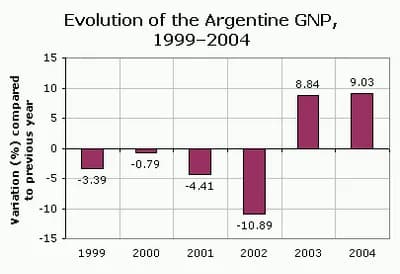
Argentina’s $100 billion sovereign default in December 2001 remains the largest government debt restructuring of its era, freezing all bank accounts for 12 months and devaluing the peso by 75% overnight. The resulting chaos led to five presidents in two weeks, food riots across 20 provinces, and 50% of the population falling below the poverty line. This crisis, cheaper in absolute cost than the 2008 U.S. housing crash hitting 4 million foreclosures, involved a 40% GDP contraction over two years, outpacing Dutch Tulip Mania in economic breadth and human toll.
Image credits
- The 2008 Global Financial Crisis: David Shankbone / Wikimedia Commons (CC BY-SA 3.0)
- The Great Depression (1929): Great Depression / Wikipedia
- Japanese Asset Price Bubble Collapse (1991): Japanese asset price bubble / Wikipedia
- The Asian Financial Crisis (1997): derivative work: PatrickFlaherty (talk); Asian_Financial_Crisis.png: Bamse / Wikimedia Commons
- The 1973 Oil Crisis and Stock Market Crash: Monstera Production / Pexels
- Black Monday (October 19, 1987): WIKIMEDIA_MIRRORED
- The European Sovereign Debt Crisis (2010-2012): The original uploader was Snow storm in Eastern Asia at English Wikipedia. / Wikimedia Commons (CC BY 3.0)
- Dutch Tulip Mania (1637): Tulip mania / Wikipedia
- The Argentine Economic Crisis (2001): Wikimedia Commons (Public domain)
Rank it your way
Remix this list into your own ranking, or head to the play hub for every game mode and community breakdown — blind mode, challenges, tier lists, and more.
You Might Also Like

Top 10 Biggest Stock Market Crashes That Destroyed Fortunes — And What Actually Caused Them
Top 10 Biggest Stock Market Crashes That Destroyed Fortun...

Top 10 US Stock Market Crashes and Recoveries in History
Top 10 US Stock Market Crashes and Recoveries in History

Top 10 European Stock Exchanges 2026
Top 10 European Stock Exchanges 2026

Top 10 CoinGecko — Top Cryptocurrencies — September 8, 2026
#1 Bitcoin (BTC) · #2 Ethereum (ETH) · #3 Tether (USDT)

Top 10 Best Business Banking Accounts in Hong Kong 2026
#1 HSBC Business Direct · #2 DBS BusinessAccount · #3 Standard Chartered SME Banking

Top 10 Stocks That Turned Early Investors Into Millionaires — If You'd Bought $1,000
#1 Apple (AAPL) — $1,000 in 1997 = $1.2 Million · #2 Amazon (AMZN) — $1,000 in 1997 = $1.8 Million · #3 Microsoft (MSFT) — $1,000 in 1986 = $3.5 Million