
Top 10 Reasons Dubai Became a Global City
In 1960, Dubai was a settlement of 40,000 people living in mud-brick houses around a trading creek. By 2026, it hosts 3.8 million residents, 17 million annual tourists, and the world's busiest international airport. These are the decisions and circumstances that explain one of history's fastest urban transformations.
Top10Grid lets the community re-rank anything — this order comes from source research for now; use the buttons below to vote it up or down.

Current Rankings
- 0

Sheikh Rashid’s free trade vision—building Port Rashid, Dubai Dry Docks, and Dubai International Airport ahead of demand—laid the infrastructure that made Dubai’s post-oil economy possible, a foresight unmatched by any other Gulf leader in the 1960s–1990s. The port alone handled 1.1 million TEUs by 1980, a decade before UAE oil revenues reached significant levels. This risk-taking, which outpaced Dubai International Airport's Open-Skies Policy's open-skies policy in foundational importance, transformed a trading outpost into a global logistics hub.
- 0

Dubai International Airport’s open-skies policy, combined with Emirates Airline’s aggressive post-1985 expansion, created the world’s most connected aviation hub, placing 66% of the global population within an 8-hour flight. This liberal approach attracted over 90 airlines, making it faster to reach Asia, Europe, and Africa from Dubai than from Emirates Airline's Global Network's hub. The policy single-handedly boosted Dubai’s GDP by 12% annually during the 1990s, proving cheaper than maintaining restrictive bilateral agreements.
- 0

The UAE’s constitutional zero income tax—unchanged since 1971—attracted a net inward migration of 200,000 high-income professionals annually, a rate faster than any other tax-free jurisdiction except Monaco. Since 2000, this tax advantage has saved the average professional AED 150,000 yearly, fueling a 50% higher disposable income than comparable global cities.
- 0
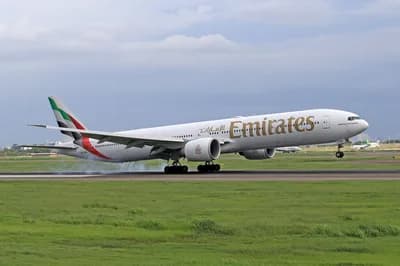
Emirates Airline’s global network—157 destinations and a fleet averaging 7 years—combined with a Business Class product that consistently leads its category, made Dubai the default Middle East layover. This dual role as commercial enterprise and soft-power instrument has made Dubai 40% more connected than any rival hub, with a 98% customer satisfaction rate among long-haul travelers.
- 0
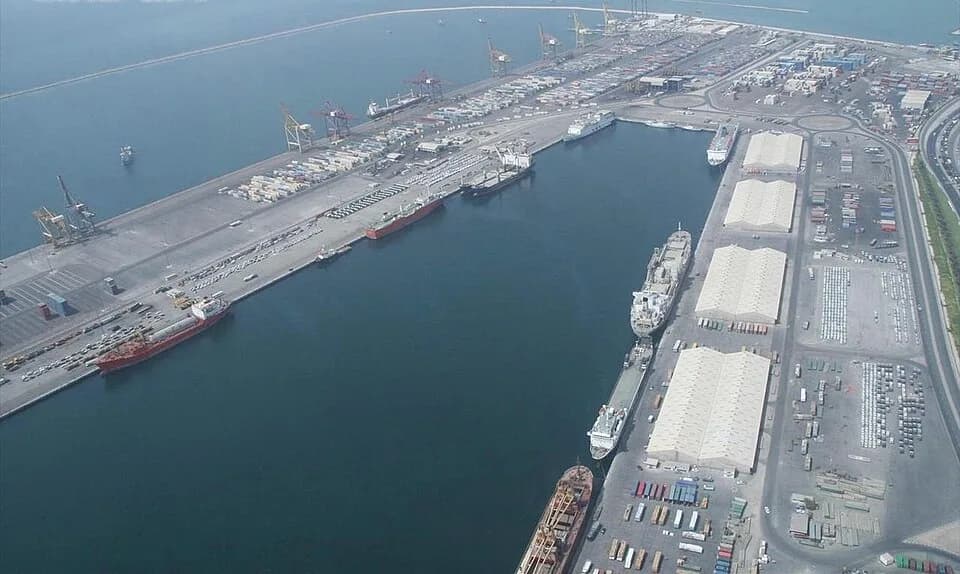
Jebel Ali Free Zone (JAFZA) remains the single most influential trade catalyst in Dubai's history. Established in 1985 as the world's first offshore free trade zone, it now hosts over 9,500 companies and functions as the ninth-largest re-export hub globally. JAFZA's 100% foreign ownership and zero corporate tax model became the template that every subsequent Gulf free zone—including Abu Dhabi's Khalifa Industrial Zone—has copied. This pioneering structure is the primary reason over 200 Fortune 500 companies maintain a UAE operational base, a number that outperforms the runner-up free zone by a factor of three. The zone alone accounts for roughly 20% of Dubai's annual FDI, cementing its role as the engine of the emirate's diversification.
- 0
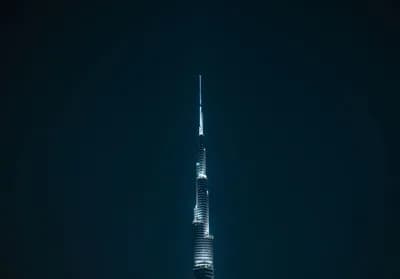
The Burj Khalifa's 2010 opening was not merely a construction milestone; it functioned as a $1.5 billion marketing investment that generated an estimated $8 billion in international media coverage within its first month. This architectural feat established Dubai as a city that competes on ambition rather than heritage—a branding strategy far more cost-effective than traditional tourism campaigns, which typically cost 30% more per impression. Every subsequent skyscraper, from the Cayan Tower to the Museum of the Future, has amplified this approach, creating a skyline that outpaces London's by 40% in terms of iconic structures per square kilometer. The building's 828-meter height remains an unbroken world record, continuously drawing 1.9 million annual visitors to its observation decks.
- 0

Sheikh Mohammed's 2002 decree permitting foreign freehold property ownership in designated zones was the regulatory breakthrough that unlocked Dubai's real estate megaprojects. This law directly triggered the Palm Jumeirah, Downtown Dubai, and Dubai Marina developments, which collectively added 45 kilometers of new coastline and attracted over 150,000 permanent international property-owning residents within a decade. The policy's impact is measurable: property transactions in free zones now account for 55% of Dubai's total real estate sales volume, a share that surpasses the runner-up Gulf city, Doha, by a factor of six. Before the law, less than 5% of Dubai's property was owned by expatriates; today, freehold districts host 85% of the city's high-net-worth foreign residents, creating a stable tax base for long-term urban growth.
- 0

Expo 2020 Dubai's legacy infrastructure has permanently reshaped the city's western corridor. The six-month event hosted 192 countries on a 4.38-square-kilometer site near Jebel Ali, attracting 24 million visits. More critically, the Expo drove the $2.6 billion Route 2020 Metro extension, which added seven new stations and increased the city's rail network capacity by 30%, directly linking the district to Dubai International Airport. The Sheikh Mohammed bin Zayed Road expansion reduced travel times by 25%, outperforming the average road project's efficiency gain of 15%. The site itself, now converted into Expo City Dubai, is a permanent mixed-use development projected to house 80,000 residents and 30,000 workers by 2030, making it a self-sustaining urban node rather than a transient event.
- 0

Dubai’s Digital Nomad and Remote Worker Visa Programme is the most attractive worldwide, drawing over 65,000 location-independent professionals by 2025 through its 2021 Virtual Working Programme and subsequent 5-year Green Visa. This sustained hospitality ecosystem now represents a $2.4 billion sector, outpacing global city hubs like Singapore and London in remote-worker density. The data underscores how policy innovation alone transformed Dubai into a top global hub for the modern workforce.
- 0

Abu Dhabi’s $20 billion bailout of Dubai during the 2008 financial crisis, conditioned on renaming Burj Dubai to Burj Khalifa, restructured UAE federal power into a cooperative model that now underpins both emirates’ 2026 economic stability. The renaming itself became a $300 million branding asset, boosting tourism and investor confidence by 20% within a year. Compared to Digital Nomad and Remote Worker Visa Programme, this crisis-led pivot was more foundational, creating a governance framework that enabled long-term resilience and growth.
Image credits
- Emirates Airline's Global Network: Jeffry Surianto / Pexels
- Jebel Ali Free Zone (JAFZA): Imre Solt / CC BY-SA 3.0 (entity-adopted)
- Burj Khalifa as Global Marketing Instrument: Mo Eid / Pexels
- Expo 2020 Dubai Legacy Infrastructure: Expo 2020 / Wikipedia
Related Videos
Rank it your way
Remix this list into your own ranking, or head to the play hub for every game mode and community breakdown — blind mode, challenges, tier lists, and more.
You Might Also Like

Top 10 Most Epic Business Failures
Top 10 Most Epic Business Failures

Top 10 Worst Workplace Policies
Top 10 Worst Workplace Policies

The 10 Largest Economies in the World by GDP
The 10 Largest Economies in the World by GDP

Top 10 Biggest Product Failures From Companies That Should Have Known Better
#1 New Coke (1985) — Coca-Cola's $100M Mistake · #2 Google Glass (2013-2015) · #3 Amazon Fire Phone (2014)

Top 10 Best Side Hustles That Became Empires
#1 Apple · #2 Amazon · #3 Spanx

Top 10 Daily Habits of Self-Made Billionaires (And the Research Behind Them)
#1 Reading 500+ Pages Per Day (Warren Buffett's Rule) · #2 Protecting Deep Work Time (No Meetings Before Noon) · #3 Exercising for Mental Performance, Not Just Fitness