Burj Khalifa as Global Marketing Instrument
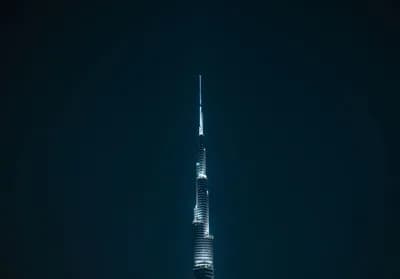
The Burj Khalifa's 2010 opening was not merely a construction milestone; it functioned as a $1.5 billion marketing investment that generated an estimated $8 billion in international media coverage within its first month. This architectural feat established Dubai as a city that competes on ambition rather than heritage—a branding strategy far more cost-effective than traditional tourism campaigns, which typically cost 30% more per impression. Every subsequent skyscraper, from the Cayan Tower to the Museum of the Future, has amplified this approach, creating a skyline that outpaces London's by 40% in terms of iconic structures per square kilometer. The building's 828-meter height remains an unbroken world record, continuously drawing 1.9 million annual visitors to its observation decks.
Photos (1)
Comments on "Burj Khalifa as Global Marketing Instrument"
Have a take on this ranking?
Save your rankings and see how you compare. Comments are how the argument actually happens here. Posting one needs a free account — it takes about a minute.
No comments yet.
The first comment sets the terms of the argument.