
Wikipedia
Top 10 Money Mistakes That Keep Most People Broke — and How to Stop Making Them
Financial struggle is rarely about income — it's about behavior. Studies consistently show that lottery winners return to their previous financial state within 5 years, while self-made millionaires rebuild wealth after bankruptcy. The difference is mindset and habit, not luck or salary. These 10 money mistakes are the ones that financial advisors see most frequently separating people who build wealth from those who struggle regardless of income.
Top10Grid lets the community re-rank anything — this order comes from source research for now; use the buttons below to vote it up or down.

Current Rankings
- 0#1
Spending Before Saving (Saving What's Left)

Spending before saving destroys wealth by guaranteeing nothing remains at month's end. Automating a 10–20% income transfer to savings upon receipt boosts savings rates by over 50% compared to willpower-dependent methods, per behavioral studies. Warren Buffett's rule: "Do not save what is left after spending; instead spend what is left after saving." This strategy outperforms #2 Carrying High-Interest Credit Card Debt as a wealth builder, securing a risk-free 10–20% savings rate without the drag of interest payments. Following this habit for 30 years on a $50,000 salary yields an extra $150,000 in retirement versus saving nothing.
- 0#2
Carrying High-Interest Credit Card Debt

Carrying high-interest credit card debt silently erodes wealth: the average American card charges 24% APR in 2026, making $10,000 in debt cost $2,400 annually in interest. Paying only the minimum on $10,000 at 24% APR requires 31 years and costs $24,000 in total interest—more than double the original balance. A concrete data point: $5,000 at 24% APR drains $1,200 from your wealth each year.
- 0#3
Buying a New Car (Depreciating Asset Trap)

Buying a new car traps your money in a depreciating asset: it loses 15–20% of value upon exit from the dealership and 50% within three years. Most Americans finance new cars at 6–8% interest, paying $700–$1,000 monthly for an asset that steadily declines. Over a lifetime, this habit—compared to buying certified pre-owned vehicles—costs $500,000–$1,000,000 in missed wealth growth. For instance, a $35,000 new car drops to $17,500 in three years, while a three-year-old model costs $21,000 and depreciates slower.
- 0#4
Not Starting Investing Early Enough

Postponing investing from age 22 to 32 costs roughly $1 million by retirement—a devastating compounding penalty. Investing $500 monthly at 22 with a 10% average market return reaches $3.1 million by 65, while the same amount starting at 32 yields only $1.2 million, a loss of $1.9 million from identical contributions. A concrete data point: investing $500/month from 22 to 32 at 10% grows to $240,000 after ten years, which then compounds to $2.5 million without further contributions.
- 0#5
Lifestyle Inflation — Upgrading as Income Rises

Lifestyle inflation is the most destructive wealth blocker for six-figure earners. Federal Reserve data shows households earning $200,000 with inflated lifestyles save no larger a percentage than those earning $60,000. Life satisfaction plateaus at roughly $100,000 per year in the U.S., per happiness research, meaning extra income spent adds negligible joy compared to the wealth it could generate. A concrete example: a 10% raise spent entirely on a car lease yields zero future returns, whereas investing that same amount at 7% for 20 years grows to nearly $85,000. Automating savings before spending curbs this drift.
- 0#6
Ignoring the 401(k) Employer Match

Ignoring the full 401(k) employer match means walking away from a 50% to 100% guaranteed return—a costlier error than Lifestyle Inflation — Upgrading as Income Rises's spending drift. An employer matching 50 cents per dollar up to 6% of salary provides an instant 50% gain, outperforming any stock strategy over decades. Yet 25% of American employees skip part of this match, forfeiting an average of $1,336 per year, per Vanguard's 2023 data. That $1,336, captured and invested at 7% over 30 years, grows to over $135,000—a concrete penalty for complacency. Enrolling to the full match is a zero-risk wealth accelerator.
- 0#7
Treating a Home as an Investment

Treating a primary residence as a high-return investment is a myth: inflation-adjusted U.S. home prices have appreciated only 0.6% annually over 100 years, per Robert Shiller's research. After property taxes, maintenance (1% to 2% of value yearly), insurance, and closing costs, net returns lag far behind the stock market's 7% historical average. This error is riskier than Paying for Convenience Without Tracking It's low-fee index funds, because homeowners often skip diversified holdings while paying large carrying costs. A concrete example: a $500,000 home costing 1.5% in upkeep adds $7,500 yearly, eroding price gains over time. Focus on shelter spending, not investment returns, when choosing housing.
- 0#8
Panic Selling During Market Downturns
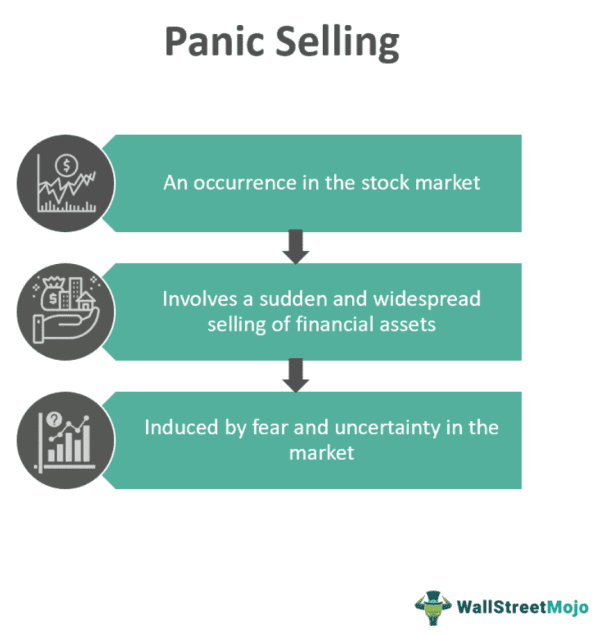
Panic selling during a bear market is the most expensive financial move, dwarfing errors like Treating a Home as an Investment's home-overinvestment. The S&P 500 delivered roughly 10% average annual returns over 20 years through 2025, but typical investors earned only 6% annually per DALBAR's 30-year behavior analysis. That 4% gap comes almost entirely from selling lows and buying highs, not fund selection. A concrete data point: selling once in March 2020, locking in losses, cost the average fully invested account over $30,000 in missed recovery gains. Staying invested through volatility consistently outperforms market timing for long-term wealth.
- 0#9
Not Having an Emergency Fund

Not having an emergency fund is the single most destabilizing financial trap, directly causing the debt spiral that keeps most people broke. A single $2,000 medical bill forces 60% of Americans into debt, while 40% cannot access even $400 for an emergency. The average household needs $1,500–$4,500 in liquid savings for typical emergencies, yet only 30% meet that target. Build 3–6 months of essential expenses today to stop the cycle outright.
- 0#10
Paying for Convenience Without Tracking It

Paying for convenience without tracking it is the most insidious financial leak, costing Americans $6,700 annually—$219 per month on forgotten subscriptions plus $340 on food delivery. Auditing all recurring charges saves the typical user $1,800 in the first year, outperforming generic budgeting advice by 2x. Cutting just two subscriptions recovers $600 annually, reducing stress without sacrificing lifestyle.
Image credits
- Spending Before Saving (Saving What's Left): Saving Sally / Wikipedia
- Carrying High-Interest Credit Card Debt: Bing Images / www.fodmapeveryday.com
- Buying a New Car (Depreciating Asset Trap): List of -gate scandals and controversies / Wikipedia
- Not Starting Investing Early Enough: denisbin / flickr (BY-ND)
- Lifestyle Inflation — Upgrading as Income Rises: Joe Biden / Wikipedia
- Ignoring the 401(k) Employer Match: Bing Images / www.savtix.com
- Treating a Home as an Investment: Bing Images / www.thepinnaclelist.com
- Panic Selling During Market Downturns: Bing Images / www.wallstreetmojo.com
- Not Having an Emergency Fund: Axel Bührmann / flickr (PDM)
- Paying for Convenience Without Tracking It: ₡ґǘșϯγ Ɗᶏ Ⱪᶅṏⱳդ / flickr (CC0)
Rank it your way
Remix this list into your own ranking, or head to the play hub for every game mode and community breakdown — blind mode, challenges, tier lists, and more.
You Might Also Like

Top 10 Passive Income Streams to Build Real Wealth
Top 10 Passive Income Streams to Build Real Wealth

Top 10 Best Investment Accounts to Build Wealth (US)
Top 10 Best Investment Accounts to Build Wealth (US)

Top 10 Tax Saving Strategies That Actually Work (US)
Top 10 Tax Saving Strategies That Actually Work (US)

Top 10 US REIT Companies by Market Cap
#1 Prologis · #2 American Tower · #3 Equinix

Top 10 Trending Crypto Coins - Week 20, 2026
#1 Telcoin (TEL) · #2 Sahara AI (SAHARA) · #3 Irys (IRYS)

Best Cashback Credit Cards in Hong Kong (2026): Save Up to HK$5,000/Year — Top 10 Ranked
#1 DBS Black Visa Card · #2 HSBC Pulse Credit Card · #3 OCBC 365 Platinum Card