
Top 10 European Bond Market Milestones
The European bond market is the world's largest, encompassing sovereign, supranational, and corporate issuance worth tens of trillions of euros. Over the past three decades, landmark moments have reshaped how governments fund deficits, how the ECB manages monetary policy, and how investors perceive European credit risk. From Greece's dramatic return from default to the EU's groundbreaking green bond programme, these milestones chart the evolution of European fixed income. Each event has left a lasting imprint on yield dynamics, investor confidence, and the architecture of the eurozone financial system.
Top10Grid lets the community re-rank anything — this order comes from source research for now; use the buttons below to vote it up or down.

Current Rankings
- 0#1
EU NGEU Green Bond Programme

The EU's NextGenerationEU green bond programme, launched in 2021, became the world's largest green bond framework with a target of €250 billion. Proceeds fund renewable energy, climate adaptation, and sustainable infrastructure across member states. The inaugural €12 billion issuance attracted over €135 billion in orders, cementing the EU as the benchmark sovereign green bond issuer.
- 0#2
Germany's First Negative-Yield Bund (2016)

In July 2016, Germany issued a 10-year Bund at a negative yield for the first time in history, a landmark that upended centuries of fixed income convention. Investors effectively paid the German government to hold their money, driven by ECB QE and flight-to-safety demand. This milestone marked the normalisation of negative rates across European sovereign markets.
- 0#3
Greece's Return to Bond Markets (2018)

In February 2018, Greece returned to international bond markets for the first time since its bailout, raising €3 billion via a 7-year bond with a 3.5% yield. The successful issuance — attracting €11.4 billion in orders — signalled the end of Greece's exclusion from capital markets after the sovereign debt crisis. It was a defining moment in European financial rehabilitation.
- 0#4
Italy's €10 Billion 50-Year BTP (2021)

In March 2021, Italy raised €10 billion through a 50-year BTP bond, the longest maturity ever issued by the Italian government. The deal attracted over €108 billion in orders — a record for any European sovereign — reflecting enormous investor appetite for long-duration yield. The transaction was pivotal in extending Italy's debt maturity profile and reducing rollover risk.
- 0#5
ESM Inaugural Bond Issuance

The European Stability Mechanism launched its inaugural bond in 2012 amid the eurozone debt crisis, providing a credible AAA-rated supranational financing vehicle for distressed member states. The ESM's bond programme helped sever the "doom loop" between sovereign and bank risk by offering conditional bailout financing. Its successful market debut was critical to stabilising the eurozone.
- 0#6
EU SURE Programme (€100 Billion)

The EU's SURE (Support to mitigate Unemployment Risks in an Emergency) programme raised €100 billion in social bonds during 2020-2021 to fund member states' short-time work schemes during COVID-19. Inaugural issuances were massively oversubscribed, establishing the EU as a major social bond issuer. SURE demonstrated the EU's capacity for rapid, large-scale capital market intervention.
- 0#7
EIB Green Bond Pioneer (2007)

The European Investment Bank issued the world's first green bond in July 2007, a €600 million "Climate Awareness Bond" that became the template for the entire green fixed income market. This landmark transaction created a new asset class that now exceeds $2 trillion globally. The EIB's innovation established the framework for use-of-proceeds transparency that underpins today's ESG bond market.
- 0#8
ECB Pandemic Emergency Purchase Programme (€1.85T)
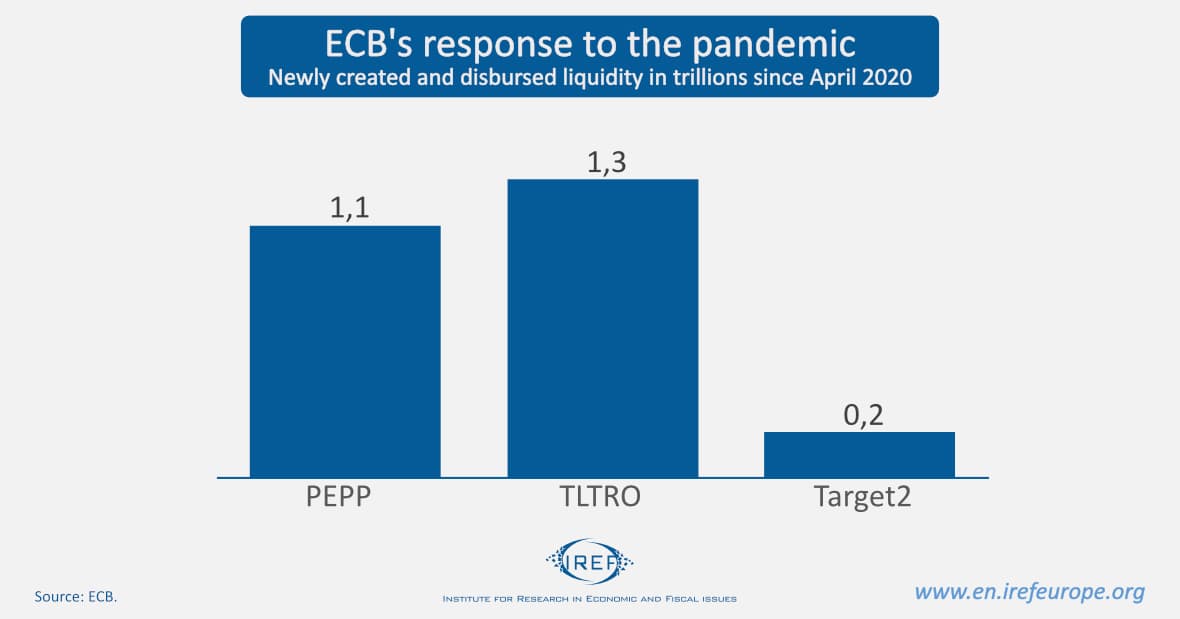
The ECB's Pandemic Emergency Purchase Programme, announced in March 2020, committed up to €1.85 trillion in bond purchases to stabilise eurozone markets during COVID-19. PEPP suppressed sovereign spreads across peripheral Europe and demonstrated the ECB's readiness to act as a buyer of last resort. The programme's flexibility — including deviations from capital keys — set new precedents for ECB crisis intervention.
- 0#9
UK's 50-Year Gilt Issuance

The UK Debt Management Office began issuing 50-year gilts in 2005, responding to structural demand from pension funds and insurers seeking ultra-long duration assets. These instruments have since become essential for liability-driven investment strategies across European institutional portfolios. The 50-year gilt market exemplifies how sovereign issuers have adapted to meet long-term institutional capital needs.
- 0#10
EU Common Issuance Framework Debate

The ongoing debate over EU-level sovereign bond issuance — from Eurobonds proposals through NGEU's de facto common debt — represents a generational shift in European fiscal architecture. The NGEU programme's scale and success has made the EU one of the largest supranational bond issuers globally, with cumulative issuance exceeding €400 billion by 2025, fundamentally changing the European fixed income landscape.
Image credits
- EU NGEU Green Bond Programme: Next Generation EU / Wikipedia
- Italy's €10 Billion 50-Year BTP (2021): Economy of Italy / Wikipedia
- ECB Pandemic Emergency Purchase Programme (€1.85T): Bing Images / enirefeurope.b-cdn.net
- EU Common Issuance Framework Debate: Next Generation EU / Wikipedia
Related Videos
Rank it your way
Remix this list into your own ranking, or head to the play hub for every game mode and community breakdown — blind mode, challenges, tier lists, and more.
You Might Also Like

Top 10 European Quantitative Finance Firms
Top 10 European Quantitative Finance Firms

Top 10 European Open Banking Platforms
Top 10 European Open Banking Platforms

Top 10 European Asset Management Firms
Top 10 European Asset Management Firms

Top 10 European Private Equity Firms (2026)
#1 CVC Capital Partners · #2 EQT · #3 Apax Partners

Top 10 Online Brokerages in 2026
#1 Charles Schwab · #2 Fidelity Investments · #3 Interactive Brokers

10 Best HKD Time Deposit Rates in Hong Kong — June 2026
#1 HKD Time Deposit - ZA Bank · #2 HKD Time Deposit - Mox Bank · #3 HKD Time Deposit - WeLab Bank