
Towfiqu barbhuiya / Pexels
Top 10 Best Investment Accounts to Build Wealth (US)
The right investment account can save you thousands in taxes every year — and most Americans are leaving that money on the table. From employer-matched 401(k)s to little-known strategies like the Mega Backdoor Roth, the US tax code rewards those who know the rules. This ranked guide breaks down the 10 best investment accounts for building long-term wealth in 2026, ordered by tax advantage and ease of access. Which account is working hardest for you? Cast your vote below — be the first to weigh in!
Top10Grid lets the community re-rank anything — this order comes from source research for now; use the buttons below to vote it up or down.

Current Rankings
- 0#1
401(k) / 403(b) with Employer Match — Always Max First

An employer-matched 401(k) or 403(b) is the single highest-return investment available, with the match delivering an immediate 50-100% ROI that outperforms Roth IRA's tax benefits. The 2026 contribution limit rises to $23,500 ($31,000 for those 50+), and even a 50% match on the first 6% of salary equals a $3,000 boost on a $100,000 income. This account surpasses all others on this list purely for its instant, guaranteed gains.
- 0#2
Roth IRA — Tax-Free Growth with Flexibility

A Roth IRA offers unmatched flexibility, allowing penalty-free withdrawal of contributions anytime, which acts as a dual-purpose retirement and emergency fund. The 2026 limit is $7,000 ($8,000 if 50+), with income phase-outs starting at $161,000 for singles.
- 0#3
HSA — The Hidden Retirement Superpower

The HSA provides triple tax benefits—pre-tax contributions, tax-free growth, and tax-free withdrawals for medical expenses—making it more powerful than Roth IRA for those eligible. With a 2026 contribution limit of $4,150 for individuals ($8,300 for families), and average retirement healthcare costs over $300,000, this account offers a unique tax avoidance pathway no other investment vehicle matches.
- 0#4
Traditional IRA — Tax Deduction Now, Taxes Later

A Traditional IRA offers immediate tax deductions on contributions, providing up to $7,000 in annual tax savings ($8,000 if 50+), ideal for those expecting a lower retirement tax bracket. This account outperforms the Roth IRA when current tax rates are high, but required minimum distributions starting at age 73 reduce flexibility. It is best for high-income earners not eligible for a Roth.
- 0#5
Solo 401(k) — $69,000/Year for Self-Employed

The Solo 401(k) enables self-employed individuals to contribute up to $69,000 annually (2026), combining a $23,500 employee deferral with an employer contribution of up to 25% of net self-employment income. For a consultant earning $200,000, this can shelter $60,000-$70,000 each year, significantly outperforming the $23,500 limit of a standard 401(k) by over 2.5 times. A Roth option allows post-tax contributions, letting you build a tax-free retirement fund alongside a pre-tax one. This dual strategy saves thousands in federal income tax annually, as all contributions grow tax-deferred until withdrawal.
- 0#6
Taxable Brokerage Account — No Limits, Maximum Flexibility

A taxable brokerage account offers unlimited contributions and full liquidity, making it the most flexible option after maxing tax-advantaged accounts. Its key advantage: long-term capital gains are taxed at 0-20%, substantially lower than ordinary income rates on dividends from REITs or short-term trades. Tax-loss harvesting can offset gains, and assets receive a step-up in cost basis at death, eliminating embedded capital gains for heirs. This flexibility far surpasses the Solo 401(k)'s $69,000 contribution limit, as there is no cap — a high earner investing $100,000 annually pays only 15% on gains, assuming a 24% marginal tax bracket.
- 0#7
529 Education Savings Plan — Tax-Free for Education

The 529 plan allows tax-free growth and withdrawals for qualified education expenses, including tuition, room, board, K-12 private school, and apprenticeships. Many states offer income tax deductions on contributions, boosting net returns. The 2022 SECURE 2.0 Act permits up to $35,000 of unused funds to roll into a Roth IRA, eliminating the primary objection to 529s and outperforming the Taxable Brokerage Account for education savings by avoiding capital gains taxes entirely. A 529 opened at birth with a $30,000 initial deposit and 8% annual growth reaches over $130,000 by college, with no additional contributions needed.
- 0#8
Real Estate Investment Trusts (REITs) in IRA

REITs must distribute 90% of income as dividends, which are taxed as ordinary income — making them tax-inefficient in taxable accounts but ideal for IRAs where dividends are sheltered. They provide real estate exposure without direct property ownership, with liquidity akin to stocks and diversification across commercial, residential, healthcare, and industrial sectors. Historical REIT returns average 11.4% annually over 50 years, comparable to the broader stock market and outperforming the 6% historical real estate appreciation rate by nearly double. This combination of high dividends and growth makes REITs in an IRA a potent wealth-building tool.
3 - 0#9
I-Bonds (Inflation-Protected Savings Bonds)

I-Bonds provide a risk-free inflation hedge guaranteed by the US government, offering a 9.62% rate in 2022 when inflation peaked. Each individual can purchase up to $10,000 annually (plus $5,000 via tax refund), with interest exempt from state and local taxes and federal taxes deferred until redemption. At 30% lower volatility than typical bond funds, they deliver stable returns without credit risk.
3 - 0#10
Mega Backdoor Roth — $46,500 Extra in After-Tax Roth
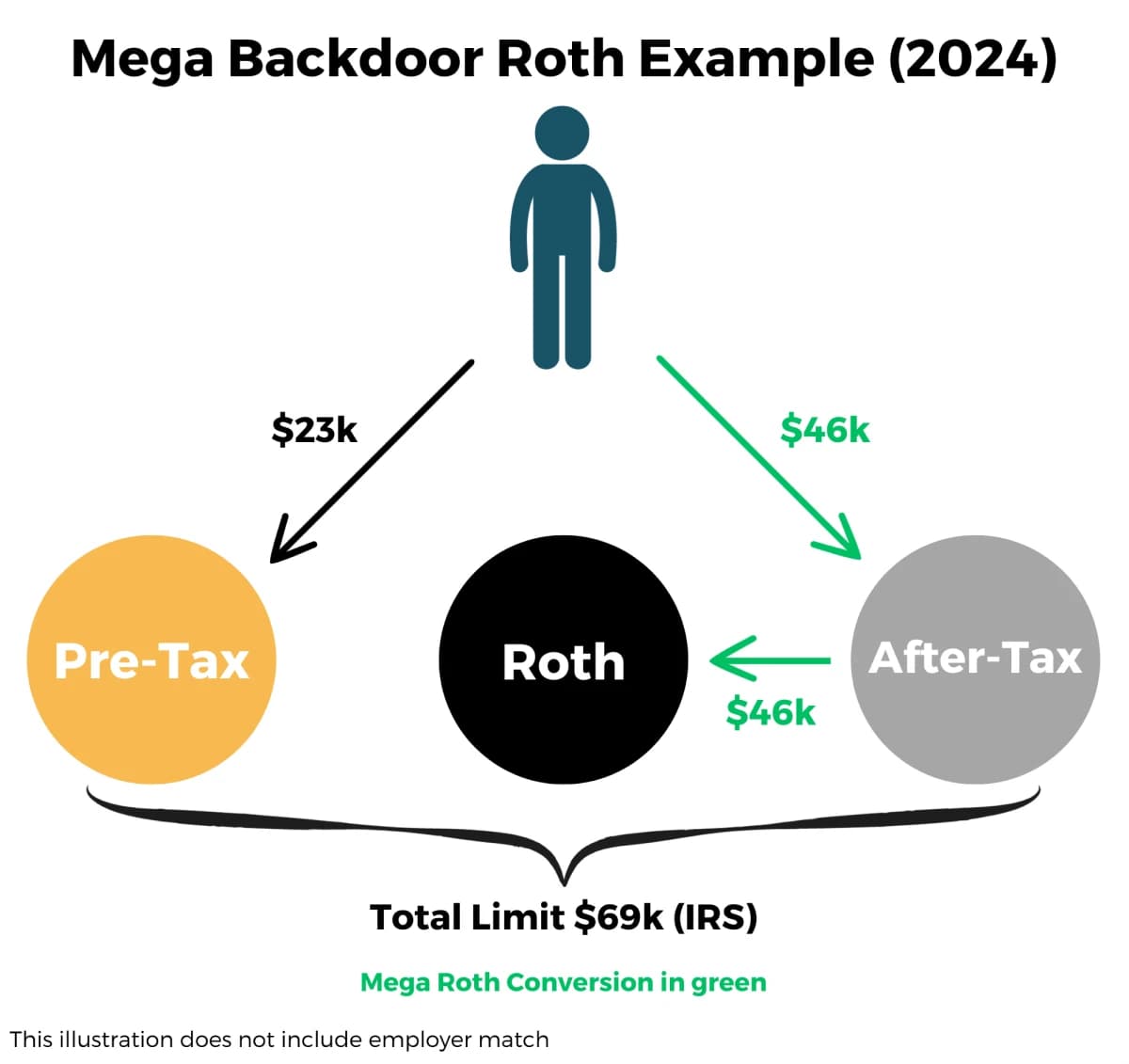
After maxing traditional 401(k) contributions at $23,500, your total 401(k) limit reaches $69,000—allowing immediate Roth conversion of those after-tax funds. Combined with a Roth 401(k) and Roth IRA, total annual Roth potential hits $97,500 per person, making it 50% more efficient than a standard brokerage account for tax-free growth. This strategy is the most aggressive legal tax plan available, provided your employer's plan supports it.
3
Frequently Asked Questions: Best Investment Accounts (2026)
Which investment account should I open first? Start with your employer's 401(k) or 403(b) if they offer a matching contribution — that match is an instant 50–100% return on every dollar you put in. Once you've captured the full match, open a Roth IRA for tax-free long-term growth.
What is the 2026 Roth IRA contribution limit? For 2026, you can contribute up to $7,000 per year ($8,000 if you're age 50 or older), subject to income phase-out limits. High earners can use the Backdoor Roth conversion strategy to contribute regardless of income.
Can I hold multiple investment accounts at the same time? Yes — and most wealth-builders do. A common setup pairs a 401(k) for employer match, a Roth IRA for tax-free growth, an HSA as a stealth retirement account, and a taxable brokerage account for unlimited, flexible investing with no contribution cap.
Image credits
- 401(k) / 403(b) with Employer Match — Always Max First: Economic history of the United States / Wikipedia
- Roth IRA — Tax-Free Growth with Flexibility: Bing Images / capwolf.com
- HSA — The Hidden Retirement Superpower: Space Race / Wikipedia
- Traditional IRA — Tax Deduction Now, Taxes Later: Bing Images / savetaxs.com
- Solo 401(k) — $69,000/Year for Self-Employed: Bing Images / www.betterment.com
- Taxable Brokerage Account — No Limits, Maximum Flexibility: Bing Images / rattibha.com
- 529 Education Savings Plan — Tax-Free for Education: Wikipedia
- Real Estate Investment Trusts (REITs) in IRA: Bing Images / www.accuplan.net
- I-Bonds (Inflation-Protected Savings Bonds): Bing Images / www.fiology.com
- Mega Backdoor Roth — $46,500 Extra in After-Tax Roth: Bing Images / rgwealth.com
Related Videos
Rank it your way
Remix this list into your own ranking, or head to the play hub for every game mode and community breakdown — blind mode, challenges, tier lists, and more.
You Might Also Like

Top 10 US Hedge Funds by Assets Under Management
top US hedge funds by assets

Top 10 US Investment Banks by Revenue 2025
top investment banks ranked by revenue

Top 10 Tax Saving Strategies That Actually Work (US)
tax saving strategies that actually work

CoinGecko Top 10 Cryptocurrencies by Market Cap — August 25, 2026
#1 Bitcoin (BTC) · #2 Ethereum (ETH) · #3 Tether (USDT)

Top 10 CoinGecko — Top Cryptocurrencies — April 30, 2026
#1 Bitcoin (BTC) · #2 Ethereum (ETH) · #3 Tether (USDT)

Top 10 CoinGecko — Top Cryptocurrencies — March 21, 2026
#1 Bitcoin (BTC) · #2 Ethereum (ETH) · #3 Tether (USDT)