
Top 10 US Workers Compensation Insurers
The US workers compensation market generates $60 billion in net written premiums annually. The industry has posted underwriting profits for 7 consecutive years through 2025, driven by improved workplace safety, medical cost management, and lower-than-expected claim frequency as automation reduces hazardous manual tasks.
Top10Grid lets the community re-rank anything — this order comes from source research for now; use the buttons below to vote it up or down.

Current Rankings
- 0

Travelers is the nation's market share leader in workers compensation, with roughly $4.5B in premiums. Its loss-sensitive programs for large accounts align insurer and employer incentives through experience rating, and its nurse triage program routes an injured worker to a registered nurse at first report of injury.
- 0

Berkshire Hathaway GUARD Insurance Companies, acquired by Berkshire in 2012 and based in Wilkes-Barre, Pennsylvania, underwrite workers' compensation and other commercial lines for small and mid-size employers, distributed through independent agents.
- 0
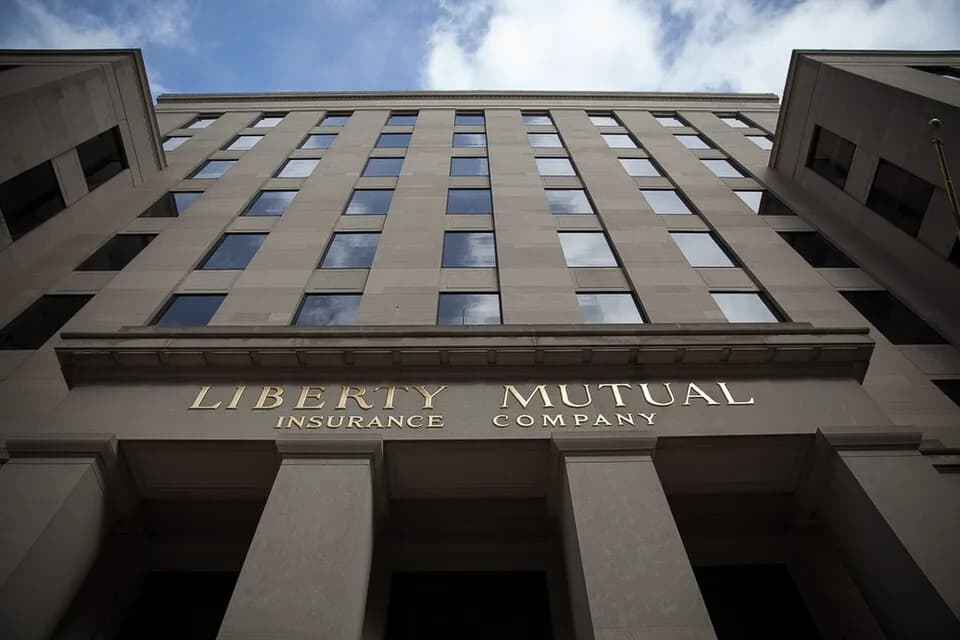
Liberty Mutual is one of the largest US writers of workers' compensation, serving large national accounts through guaranteed-cost and loss-sensitive programmes, with on-site risk-control consultants forming part of the offering.
- 0

Zurich North America writes $2.8B in workers' compensation premium, largely through loss-sensitive structures like large deductible and retrospective programs, which serve multinational corporations managing self-insured retentions above $500,000 per occurrence. It pairs these with an in-house risk engineering team that carries out on-site workplace safety assessments.
- 0

Nationwide began in 1926 as the Ohio Farm Bureau's own auto insurer and is still a Columbus-based mutual owned by its policyholders. That history is why it remains one of the few national carriers with real appetite for farm and agribusiness workers compensation, alongside a broad small-business book covering contractors, retail and light manufacturing.
- 0

Employers Holdings dominates the small-business workers comp arena as a pure-play specialist with $700 million in premiums. Listed on NASDAQ (EIG), it serves over 100,000 small employers in low-to-medium hazard industries, leveraging proprietary AI-powered underwriting for fast quotes and precise pricing. Unlike diversified insurers, its exclusive focus on small accounts ensures tailored risk assessment and competitive rates.
- 0

ICW Group leads with dividend plans that return premiums to employers with favorable loss experience. Writing $1.5 billion in WC premiums from San Diego, this Western US regional specialist also provides the SafetyFirst program at no extra cost, offering training resources to reduce claims. Its regional focus allows deeper local risk insights. For Western employers, ICW's blend of loss prevention support and premium rebates delivers tangible savings and safety improvements.
- 0
AmTrust Financial excels in specialty workers comp for staffing, healthcare, and retail sectors, with $2 billion in premiums. Taken private in 2018 for $2.7 billion after resolving prior reporting issues, it now operates a global platform spanning 8 countries. For staffing firms, AmTrust's international reach and niche expertise provide an alternative to ICW Group's regional dividend model.
- 0

CNA Financial is a Chicago-based commercial property and casualty insurer, majority owned by Loews Corporation, writing workers' compensation for mid-market and large accounts with complex exposures alongside its managed-care and risk-control services.
- 0

The Hartford, founded in Connecticut in 1810, is one of the largest US writers of workers' compensation insurance, with its strength concentrated in small and mid-sized commercial accounts placed through independent agents. It broadened its specialty lines with the $2.1 billion acquisition of Navigators Group in 2019.
Image credits
- Travelers: GK tramrunner229 / CC BY-SA 3.0 (entity-adopted)
- Berkshire Hathaway (GUARD Insurance): Berkshire Hathaway / Wikipedia
- Liberty Mutual: Liberty Mutual Insurance Headquarters - Boston, MA.jpg / Wikimedia Commons (entity-adopted)
- Nationwide: Nationwide Insurance.svg / Wikimedia Commons (entity-adopted)
- Employers Holdings: ChattOconeeNF / flickr (PDM)
- ICW Group: Sino-Vietnamese War / Wikipedia
- AmTrust Financial: MassDOT / Wikimedia Commons (Public domain)
- CNA Financial: CNA Financial / Wikipedia
- Hartford Financial: Garrison Gao / Pexels
Related Videos
Rank it your way
Remix this list into your own ranking, or head to the play hub for every game mode and community breakdown — blind mode, challenges, tier lists, and more.
You Might Also Like

Top 10 US Health Insurance Providers 2026
Top 10 US Health Insurance Providers 2026

Top 10 US Property & Casualty Insurers by Premium Volume (2025)
Top 10 US Property & Casualty Insurers by Premium Volume (2025)

Top 10 US Family Offices of Billionaire Dynasties
Top 10 US Family Offices of Billionaire Dynasties

Top 10 Highest Interest Savings Accounts in Hong Kong May 2026
#1 Mox Account - Mox Bank · #2 ZA Savings Account - ZA Bank · #3 GoSave - WeLab Bank

Top 10 European FinTech Unicorns Ranked by Valuation (2025–2026)
#1 Revolut · #2 Adyen · #3 Checkout.com

Top 10 Tax Saving Strategies That Actually Work (US)
#1 Max Out Your 401(k) — Pre-Tax Contributions · #2 Roth IRA Conversions — Tax-Free Growth Forever · #3 Health Savings Account (HSA) — Triple Tax Advantage