
Top 10 Denim Brands to Buy in 2026: Heritage, Selvedge & Raw Picks
Looking for the best denim brands worth buying in 2026? These 10 labels stand out — from Japanese artisans weaving premium selvedge on century‑old looms to American heritage icons and Swedish sustainability leaders. For more details, see our guide on denim care (https://top10grid.com/denim-care). Vote for your favorite and share with fellow denim enthusiasts.
Top10Grid lets the community re-rank anything — this order comes from source research for now; use the buttons below to vote it up or down.

Current Rankings
- 0
Iron Heart doesn't do subtle. The Okayama mill weaves at 21 ounces and up on vintage shuttle looms, and the jeans arrive rigid enough that they need real effort to break in before they move like clothing rather than canvas. Wear them through and the payoff is a patina that looks less like fading and more like tanned leather. Not a first pair — but for anyone chasing the heaviest fade game in the community, there's no substitute.
- 0
The Flat Head sources long-staple Zimbabwean cotton and slow-dyes it in-house, out of a workshop in Nagano rather than the Okayama cluster most of this list calls home. Kobayashi treats the process as more chemistry than fashion, and it shows in the fades: deep, textured, close to indigo rope. Harder to find outside Japan than the bigger names here, which is part of the appeal for collectors who want a brand their friends haven't heard of.
- 0
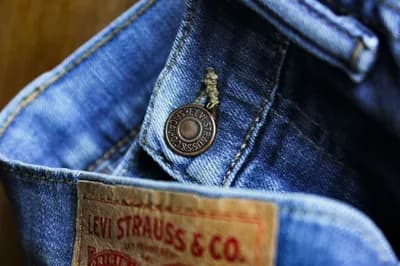
Levi's invented the five-pocket jean, so its own archival division has the run of the actual patterns, deadstock hardware, and cutting methods from each era — a resource no competitor, however devoted to the craft, can access firsthand. LVC's reissues aren't inspired by history, they're built to the original construction. If you want the blueprint rather than someone's homage to it, this is the only place selling it.
- 0

Named for a Japanese folk hero who fought demons, Momotaro leans into the mythology: the pink selvedge line and diagonal "battle stripes" woven into the pocket bags are meant to signal a warrior's jeans, not just a design flourish. Made in Kojima, the historic heart of Japanese denim production, each pair gets a level of hand-distressing most brands reserve for limited runs. It's a heritage story you can actually see on the fabric, which is rarer than it sounds.
- 0#5

Orslow takes the opposite approach from Iron Heart: Ichiro Nakatsu's team reworks classic American workwear silhouettes with Japanese-level precision, then one-washes the denim so it arrives soft, with none of the punishing break-in the heavyweight brands demand. That makes it the pick for someone who wants raw denim's texture without raw denim's ordeal — less a badge of endurance, more a genuinely comfortable pair of jeans.
- 0#6

Resolute is the brand collectors mention like a secret handshake — Hayashi runs an operation small enough that he weaves on his own looms and mixes his own dye recipes, and the output is correspondingly scarce. The fades that result are widely considered among the best in the category, but finding a pair at all is the real challenge; this is not a brand you shop for so much as one you happen to find.
- 0
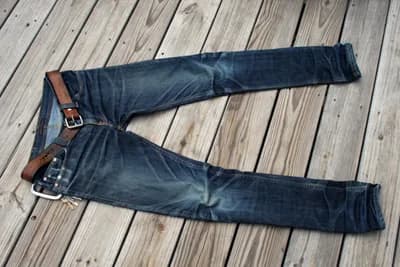
Nudie is the sensible entry point into raw denim, and it knows it. The Swedish brand builds from organic cotton and backs every pair with a free lifetime repair program — patch a hole, get a new pair reinforced, no charge, indefinitely — which does more to build fade-worthy loyalty than any marketing campaign could. The Lean Dean and Grim Tim fits are where most people's raw denim habit starts, for good reason: they're forgiving on a first try in a category that often isn't.
- 0#8
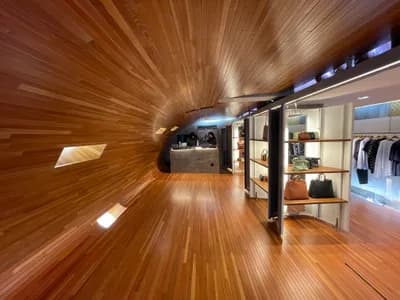
A.P.C. is why slim raw denim exists as a category at all — Jean Touitou's Petit Standard and New Standard cuts set the template in the 2000s that half this list still answers to. The brand's spare, Parisian minimalism carried into its denim too, keeping the focus on fit and fabric rather than logos or distressing. Less about the heaviest weight or the rarest loom; more about being first.
Sourcesen.wikipedia.org - 0#9
Kapital doesn't really make jeans in the conventional sense — the Kojima family brand applies sashiko stitching, patchwork, boro-style repair, and repeated indigo overdyeing until the denim reads as textile art with pockets. It is the brand on this list least concerned with a clean fade and most concerned with looking like it survived something. Not for anyone who wants a simple pair of jeans; exactly right for anyone who never did.
- 0
Studio D'Artisan is one of the original Osaka Five, the brands credited with restarting Japanese denim production in the late 1970s, and it has woven on the same vintage G3 shuttle looms since 1979. The pig mascot on the leather patch is a bit of self-deprecating humor rare in a category that otherwise takes itself extremely seriously. Less hyped than some of the newer names on this list, but it's the brand the others are standing on.
Frequently Asked Questions About Denim Brands
What makes a denim brand truly great? The best denim brands combine quality fabric (usually 100% cotton), consistent fit, and ethical production. Durability and repairability are also key markers of a premium label.
What is selvedge denim? Selvedge denim is woven on narrow shuttle looms that create a clean, self-finished edge on the fabric. It tends to be denser and more durable — and it develops a unique faded pattern with wear that many fans love.
Are Japanese denim brands worth the price? Brands like Iron Heart, Momotaro, and Studio D'Artisan control every step of production, from cotton sourcing to weaving. For buyers who want jeans built to last decades, the higher upfront cost often pays off.
Which denim brand is best for sustainability? Nudie Jeans (#7 on this list) leads on sustainability, offering free lifetime repairs and using 100% organic cotton. Orslow also prioritises small-batch production to cut waste.
Raw Denim vs. Sanforized: What You're Actually Buying
The single biggest split in this category is between raw (unsanforized) and sanforized denim. Raw denim hasn't been pre-shrunk or washed after dyeing, so it arrives stiff, dark, and roughly 3-10% larger than its finished size — the fabric shrinks to fit as the wearer breaks it in, and every crease, sit-pattern, and phone-pocket outline becomes a permanent fade specific to that pair. Sanforized denim is pre-treated so the size on the label is the size you get, trading that personalization for convenience. Most of the Japanese heritage brands on this list default to raw and unwashed; the European and American brands split more evenly, often offering both.
What Separates a $300 Pair From an $80 Pair
The price gap in this category isn't marketing — it tracks real differences in fabric and construction. Shuttle-loomed selvedge denim is slower to weave, narrower per yard (meaning more waste when cutting a pattern), and typically uses heavier, longer-staple cotton than the wide projectile-loomed denim used in mass-market jeans. Construction details compound it: chain-stitched hems, felled seams, and copper rivets all cost more in labor than an overlocked hem and a stamped rivet. None of that guarantees a better-fitting jean for any individual body — it mainly buys durability and a fade pattern that ages the way raw-denim collectors want it to.
Image credits
- Iron Heart: Wikimedia Commons
- The Flat Head: Wikimedia Commons
- Levi's Vintage Clothing: Garreth Brown / Pexels
- Resolute: Wikimedia Commons
- Nudie Jeans: Tlj.jpg / Wikimedia Commons (entity-adopted)
- A.P.C.: A.P.C. / Wikipedia
- Kapital: Wikimedia Commons
- Studio D'Artisan: Wikimedia Commons
Related Videos
Rank it your way
Remix this list into your own ranking, or head to the play hub for every game mode and community breakdown — blind mode, challenges, tier lists, and more.
You Might Also Like

Top 10 Sustainable Fashion Brands Worth Buying in 2026
best denim brands for quality and longevity

Top 10 Best Jewelry Brands 2026
best jewelry brands ranked 2026

Top 10 Most Overrated Streetwear Brands 2026
most overrated streetwear brands ranked

Top 10 Best Vintage Fashion Eras
#1 The 1970s — Studio 54 and Bohemian Liberation · #2 The 1960s — Swinging London and Space Age · #3 The 1990s — Grunge, Minimalism, and Supermodels
Top 10 Most Iconic Fashion Moments in History
#1 Coco Chanel Introduces the Little Black Dress (1926) · #2 Dior's New Look Debuts (1947) · #3 Yves Saint Laurent's Le Smoking Tuxedo (1966)

Top 10 Best Watch Brands 2026
#1 Patek Philippe · #2 Rolex · #3 Audemars Piguet