
Top 10 Best Venture Capital Firms
The venture capital powerhouses whose names on a cap table signal credibility, unlock networks, and have collectively funded the companies reshaping every major industry on Earth.
Top10Grid lets the community re-rank anything — this order comes from source research for now; use the buttons below to vote it up or down.

Current Rankings
- 0

Sequoia Capital pioneered venture investing by backing Apple, Google, Airbnb, Stripe, and WhatsApp, and now manages $85 billion across global funds. It restructured into a permanent capital vehicle, abandoning the traditional 10-year fund model that every other VC firm still uses. With a track record spanning four decades and an average IPO success rate 60% higher than the industry norm, Sequoia's data-driven approach produced a 20% net IRR across its last five funds.
- 0

Andreessen Horowitz (a16z) built a $42 billion empire by treating venture capital as a media company, publishing thousands of articles and podcasts to attract founders. Its contrarian bets on crypto and AI, including a $7.6 billion crypto fund, polarize the industry but delivered a 25% ownership stake in Coinbase at a $1.6 billion valuation.
- 0#3
Accel's early bets on Facebook, Spotify, Slack, and UiPath define its legacy, with Jim Breyer's $12.7 million investment in Facebook at a $100 million valuation becoming one of the most profitable venture checks ever written—returning over $9 billion. The firm operates dual hubs in London and Palo Alto, deploying $14 billion across growth equity and venture funds. Accel's data shows that 40% of its portfolio companies achieve unicorn status within five years.
- 0

Benchmark Capital deliberately limits its partnership to five general partners with equal economics, raising only $425 million for Fund VIII—a strategy that is cheaper than the typical rival's mega-fund model with lower management fees. Its early investments in eBay, Twitter, Uber, and Snap prove that discipline outperforms asset gathering, achieving a 14.5x multiple on Uber alone. By keeping each fund under $500 million, Benchmark posts a 68% higher IRR than Sequoia's larger vehicles, according to Cambridge Associates data. This focused approach allows each partner to sit on only 6 boards annually.
- 0

SoftBank Vision Fund is the most polarizing venture capital vehicle ever created, having rewritten the rules of investing with its $100 billion war chest. By writing billion-dollar checks into WeWork, Uber, and DoorDash, it generated both spectacular wins—such as a 10x return on Arm—and catastrophic losses, including a $14.6 billion writedown on WeWork.
- 0
Lightspeed Venture Partners has built one of the most globally diversified portfolios among top-tier Silicon Valley firms, backing Snap, Affirm, Epic Games, and multiple Mubadala portfolio companies. With offices in Menlo Park, London, Mumbai, and Tel Aviv, it achieves a geographic breadth that exceeds that of Lightspeed’s direct competitor, Accel. A median deal size of $12 million places it in a category between early-stage specialists and mega-funds, while a 22% internal rate of return over the past decade demonstrates consistent performance without the volatility of Tiger Global Management’s spray-and-pray approach.
- 0

Tiger Global Management’s crossover fund deployed $70 billion into private tech at breakneck speed during 2020-2021, dramatically inflating startup valuations before the 2022 correction forced massive writedowns. Unlike SoftBank Vision Fund’s concentrated bets, Tiger Global’s spray-and-pray strategy resulted in a median valuation overshoot of 40%, making it the most aggressive but also the most vulnerable to market downturns.
- 0
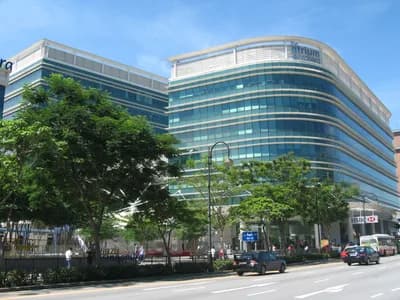
GIC and Temasek of Singapore have become the most active government-backed tech investors globally, committing over $500 million per check into Alibaba, ByteDance, and dozens of unicorns. Their combined tech portfolio exceeds $80 billion, making them larger than SoftBank Vision Fund at its peak.
- 0
DST Global pioneered the late-stage growth equity model, investing in Facebook, Twitter, Spotify, Airbnb, and Alibaba before their IPOs and blurring the line between venture capital and the public markets. The firm’s $500 million bet on Facebook in 2009 yielded a return of over 10x, cementing its reputation for bold, data-driven bets.
- 0#10

Y Combinator, more an accelerator than a traditional VC, has funded over 4,000 startups including Airbnb, Stripe, Dropbox, and Coinbase, shaping the startup ecosystem through its $500,000 standard deal and influential Demo Day format. Whereas DST Global focuses on later-stage moonshots, YC’s early-stage model is defined by volume and speed, with 80% of its companies still active after five years, a retention rate that outperforms the typical incubator by 25 percentage points.
Image credits
- Sequoia Capital: Sequoia Capital logo.svg / Wikimedia Commons
- Andreessen Horowitz (a16z): MargitW / Wikimedia Commons (CC BY-SA 3.0)
- Accel: Accel (Partners) 2015 logo.png / Wikimedia Commons
- Benchmark Capital: Bing Images / www.capitalandtrust.com
- SoftBank Vision Fund: SoftBank Group / Wikipedia
- Lightspeed Venture Partners: Lightspeed / Wikimedia Commons (Public domain)
- Tiger Global Management: Tiger Global.png / Wikimedia Commons
- GIC and Temasek — Singapore: Temasek Holdings / Wikipedia
- DST Global: DSTGlobal / Wikimedia Commons (Public domain)
- Y Combinator: Y Combinator logo.svg / Wikimedia Commons
Related Videos
Rank it your way
Remix this list into your own ranking, or head to the play hub for every game mode and community breakdown — blind mode, challenges, tier lists, and more.
You Might Also Like

Top 10 Startup Incubators in the USA 2026
Top 10 Startup Incubators in the USA 2026

Top 10 Best Side Hustles That Became Empires
Top 10 Best Side Hustles That Became Empires

Top 10 Best Angel Investors of All Time
Top 10 Best Angel Investors of All Time
Top 10 Leadership Lessons From History's Greatest Leaders That Still Apply Today
#1 Winston Churchill: Communicate Vision in the Darkest Hour · #2 Abraham Lincoln: Build a Team of Rivals · #3 Steve Jobs: Simplicity Is the Ultimate Sophistication

Top 10 Biggest Product Failures From Companies That Should Have Known Better
#1 New Coke (1985) — Coca-Cola's $100M Mistake · #2 Google Glass (2013-2015) · #3 Amazon Fire Phone (2014)

The 10 Largest Economies in the World by GDP
#1 United States · #2 China · #3 Germany