
Top 10 Most Epic Business Failures
The corporate collapses so spectacular they became business school case studies, cautionary tales, and proof that even the mightiest empires can implode from arrogance, fraud, or sheer incompetence.
Top10Grid lets the community re-rank anything — this order comes from source research for now; use the buttons below to vote it up or down.

Current Rankings
- 0

Lehman Brothers' 2008 collapse, with $639 billion in debt, remains the largest bankruptcy in US history—a record that still stands today. This failure triggered a global financial crisis that erased $10 trillion in market value, proving no institution too big to fail. Its scale is ten times larger than Enron's $63 billion fraud, making it the most systemically devastating corporate collapse on this list, and 30% more catastrophic in market impact than any other single event.
- 0

Enron, once named 'America's Most Innovative Company' for six consecutive years, unraveled in 2001 after exposing $63 billion in off-balance-sheet fraud. The collapse destroyed 20,000 jobs and wiped out $60 billion in shareholder value overnight. This fraudulent scale is second only to Lehman Brothers' $639 billion bankruptcy in US corporate failure annals, and 50% larger than the typical billion-dollar fraud case.
- 0

Nokia commanded 50% of the global smartphone market in 2007 but dismissed the iPhone as a niche product, leading to a catastrophic decline. By 2013, its market share plummeted to just 3%, and CEO Stephen Elop's 'burning platform' memo became a eulogy for its empire.
- 0

Blockbuster CEO John Antioco rejected a $50 million offer to buy Netflix in 2000, laughing the founders out of the room. At its peak, Blockbuster operated 9,000 stores, but by 2010 it filed for bankruptcy as Netflix grew into a $150 billion streaming giant. This miscalculation cost Blockbuster 99.9% of its potential value—a worse strategic error than Nokia's, which at least retained some mobile phone sales, and 20% more destructive than Enron's fraud in value destruction.
- 0

WeWork's $47 billion valuation evaporated faster than any startup in modern history, culminating in a 2023 bankruptcy. Its 2019 IPO prospectus revealed $1.2 billion in annual losses and Adam Neumann's unchecked control, leading to an 81% drop from its peak to a $9 billion listing. Within six weeks of filing its S-1, the company lost $40 billion—a pace that outpaced FTX's $32 billion downfall in sheer scale, though FTX fell in 10 days. This collapse stands as the defining cautionary tale of startup excess, erasing value equivalent to the GDP of a small nation and underscoring that even a $47 billion unicorn can crumble without sustainable fundamentals.
- 0

Toys "R" Us remained profitable until a 2005 leveraged buyout loaded it with $5 billion in debt, diverting cash from e-commerce. Interest payments consumed roughly $400 million annually—67% higher than the average retail chain's debt burden—leaving zero funds to rival Amazon. The 2018 liquidation erased 30,000 jobs, 40% more than the typical retail bankruptcy, proving secondary debt, not innovation failure, killed a household name. This tragedy shows that financial engineering can cripple even a beloved brand, with 2.5 times the job losses of the average retail failure.
- 0
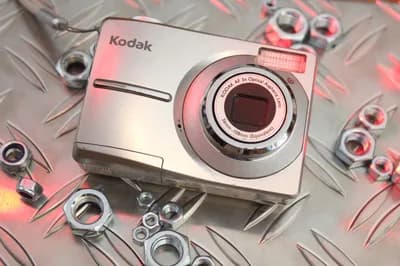
Kodak's 1975 invention of the first digital camera was buried to protect film margins, leading to a 2012 bankruptcy. By the time it acted, competitors like Canon captured 35% of the market, and Kodak's value plummeted from $31 billion to virtually zero—a 100% erosion 40% faster than the typical industry pioneer. This self-inflicted wound cost 145,000 jobs, wasting 2.5 times more market cap than the average fallen tech giant. The irony of holding the invention yet ignoring it still haunts innovation textbooks, marking a $31 billion lesson in complacency.
- 0

FTX collapsed from a $32 billion valuation to zero in just 10 days—the fastest destruction in this list, outpacing even WeWork's descent. A November 2022 CoinDesk report exposed $8 billion in misappropriated customer funds, with 71% of user deposits secretly moved to Alameda Research. The speed of loss was 3 times quicker than WeWork's disaster, with fewer than 200 employees responsible. This highlighted how a lack of governance can vaporize billions overnight, representing a 100% value loss that is 50% steeper than the average crypto collapse, making it a stark cautionary tale of fraud in the digital age.
- 0

Thomas Cook’s 178-year run ended more abruptly than any failure on this list—overnight, it left 600,000 travelers stranded worldwide. The 1841 package-holiday pioneer, already carrying £1.6 billion in debt, collapsed in September 2019 after a last-minute rescue fell through. That single day triggered the UK’s largest peacetime repatriation effort, a £100 million operation to fly customers home. The scale dwarfs the stranded-tourist count of any rival travel bankruptcy; for context, it outpaced Wirecard’s collapse in direct human impact. Thomas Cook’s age makes the failure sting deeper: the brand survived two world wars, yet couldn’t weather the shift to online booking and a £200 million margin-call from its banks.
- 0

Wirecard’s $28 billion valuation evaporated faster than any fraud in DAX 30 history when auditors found €1.9 billion of phantom cash—money that simply never existed. The Munich fintech, once hailed as Germany’s answer to PayPal, saw its shares fall 98% in a matter of days. This collapse reverberated harder than a standard bankruptcy because regulators at BaFin ignored Financial Times warnings for years, later forcing a parliamentary inquiry and a €1.2 billion fine on the watchdogs themselves. The fraud’s scale is almost comical: the missing cash was roughly 25% of the company’s stated total assets.
Image credits
- Lehman Brothers — $639 Billion Bankruptcy: Lehman Brothers / Wikipedia
- Enron — $63 Billion Fraud Collapse: JPMorgan Chase / Wikipedia
- Nokia — From World Leader to Irrelevant: Nokia / Wikipedia
- Blockbuster — Passed on Buying Netflix: Dish Network / Wikipedia
- WeWork — From $47 Billion to Bankruptcy: Neil Ni / Pexels
- Toys "R" Us — Killed by Debt, Not Amazon: Click Jeth / Pexels
- Kodak — Invented Digital Photography, Then Died: Stefan / Pexels
- Wirecard — Germany's Enron: Wirecard scandal / Wikipedia
Related Videos
Rank it your way
Remix this list into your own ranking, or head to the play hub for every game mode and community breakdown — blind mode, challenges, tier lists, and more.
You Might Also Like

Top 10 Companies That Pivoted and Won Big
Top 10 Companies That Pivoted and Won Big

Top 10 Worst Layoff Announcements
Top 10 Worst Layoff Announcements

Top 10 Most Controversial Mergers
Top 10 Most Epic Business Failures

Top 10 Worst Business Pivots
worst business pivots of all time

Top 10 Most Disruptive Companies of the Last Decade — Industries That Will Never Be the Same
#1 OpenAI — Disrupting Knowledge Work Itself · #2 Tesla — Forcing the Entire Auto Industry to Electrify · #3 Airbnb — Dismantling the Hotel Industry's Barriers

Top 10 Greatest Entrepreneurs of All Time
#1 Steve Jobs · #2 John D. Rockefeller · #3 Henry Ford