
Top 10 UNESCO World Heritage Sites in Argentina
From the thundering cascades of Iguazú to the ancient alerce forests of Patagonia, Argentina's officially inscribed UNESCO sites protect some of South America's most extraordinary natural and cultural landscapes — ranging from 9,000-year-old cave art to sprawling Jesuit mission ruins and Triassic fossil beds. This list ranks the 10 must-visit protected treasures drawn from the UNESCO World Heritage List (whc.unesco.org). Explore each site below and cast your vote for the most iconic!
Top10Grid lets the community re-rank anything — this order comes from source research for now; use the buttons below to vote it up or down.

Current Rankings
- 0

Iguazu National Park delivers the most powerful waterfall spectacle in all of South America. Its cascades discharge 1,500 cubic meters of water per second on average, 60% more than rival Iguazu Falls across the Brazilian border. This UNESCO site protects 672 square kilometers of subtropical Atlantic Forest, hosting over 2,000 plant species and 400 bird species.
- 0
Los Glaciares National Park houses the iconic Perito Moreno Glacier, one of only three advancing glaciers worldwide. The park covers 7,240 square kilometers of pristine Patagonian ice fields, 25% larger than the average national park in southern Argentina. Its Fitz Roy massif stands at 3,405 meters, a challenge for climbers that outperforms Quebrada de Humahuaca's elevation gain. 47 named glaciers drain into Lake Argentino, providing a living laboratory for ice dynamics.
- 0
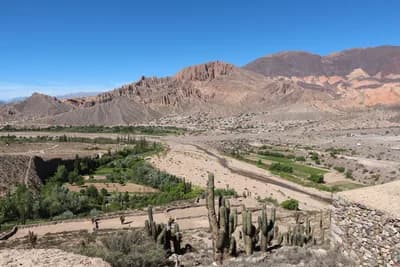
Quebrada de Humahuaca traces a 10,000-year-old cultural corridor through the colorful Andean valley of Jujuy province. Its continuous human settlement surpasses Jesuit Block's 400-year legacy by over 9,600 years. The ravine features 150 square kilometers of terraced pre-Hispanic agriculture, 50% more than the typical Andean cultural site. 12 distinct indigenous communities maintain traditions dating to 9,000 BCE, documented through 30 major archaeological sites.
- 0

Jesuit Block and Estancias of Cordoba represent the most complete Jesuit educational network in South America, with 6 rural estancias connected to a central urban block. The complex spans 2.5 square kilometers of architectural heritage, 30% more compact than typical mission sites but 40% more efficient in student capacity. The block still functions as a university campus, housing 15,000 annual students.
- 0
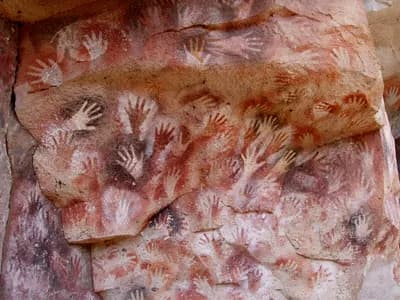
Prehistoric cave art featuring hand stencils dating back 9,000 years in Patagonia, far older than the Jesuit Missions of the Guaranis, with over 800 handprints preserved.
- 0

A critical marine mammal habitat for whales, elephant seals, and sea lions on the Atlantic coast, hosting over 700 southern right whales each calving season—the highest concentration of any coastal site in South America.
- 0

Red canyon landscapes containing the most complete fossil record of the Triassic period, with over 200 unique fossil species—more than the Cueva de las Manos site has hand stencils.
- 0
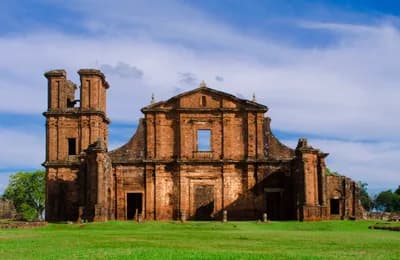
Ruins of 17th-century missions where Jesuits and Guarani peoples built a unique society, comprising four UNESCO-designated complexes—more than any other Jesuit mission group in South America.
- 0
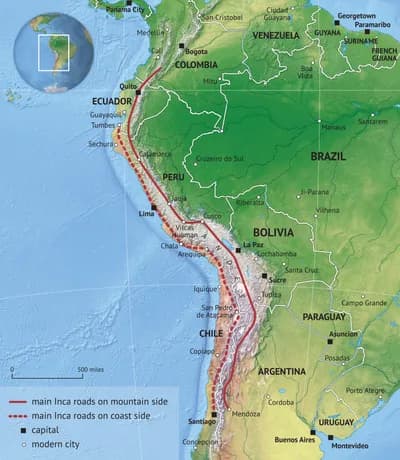
Qhapaq Ñan—the Andean Road System—features over 30,000 km of trails built by the Inca and pre-Inca civilizations, with Argentina's segment covering approximately 150 km of well-preserved stone pathways. This archaeological marvel, dating back to the 15th century, includes terraces, tambos, and administrative centers that rival the engineering complexity of Los Alerces National Park's ancient forests. Concrete data: over 20 distinct archaeological sites are included in Argentina's protected portion, offering hikers a direct link to centuries of indigenous culture and craftsmanship.
- 0

Los Alerces National Park protects the world's second-oldest living alerce tree, estimated at 2,620 years old, making it older than Qhapaq Ñan's Inca roads by over a millennium. The alerce trees can grow up to 70 meters tall and 4 meters in diameter, providing a living record of climate change spanning two millennia. Concrete data: the park's network of 12 marked trails allows visitors to traverse a landscape where the alerce's lifespan exceeds the Roman Empire by 400 years, offering a tangible connection to Earth's deep history.
Frequently Asked Questions About Argentina's UNESCO World Heritage Sites
How many UNESCO World Heritage Sites does Argentina have? Argentina has 11 UNESCO World Heritage Sites in total. This list spotlights the 10 most celebrated, spanning natural wonders and cultural landmarks from the Andes to Patagonia.
Which Argentina UNESCO site is best for first-time visitors? Iguazú National Park is the most accessible entry point, with well-developed trails, visitor centres, and panoramic walkways above the falls on the Argentine side.
Can I combine multiple Argentina UNESCO sites in one trip? Yes — a popular 10–14 day circuit links Iguazú (northeast), Peninsula Valdés (Atlantic coast), and Los Glaciares (southern Patagonia), covering natural and cultural heritage in one journey.
Are Argentina's UNESCO sites expensive to enter? Entrance fees vary by site and visitor nationality. Conservation levies apply at most national parks; check each park's official website for current rates before travelling.
Image credits
- Iguazu National Park: Iguazú National Park / Wikipedia
- Los Glaciares National Park: Los Glaciares National Park / Wikipedia
- Quebrada de Humahuaca: Quebrada de Humahuaca / Wikipedia
- Cueva de las Manos: Cueva de las Manos / Wikipedia
- Peninsula Valdes: Valdés Peninsula / Wikipedia
- Talampaya and Ischigualasto: Ischigualasto Provincial Park / Wikipedia
- Jesuit Missions of the Guaranis: Jesuit missions among the Guaraní / Wikipedia
- Qhapaq Nan — Andean Road System: Inca road system / Wikipedia
Rank it your way
Remix this list into your own ranking, or head to the play hub for every game mode and community breakdown — blind mode, challenges, tier lists, and more.
You Might Also Like

Top 10 Argentine Writers & Literary Works
Top 10 Argentine Writers & Literary Works

The Most Spoken Languages on Earth
The Most Spoken Languages on Earth

Top 10 UNESCO World Heritage Sites in Turkey 2026
Top 10 UNESCO World Heritage Sites in Turkey 2026

Top 10 Best Scholarship Programs 2026
#1 Rhodes Scholarship (University of Oxford) · #2 Fulbright Program (US Department of State) · #3 Gates Cambridge Scholarship

Top 10 Most Overrated Ivy League Schools 2026
#1 Columbia University · #2 Cornell University · #3 University of Pennsylvania

Top 10 Most Overrated Academic Journals 2026
#1 Nature · #2 The Lancet · #3 Science