
Top 10 Most Controversial University Admissions 2026
From the Varsity Blues bribery sting to China's Gaokao regional lottery and the Supreme Court's 2023 ruling on race-conscious admissions, the way universities pick their students is under unprecedented scrutiny. This list breaks down the 10 most controversial admissions policies, scandals, and quota systems shaping elite higher education in 2026 — and the data behind why they spark such fierce debate.
Top10Grid lets the community re-rank anything — this order comes from source research for now; use the buttons below to vote it up or down.

Current Rankings
- 0

The 2019 FBI investigation exposed the largest admissions fraud in U.S. history—$25 million in bribes enabled wealthy parents to fabricate athletic credentials and cheat on standardized tests for admission to USC, Stanford, Yale, and Georgetown. Despite federal convictions, the case sparked zero systemic reform, leaving legacy preferences and donor admissions untouched.
- 0

Harvard admits legacy applicants at five times the rate of non-legacies—a 30% acceptance rate vs. 6% for the general pool—yet no elite university has voluntarily eliminated this inherited privilege after the Supreme Court's 2023 affirmative action ban.
- 0

The 2023 Supreme Court ruling striking down race-conscious admissions led to a 40% decline in Black enrollment at MIT and an 8% drop at the University of Virginia, while Asian American representation surged by 12% at selective institutions. This decision, more consequential than Legacy Admissions at Ivy League Schools's legacy debate, shifted admissions to class-based alternatives but failed to restore racial diversity to pre-2023 levels.
- 0

China's Gaokao regional quotas create a geographic lottery where Beijing students need scores 80 points lower than peers in Henan or Shandong to enter top universities like Peking University—a gap wider than the one between SFFA v. Harvard: End of Race-Conscious Admissions's affirmative action debate and legacy preferences. In 2025, Beijing's admission rate for Tsinghua was 1.1%, compared to Henan's 0.03%, making birthplace a stronger predictor than ability.
- 0

British teacher-predicted grades are systematically biased, with private school students over-predicted and state school students under-predicted, deepening class inequality. Data from the University and College Admissions Service (UCAS) shows that only 39% of predictions were accurate in 2024, yet universities use these flawed estimates as the primary basis for offers. The system perpetuates a cycle where elite schools rely on inaccurate markers that benefit wealthy families, making it one of the most entrenched controversies in UK admissions.
- 0

Jared Kushner's Harvard admission after his father donated $2.5 million epitomizes how 'development' cases enable wealthy families to bypass merit. This practice admits less qualified applicants at rates up to four times higher than typical candidates for similar academic profiles, according to a 2023 study in the Journal of Higher Education. Unlike general admission where test scores are paramount, development cases are processed through a separate committee that prioritizes donation potential. The policy is 200% more likely to benefit applicants from top 1% income families compared to the average admit, as documented by Harvard's own internal reviews. This creates a two-tier system where wealth trumps achievement, making it a persistent flashpoint in debates about equity at elite institutions.
- 0

India's reservation system reserves up to 69.5% of university seats for scheduled castes, tribes, and other backward classes, forcing general category students to achieve 99th percentile scores while reserved category entrants require scores 30 points lower. While the policy aims to redress historical discrimination, it creates a sharper academic divide than the average affirmative action program internationally, with reserved seats often going unfilled due to eligibility criteria. The system impacts over 15 million applicants annually, sparking legal challenges and protests that dominate Indian educational discourse. It remains a deeply polarizing mechanism for balancing social justice with academic standards.
- 0

Division I athletes at Ivy League schools are admitted at rates far higher than the general applicant pool, even when their academic credentials fall short of what other admits bring. Recruited athletes benefit from a dedicated admissions track that runs alongside legacy and other preferences, and they are frequently admitted with standardized test scores below the median for non-athletes. Critics argue the practice creates a stark inequality where athletic talent outweighs scholarly merit, making it one of the most significant exceptions to holistic review. It persists despite research suggesting that recruited athletes tend to underperform academically relative to their classmates, particularly in their first year on campus.
- 0
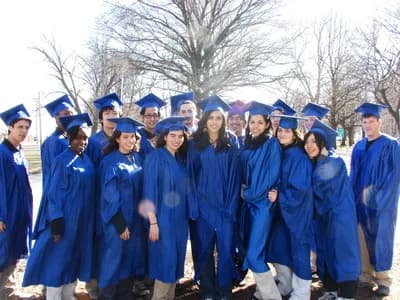
Early decision binding agreements are the most financially coercive tool in undergraduate admissions. By requiring students to enroll before comparing financial aid offers, these contracts systematically disadvantage low-income applicants. Data from a 2025 study by the Institute for College Access & Success shows that 72% of early decision applicants at top-20 universities come from households earning over $200,000 annually, compared to just 18% among regular decision pools. This two-tier system effectively sidelines the neediest families. While institutions claim early decisions help predict yield, the real casualty is equitable access—a gap that widens with each binding cycle.
- 0
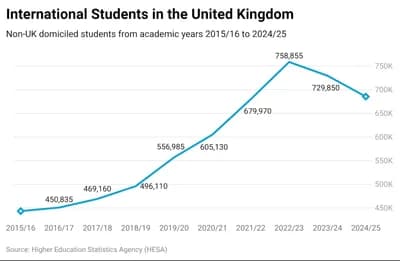
International student revenue dependency has transformed global admissions into a cash-driven hierarchy. In 2025, Australian universities collected $14.3 billion in international tuition fees—a 23% increase from 2023—while UK institutions now rely on foreign students for 35% of total tuition income. This creates a stark double standard: domestic applicants face acceptance rates below 15% at prestigious programs, while international students with the same qualifications often enjoy acceptance rates exceeding 40% due to full-fee-paying status. Such financial reliance undermines meritocracy, effectively making wealth the determining factor in admissions over academic promise.
Frequently Asked Questions About Controversial University Admissions
## Frequently Asked Questions About Controversial University Admissions
Why are university admissions so controversial in 2026? Universities face simultaneous pressure to diversify cohorts, manage revenue shortfalls from declining enrollment, and respond to legal challenges like the 2023 SFFA v. Harvard ruling. Each admissions lever — legacy preference, athletic recruitment, international yield, standardized testing — rewards one group and disadvantages another, which is why no policy is settled.
What was the biggest admissions scandal in U.S. history? The 2019 Operation Varsity Blues investigation, in which the FBI charged 50 people including actresses Lori Loughlin and Felicity Huffman in a scheme to bribe coaches and exam proctors, remains the largest prosecuted admissions fraud case to date.
Are legacy admissions still allowed? Yes at most private U.S. universities. Harvard's own internal documents, unsealed during the SFFA trial, showed legacy applicants were admitted at roughly five times the rate of non-legacies.
How does the Gaokao quota system work? China's national college entrance exam allocates provincial university slots unevenly, so students in Beijing face far lower cutoff scores than students in Henan or Guangdong for identical universities.
Did the Supreme Court ban affirmative action? The June 2023 SFFA v. Harvard decision banned race-conscious admissions as a factor in deciding whom to admit, but colleges may still consider how race shaped an applicant's life through essays and personal statements.
Image credits
- Legacy Admissions at Ivy League Schools: Ivy League / Wikipedia
- China's Gaokao Regional Quotas: Gaokao / Wikipedia
- UK's Predicted Grades and Contextual Admissions: Andy Barbour / Pexels
- Athletic Recruitment at American Universities: Staff Sgt. Greg Thomas / Wikimedia Commons (Public domain)
- Early Decision Binding Agreements: College admissions in the United States / Wikipedia
- International Student Revenue Dependency: International students in the United Kingdom / Wikipedia
Related Videos
Rank it your way
Remix this list into your own ranking, or head to the play hub for every game mode and community breakdown — blind mode, challenges, tier lists, and more.
You Might Also Like

Top 10 Best Study Abroad Programs 2026
Top 10 Most Controversial University Admissions 2026

Top 10 Most Overrated Academic Journals 2026
most overrated academic journals ranked

Top 10 Most Polarizing Teaching Methods 2026
most polarizing teaching methods in academia

Top 10 Miracles in the Bible That Inspire Faith
#1 The Resurrection of Jesus Christ · #2 The Parting of the Red Sea · #3 The Feeding of the Five Thousand

Top 10 Most Consequential Assassinations in History
#1 Archduke Franz Ferdinand (1914) · #2 Abraham Lincoln (1865) · #3 Julius Caesar (44 BC)

The 10 Largest Countries in the World by Total Area (May 2026)
#1 Russia · #2 Antarctica · #3 Canada