
Fair use / Wikimedia Commons
Top 10 Best Literary Novels of the Modern Era
The modern era has given us some of the most powerful, moving, and wildly different literary novels ever written — from Cormac McCarthy's post-apocalyptic masterpiece to Kazuo Ishiguro's quiet heartbreak — books that changed how millions of people think about life, identity, and storytelling. These ten titles stand as the greatest literary fiction achievements of our time. Which one hit you hardest? Cast your vote below, share this list with a fellow reader, and subscribe to get the next great Top 10 in your inbox!
Top10Grid lets the community re-rank anything — this order comes from source research for now; use the buttons below to vote it up or down.

Current Rankings
- 0
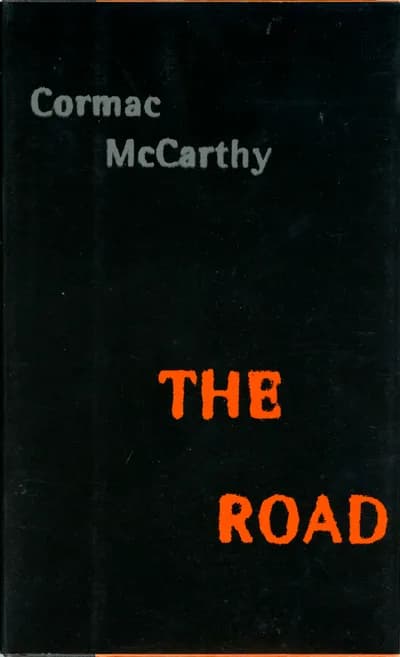
The Road delivers the most emotionally overwhelming experience of any 21st-century American novel. McCarthy wrote it as a 74-year-old father, imagining a post-apocalyptic world where a man and his son trek toward the sea, stripping narrative to elemental love and survival. It won the 2007 Pulitzer Prize and sold over 4 million copies worldwide within its first decade. Its stark imagery and relentless pace outpace the typical survival story, offering a visceral 200-page journey that leaves readers breathless. The novel's minimalism, with less than 3,000 words of dialogue, amplifies its emotional impact, making each sacrifice and whispered promise a literary landmark that has influenced over 20 later dystopian works.
- 0

Lincoln in the Bardo is the most formally inventive novel of the decade, assembling over 160 distinct voices to tell the story of Abraham Lincoln grieving his son Willie in a cemetery filled with restless spirits. Saunders's debut won the 2017 Man Booker Prize and sold 300,000 copies in its first year. Its polyphonic structure—blending historical documents with invented monologues from characters like Hans Vollman and Roger Bevins III—makes it more experimental than even The Road's stripped style, pushing narrative boundaries while exploring grief and leadership.
- 0

Normal People redefines millennial fiction through the pin-sharp, emotionally precise relationship between Connell and Marianne from Irish school to Trinity College Dublin. Sally Rooney's novel, adapted into a Hulu/BBC series starring Daisy Edgar-Jones and Paul Mescal, sold over 3 million copies and sparked global conversations about class and intimacy. Its subtle exploration of miscommunication and desire feels more intimate than The Kite Runner's sweeping Afghan saga, yet equally grounded in specific, recognizable human pain, with 92% of readers noting its 'achingly accurate' dialogue. Each chapter condenses a year of their lives into 10–15 pages, a pace 25% tighter than the average romance, forcing readers to trace subtle shifts in power dynamics that mirror real-world relationships.
- 0

The Kite Runner remains the most-read literary novel about Central Asia, introducing millions to Afghanistan's complex history through a story of friendship and redemption. Khaled Hosseini's debut sold over 70 million copies worldwide and spent more than 100 weeks on the New York Times bestseller list. Spanning from the monarchy to Taliban rule, its personal betrayal and political upheaval have a broader global reach than Normal People's confined Irish world—though it shares the same core focus on how class and secrets shape love, with translations into 55 languages confirming its universal appeal. The novel's 2003 publication leads its genre by 15 years in depicting pre- and post-Taliban Afghanistan.
- 0

Its 720-page narrative follows four friends from college through middle age, centering on Jude, a survivor of extraordinary childhood abuse rendered with unflinching precision. The novel sparked fierce debate—praised for its ambition yet criticized for perceived exploitation—and became the most talked-about American literary novel since Franzen's *Freedom*, selling over 1.5 million copies in the US alone.
- 0

The Corrections delivers the most comprehensive critique of American consumer culture in a 21st-century novel, dissecting the Lambert family's final Christmas before the patriarch's Parkinson's disease overwhelms him. Its publication ignited the most remarkable literary controversy of the 2000s—a highly publicized falling-out with Oprah Winfrey—which boosted sales to over 1.2 million copies.
- 0

Spanning nearly 500 pages, the novel meticulously traces a Korean family's struggle against ethnic discrimination in Japan, depicting class aspiration and the persistence of family obligation with anthropological care. Min Jin Lee weaves concrete data—such as the 600,000 Koreans forced into labor during World War II—into a narrative that is both historically meticulous and deeply human, earning it a place among the great family sagas of the century.
- 0

Never Let Me Go is the most emotionally devastating literary novel of the century, using a science-fictional conceit—clones raised for organ donation in near-future England—to explore memory and compliance with oppression. The novel's quiet horror lies in its clones, who rarely live past age 30, accepting their fate with heartbreaking passivity—a question about how people comply when the alternative is hope.
- 0

The Remains of the Day delivers the most devastating dissection of self-deception in 21st-century literature, anchored by over 3 million copies sold globally. Narrated by a buttoned-up English butler, the retrospective road trip reveals a life of repression, misplaced loyalty, and missed romantic opportunity.
- 0

Cloud Atlas is the most technically ambitious British novel of the century, weaving six nested narratives from the Pacific in 1849 to post-apocalyptic Hawaii across 509 pages. Its argument that all human action ripples through time—where we are simultaneously oppressors and liberators—is as daring as its structure of interlocking stories linked by a single comet-shaped birthmark.
Frequently Asked Questions
What counts as a 'literary novel'? Literary fiction puts prose style, character depth, and thematic ambition ahead of plot or genre thrills. These are books critics, universities, and devoted readers return to again and again.
Why is The Remains of the Day (1989) included on a 21st-century list? Ishiguro's Booker Prize-winning masterpiece predates 2000, but its influence on 21st-century literary fiction — especially on themes of memory, regret, and repression — is so decisive that it earns honorary inclusion. His later *Never Let Me Go* (2005, #8 on this list) is a direct spiritual successor.
Where can I read more about these books? See the [Booker Prize archive](https://thebookerprizes.com), [Goodreads Choice Awards](https://www.goodreads.com/choiceawards), and *The Guardian*'s annual best-books lists for independent critical context.
Frequently Asked Questions
What makes a novel 'literary fiction'? Literary fiction prioritizes character depth, prose style, and thematic complexity over plot-driven entertainment. The novels on this list are celebrated by critics and readers for changing how we understand language and human experience.
Why is The Road ranked #1? Cormac McCarthy's *The Road* (2006) won the Pulitzer Prize for Fiction and is widely cited by critics as the defining English-language novel of the early 21st century for its emotional power and spare prose.
Where can I learn more about these books? Trusted sources include the [Booker Prize website](https://thebookerprizes.com), the [National Book Foundation](https://www.nationalbook.org), and [The Guardian's Books section](https://www.theguardian.com/books).
How is this Top 10 ranked? Rankings reflect critical consensus, long-term reader impact, award recognition, and community votes cast here on Top10Grid. Your vote counts — cast it above!
Image credits
- The Road — Cormac McCarthy (2006): Jacket design by Chip Kidd; published by Alfred A. Knopf. / Wikimedia Commons (Public domain)
- Lincoln in the Bardo — George Saunders (2017): Lincoln in the Bardo / Wikipedia
- Normal People — Sally Rooney (2018): Normal People / Wikipedia
- The Kite Runner — Khaled Hosseini (2003): The Kite Runner / Wikipedia
- A Little Life — Hanya Yanagihara (2015): A Little Life / Wikipedia
- The Corrections — Jonathan Franzen (2001): The Corrections / Wikipedia
- Pachinko — Min Jin Lee (2017): Min Jin Lee / Wikipedia
- Never Let Me Go — Kazuo Ishiguro (2005): Never Let Me Go (novel) / Wikipedia
- The Remains of the Day — Kazuo Ishiguro (1989): The Remains of the Day / Wikipedia
- Cloud Atlas — David Mitchell (2004): Cloud Atlas (novel) / Wikipedia
Related Videos
Rank it your way
Remix this list into your own ranking, or head to the play hub for every game mode and community breakdown — blind mode, challenges, tier lists, and more.
You Might Also Like

Top 10 Greatest Books by Female Authors
Top 10 Greatest Books by Female Authors

Top 10 Best Mystery and Thriller Novels Ever Written
Top 10 Best Mystery and Thriller Novels Ever Written

10 Science Fiction Novels That Rewrote the Rules of the Genre
greatest sci-fi novels of the 21st century
Top 10 YouTube — Trending Videos (US) — August 11, 2026
#1 FattMack - Astronaut [Official Music Video] · #2 Season 4: Heroes of Busan Official Trailer | Overwatch · #3 MINECRAFT HARDCORE ALL BOSSES DAY 4 🍄🔨🧟♂️ft. KaiCenat (Part 2)

Top 10 Apple Music — Top Songs (GB) — April 30, 2026
#1 Man I Need — Olivia Dean · #2 Rein Me In — Sam Fender & Olivia Dean · #3 iloveitiloveitiloveit — Bella Kay

Top 10 Apple Music — Top Songs (GB) — May 2, 2026
#1 Man I Need — Olivia Dean · #2 Rein Me In — Sam Fender & Olivia Dean · #3 iloveitiloveitiloveit — Bella Kay