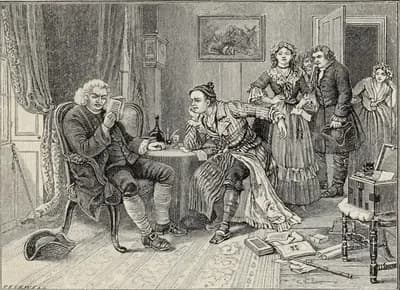
Internet Archive Book Images / Wikimedia Commons (No restrictions)
Top 10 Greatest Novels of All Time
Literature's supreme achievement is the novel — a form capacious enough to hold entire worlds, long enough to colonise months of a reader's life, and powerful enough to permanently alter how you see your own. These ten works are not merely great books. They are the benchmarks against which all other fiction is measured. Spanning four centuries, seven languages, and every corner of human experience, they share one quality: the ability to create a universe so convincing that closing the cover feels like leaving a place you have actually lived. Critics, scholars, and translators have argued about rankings for generations. What follows is the consensus of the ages.
Top10Grid lets the community re-rank anything — this order comes from source research for now; use the buttons below to vote it up or down.

Current Rankings
- 0

The first modern novel and, by near-universal critical consensus, the greatest work of fiction ever written, Don Quixote was published in two parts in 1605 and 1615. Miguel de Cervantes invented the unreliable narrator, the meta-novel, and the modern antihero in a single stroke — achievements that influenced nearly every novel that followed. Over 700 editions are currently in print worldwide, and it has been translated into more languages than any book except the Bible. The story of an ageing nobleman who mistakes windmills for giants is as philosophically alive and as funny today as it was four centuries ago.
- 0

War and Peace earns its reputation as the novel intimidating readers avoid and the one they're almost always wrong to avoid — yes, it runs past 580,000 words and tracks five families and hundreds of named characters through Napoleon's invasion of Russia, but Tolstoy never loses the thread of any single person's interior life inside that scale. Virginia Woolf called it the greatest of all novels, and 150 years on nobody's mounted a serious rebuttal. Where Don Quixote invented the form, this is the novel that proved how far it could go.
- 0

The longest novel in the French literary canon and the most sustained exploration of consciousness in all of fiction, In Search of Lost Time spans seven volumes and approximately 1.5 million words — more than twice the length of War and Peace. Marcel Proust published the work in installments between 1913 and 1927, constructing an entire world from involuntary memory, beginning with the narrator's madeleine dipped in tea. T.S. Eliot judged it the greatest fiction of the 20th century. Contemporary neuroscientists have since confirmed that Proust's description of sensory-triggered recall is anatomically accurate — a novelist who understood how the brain works before the science existed to prove it.
- 0#4

Nothing happens in Ulysses, technically — one day in Dublin, June 16, 1904 — and everything happens in it, because Joyce spends eighteen episodes reinventing what a novel is even allowed to do: interior monologue, mock-newspaper headlines, a chapter written as catechism. Sylvia Beach published the first edition out of her Paris bookshop in 1922, a thousand copies that now sell at auction for six figures each. It was banned in the United States until 1933, which meant early copies crossed the Atlantic hidden inside other books — smuggled contraband, and arguably still the most influential novel of the twentieth century.
- 0
The bestselling novel ever written in Spanish, One Hundred Years of Solitude sold 1 million copies within three years of its 1967 publication — a velocity of success that dwarfs Moby-Dick's lifetime sales of fewer than 4,000 copies. Gabriel García Márquez's multigenerational saga of the Buendía family in the fictional town of Macondo established magical realism as a globally recognized literary mode and won García Márquez the Nobel Prize in Literature in 1982. Over 50 million copies have since been sold across 46 languages. The novel permanently expanded what literary fiction is permitted to do, folding the supernatural seamlessly into historical reality without apology or explanation.
- 0

The most studied short novel in the English language, The Great Gatsby packs its verdict on the American Dream into just 47,094 words — a precision that amplifies rather than limits its force. F. Scott Fitzgerald published it in 1925 to commercial failure: only 20,000 copies sold in his lifetime. The revival was military: after Fitzgerald died in 1940, the U.S. Army distributed 155,000 copies to soldiers in World War II, and the novel never went out of print again. Today it sells approximately 500,000 copies per year and is the most commonly assigned novel in American high school education — a portrait of the Jazz Age so exact that it gave the culture the phrase 'the American Dream.'
- 0

Herman Melville died in 1891 convinced Moby-Dick was his great failure — it sold under 4,000 copies in his lifetime and was largely forgotten by the time he passed. Twentieth-century critics dug it back up and put it at the summit of American literature, and the case for that holds up: 'Call me Ishmael' remains the most recognized opening line in American prose, and Ahab's pursuit of the whale is still the country's defining allegory for obsession that eats the man chasing it. The digressions into whale anatomy that used to get the book skipped in high school are, read now, the most radical thing about it — knowledge itself treated as part of the drama.
- 0
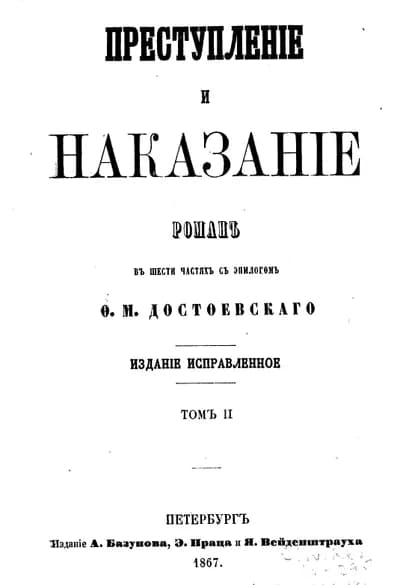
The novel that invented the modern psychological thriller and the existential novel simultaneously, Crime and Punishment was serialized in a Russian literary journal in 1866 while Fyodor Dostoevsky wrote under acute personal duress — drowning in debt following his first wife's death. Its protagonist Raskolnikov murders a pawnbroker to test the theory that extraordinary people stand beyond ordinary morality, and every subsequent page traces the psychological disintegration that follows. Freud called Dostoevsky the greatest psychologist who ever lived — and the novel's precision about guilt and self-punishment makes the compliment credible. It has been translated into 170 languages and adapted into more than 40 films, a testament to the universality of its central question.
- 0

Pride and Prejudice has remained one of the best-selling and most continuously reprinted novels in the English language since Jane Austen published it in 1813 under the anonymous byline 'A Lady,' having accepted just £110 for the copyright; the first print run of 1,500 copies sold out within six months. Its opening line is among the most quoted and parodied first sentences in the English literary canon, and Elizabeth Bennet is routinely cited as one of fiction's most beloved heroines. Austen built all of this from the domestic sphere alone — transforming the drawing room into an arena of moral precision with dramatic intensity that rivals any battlefield novel.
- 0

To Kill a Mockingbird won the Pulitzer Prize in 1961, one year after Harper Lee published it. Set in fictional Maycomb, Alabama, during the 1930s Depression, it tells the story of lawyer Atticus Finch defending a Black man falsely accused of rape, filtered through the eyes of his young daughter Scout. It topped a 2018 PBS 'Great American Read' survey of the novel that most changed readers' lives, and it holds a troubling parallel distinction: it is consistently among the most frequently challenged books in American school libraries, a measure of the power it still carries to disturb and transform.
What these ten actually have in common
Beyond canonical status, the throughline across this list is formal risk that paid off. Cervantes invents the unreliable narrator and the novel-about-novels in 1605; three centuries later Joyce confines an entire novel to one day and changes style every chapter; Proust builds a seven-volume structure out of the mechanics of involuntary memory. Even the more conventionally told entries — Pride and Prejudice, To Kill a Mockingbird — do something structurally exact within a tighter form: Austen builds high-stakes drama entirely out of drawing-room conversation, and Lee filters an adult moral crisis through a child narrator who only partly understands what she's witnessing. None of these are simply well-written; each one solved a problem the novel hadn't solved before.
Scale versus precision
It's worth reading this list as two different approaches to greatness rather than one ladder. War and Peace and In Search of Lost Time earn their place through sheer scale — hundreds of characters, years of narrative time, an attempt to hold an entire society or an entire interior life on the page. The Great Gatsby and Moby-Dick's opening chapters do something closer to the opposite: Gatsby says almost everything it needs to in under 50,000 words, and both novels use tight, exact prose to make a small cast of characters carry enormous symbolic weight. Neither approach is a lesser achievement than the other; they're just different bets about what makes a novel last.
Image credits
- Don Quixote: First edition title page, 1605 — Wikimedia Commons (Public Domain)
- War and Peace: First edition cover, 1869 — Wikimedia Commons (Public Domain)
- In Search of Lost Time: Proust galley proof with handwritten corrections — Wikimedia Commons (Public Domain)
- Ulysses: First edition cover, Shakespeare and Company, Paris 1922 — Wikimedia Commons (Public Domain)
- One Hundred Years of Solitude: WIKIMEDIA_MIRRORED
- The Great Gatsby: First edition dust jacket, art by Francis Cugat, 1925 — Wikimedia Commons (Public Domain)
- Moby-Dick: First American edition title page, 1851 — Wikimedia Commons (Public Domain)
- Crime and Punishment: Unknown authorUnknown author / Wikimedia Commons (Public domain)
- Pride and Prejudice: Title page of the first edition, 1813 — Wikimedia Commons (Public Domain)
- To Kill a Mockingbird: First edition cover, J. B. Lippincott & Co., 1960 — Wikimedia Commons (Public Domain)
Related Videos
Rank it your way
Remix this list into your own ranking, or head to the play hub for every game mode and community breakdown — blind mode, challenges, tier lists, and more.
You Might Also Like

Books the Internet Can't Stop Reading Right Now
Books the Internet Can't Stop Reading Right Now

Most Popular Project Gutenberg Downloads — September 2026 (Top 10 Classic Books)
Top 10 Greatest Novels of All Time

Top 10 Most Banned and Challenged Books in History
Top 10 Most Banned and Challenged Books in History

This Week's Top 10 Most-Tracked Books on Open Library (and Why They're Trending)
#1 Atomic Habits — James Clear (2018) · #2 The 48 Laws of Power — Robert Greene (1998) · #3 Rich Dad, Poor Dad — Robert T. Kiyosaki (1997)

Top 10 Best Education YouTube Channels 2026
#1 3Blue1Brown · #2 Kurzgesagt — In a Nutshell · #3 Veritasium
Top 10 YouTube Channels to Watch for Self-Improvement & Productivity in 2026
#1 Ali Abdaal · #2 Thomas Frank · #3 Matt D'Avella