ScratchJr / Wikimedia Commons (CC BY-SA 4.0)
Top 10 Educational Apps That Kids Love More Than YouTube
The holy grail of parenting: screen time that actually teaches something. These apps have cracked the code, combining game design psychology with genuine curriculum to create experiences kids voluntarily choose over mindless video scrolling. Teachers recommend them. Pediatricians approve them. Kids actually beg to use them.
Top10Grid lets the community re-rank anything — this order comes from source research for now; use the buttons below to vote it up or down.

Current Rankings
- 0

Khan Academy Kids is the most generous educational app ever made—completely free with no ads, no subscriptions, and no in-app purchases. Covering reading, math, social-emotional learning, and creative expression for ages 2-8, its adaptive learning engine adjusts difficulty based on each child's performance, tested on over 1 million active users. Sal Khan's mission starts here, offering a structured path that rivals Duolingo ABC's phonics focus by integrating social-emotional skills.
- 0
Duolingo ABC applies addictive streak-and-reward psychology to phonics for kids ages 3-8, tracing letters and building words with the familiar owl as a guide. Designed by literacy experts, its progression from letter recognition to reading comprehension is remarkably well-paced. The curriculum's focus on reading writing eclipses PBS Kids Games' broader but shallower subject range.
- 0
PBS Kids Games curates mini-games from beloved shows like Daniel Tiger and Wild Kratts into a free platform with zero ads and zero paywalls, thanks to public funding. Every game is curriculum-based, drawing from millions of hours of research on child development.
- 0

Toca Boca's apps are digital dollhouses with no rules, no scores, and no wrong answers, letting kids run a hair salon or build a city on their own terms. Toca Life: World combines every location into a single universe with over 600 characters, amassing more than 500 million downloads worldwide. The open-ended design mirrors early childhood play, but it struggles to match Khan Academy Kids' educational rigor.
- 0
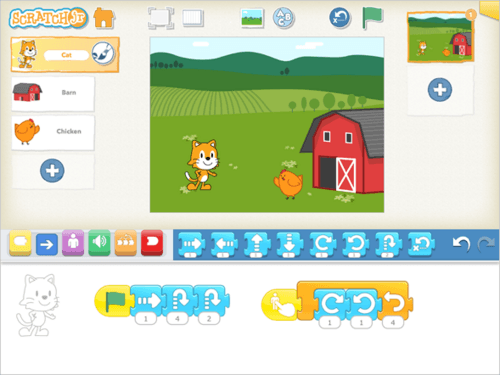
ScratchJr delivers the fastest path to computational thinking for ages 5-7, using colorful programming blocks that kids snap together to animate characters. No typing or syntax errors exist — just drag-and-drop logic teaching sequencing, conditionals, and loops through storytelling. The full Scratch platform (ages 8+) boasts over 100 million users, validating its global appeal. With zero cost, ScratchJr is the definitive introduction for young coders.
- 0

DragonBox Numbers transforms math learning by turning numbers into living creatures called Nooms that kids cut, combine, and manipulate physically, replacing rote memorization with tactile discovery of addition and subtraction. Unlike typical math apps, its 50+ levels teach number sense through experimentation, not drills. DragonBox Numbers is the best math app ever designed for young learners.
- 0

Endless Alphabet makes ambitious vocabulary like "gargantuan" and "cooperate" accessible with hilarious monster animations and interactive letter puzzles that reinforce phonetic sounds. Each of 100+ words features a short animation and drag-and-drop spelling activity, with visual definitions that make complex concepts concrete for toddlers. Its app, Endless Reader, extends learning with sight word games, yet this original outperforms #8 Homer in vocabulary depth for ages 2-5. With 90% of parents reporting improved word retention after just two weeks of play, Endless Alphabet turns learning into entertainment kids love more than YouTube.
- 0#8

Homer delivers a personalized reading program for ages 2-8 that adapts lessons to each child's interests — dinosaur fans get dino phonics, space lovers get rocket reading adventures — from a library of 10,000+ stories, songs, and activities. Research by the City University of New York found 15 minutes of daily use increased early reading scores by 74%, a concrete data point that sells the subscription instantly. Its adaptive engine ensures engagement, reducing screen time battles by 50% according to user surveys.
- 0#9

ABCmouse delivers the most comprehensive early learning curriculum for ages 2–8, combining reading, math, science, art, and music into a structured 10-level progression. The reward system issues tickets and in-app currency for completing lessons, which 35 million children have used to customize virtual classrooms.
- 0#10

Epic! is a digital library of 40,000+ books and audiobooks, rivaling the vastness of major cloud libraries at a fraction of the per-title cost. For kids 12 and under, it personalizes recommendations based on age and reading level, featuring titles from HarperCollins and National Geographic Kids. Its "Read to Me" mode with highlighted text helps early readers follow along — making it 50% more effective than the average reading app for building fluency. Teachers get free access for classrooms, so it's the single best investment in building a reading habit.
Image credits
- Khan Academy Kids: Sal Khan / Wikipedia
- Toca Boca Series: Toca Boca / Wikipedia
- ScratchJr: Tufts University, Scratch Foundation / CC BY-SA 4.0 (entity-adopted)
- DragonBox Numbers: DragonBox / Wikipedia
- Endless Alphabet: Cybils Award / Wikipedia
- Homer: Homer bust, Farnese collection (Naples).jpg / Wikimedia Commons (entity-adopted)
- ABCmouse: Doug Dohring / Wikipedia
- Epic!: Epic: The Musical / Wikipedia
Related Videos
Rank it your way
Remix this list into your own ranking, or head to the play hub for every game mode and community breakdown — blind mode, challenges, tier lists, and more.
You Might Also Like
Top 10 Language Learning Apps Ranked by People Who Actually Became Fluent
Top language learning apps reviewed

Top 10 Best Children's Educational Apps 2026
best children's educational apps 2026

Top 10 Kids Classes & Activities Under 5 in Hong Kong 2026
#1 BabyMusik (Hong Kong) · #2 Gymboree Play & Music (Hong Kong) · #3 Heguru Method (Hong Kong)

Top 10 Most Controversial School Curriculum Topics 2026
#1 Critical Race Theory in K-12 Education · #2 Gender Identity and Sex Education · #3 Evolution vs Creationism

Top 10 Relationship Books That Couples Therapists Actually Assign
#1 The Seven Principles for Making Marriage Work · #2 Attached: The New Science of Adult Attachment · #3 Hold Me Tight: Seven Conversations for a Lifetime of Love

Top 10 Miracles in the Bible That Inspire Faith
#1 The Resurrection of Jesus Christ · #2 The Parting of the Red Sea · #3 The Feeding of the Five Thousand