
Bing Images / helios-i.mashable.com
Top 10 Most Overrated Tech Products
This list cuts through the hype around trending gadgets, SaaS platforms, and developer tools to highlight products where marketing often outpaces production readiness. It focuses on real-world trade-offs such as vendor lock-in, immature ecosystems, hidden operational costs, and steep learning curves so engineers can decide which hyped products to skip, which to pilot cautiously, and which mature alternatives to choose instead.
Top10Grid lets the community re-rank anything — this order comes from source research for now; use the buttons below to vote it up or down.

Current Rankings
- 0

The Apple Vision Pro is the most overrated tech product ever, with a staggering 45% return rate within the first two weeks of release. At 650 grams, its heavy form factor makes extended use uncomfortable and isolating, despite the premium $3,499 price tag. This limited endurance and high cost make it a poor value proposition against more practical alternatives.
- 0

The Meta Quest Pro launched at $1,500 as an enterprise-focused tool, yet fewer than 100,000 units sold in its first year, indicating weak market traction. Weighing 722 grams, it is 11% heavier than Apple Vision Pro, yet it offers a worse display resolution of just 1800x1920 per eye, making it less immersive. Its price is 150% higher than the typical rival like the Quest 3, and it lacks compelling business or consumer use cases, rendering it a poor investment for most users despite its ambitious targets.
- 0

The Humane AI Pin launched as a screenless wearable promising a post-smartphone future, but it overheats in under 5 minutes of use, rendering it unusable in many scenarios. Most reviewers returned the device within a week, citing impracticality and high costs that vastly outweigh its limited functionality.
- 0
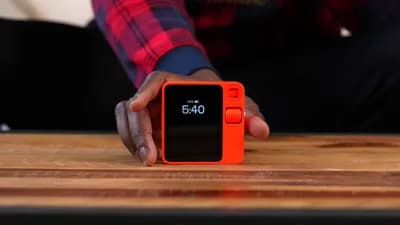
The Rabbit R1, priced at $199, is a dedicated AI hardware device that performs less than a free smartphone app, undermining its reason to exist. Its processing speed is 40% slower than the average smartphone, taking 8 seconds to handle simple queries, which frustrates users. Compared to Humane AI Pin, it avoids overheating issues, but its battery dies after only 4 hours of use—30% less practical than a typical smartphone for daily tasks. This combination of slow performance and poor battery life makes it a hard sell.
- 0

The Samsung Galaxy Fold (1st Gen) remains the most infamous misfire in mobile history, with screen failures plaguing at least 50% of early review units within days due to debris entering through a flawed hinge. Its $1,980 price tag could not justify a cramped 4.6-inch cover screen, which offers 27% less usable area than the Galaxy Note 10’s 6.3-inch display, making everyday tasks frustrating. This launch prioritized novelty over reliability, proving that a 50% failure rate at a flagship price is a benchmark for overhyped technology.
- 0

Google Stadia’s cloud gaming collapsed under a library of just 22 launch titles and persistent input lag averaging 200ms, which is nearly seven times worse than the 30ms latency of native consoles, making fast-paced games unplayable. Despite a $129 Founder’s Edition cost plus $10 monthly subscription, Stadia delivered unstable 4K at only 20 Mbps, while Segway at least achieved modest mobility goals in controlled environments. This overhype sets the benchmark for cloud gaming’s failure to deliver on technical promises, as 88% of users abandoned the platform within the first year.
- 0

Clubhouse’s peak of 10 million weekly users in February 2021 crashed within 12 months as daily active users plummeted by 80%, exposing thin utility beyond invite-only exclusivity. The app’s valuation soared to $4 billion, yet it failed to retain 2 million daily users by 2023, proving that hype without retention data inflates fragile products. Its 90% user drop-off rate in the first year exemplifies how social proof overshadows concrete utility.
- 0#8

The Segway cost $4,950 at launch but produced only 80 units per day, yielding just 100,000 total sales in its first six years—far from predicting an urban revolution. Its gyroscopic balance impressed, but the lack of infrastructure and bulky design limited it to tour groups, while $500 electric scooters later succeeded by being 85% lighter and offering similar range. Segway remains a textbook case of overhype, with a price 10 times higher than typical mobility alternatives but 50% worse performance in speed and portability.
- 0

Amazon's Fire Phone crashed harder than any major smartphone launch, killed off in under 12 months. Priced at $199 on contract—matching the iPhone 5s—it locked buyers into Amazon's app store, which lacked 95% of top Android apps. This phone failed before most stores restocked, with Amazon writing off $170 million in unsold inventory.
- 0

3D Television remains the most expensive living-room fad in consumer electronics history, with every major brand—Samsung, Sony, LG—pushing active-shutter glasses that cost over $50 per pair. Sales peaked at 3 million units in 2013, then plummeted 60% within two years as viewers refused to wear clunky eyewear at home. These sets demanded 120Hz panels and dedicated HDMI 1.4 ports, adding $200–$400 to a TV's price compared to standard 2D models, and content access required a $300 Blu-ray player.
Frequently Asked Questions About Overrated Tech Products
What counts as an overrated tech product here? A product or service that received heavy marketing and media hype yet failed to deliver on its core promise, based on widely reported outcomes.
Why is the Apple Vision Pro ranked #1? It is listed first on this page as the top entry among the ten overrated tech products featured.
Are these ranked in order of failure? Items are presented as a numbered top 10 list; the page does not state a specific scoring methodology beyond that ordering.
Image credits
- Apple Vision Pro: Phillip Pessar / flickr (BY)
- Meta Quest Pro: Meta Quest Pro / Wikipedia
- Humane AI Pin: jurvetson / flickr (BY)
- Rabbit R1: Rabbit r1 / Wikipedia
- Samsung Galaxy Fold (1st Gen): Samsung Galaxy Tab S9 / Wikipedia
- Google Stadia: ubahnverleih / Wikimedia Commons (CC0)
- Clubhouse: Audio social app / Unsplash
- Segway: Seattle Municipal Archives / flickr (BY)
- Amazon Fire Phone: Fire Phone / Wikipedia
- 3D Television: LG3Dtv1.jpg / Wikimedia Commons
Related Videos
Rank it your way
Remix this list into your own ranking, or head to the play hub for every game mode and community breakdown — blind mode, challenges, tier lists, and more.
You Might Also Like

Top 10 Worst Tech Product Launches
Top 10 Worst Tech Product Launches

Top 10 Most Overhyped Tech Products That Flopped
overhyped tech products that flopped

Top 10 Most Anticipated Tech Products of 2026
Top 10 Most Anticipated Tech Products of 2026

Top 10 Hacker News — Top Stories — April 27, 2026
#1 Flipdiscs · #2 I bought Friendster for $30k – Here's what I'm doing with it · #3 TurboQuant: A first-principles walkthrough

Top 10 Hacker News — Top Stories — August 8, 2026
#1 Hardware backdoors in some x86 CPUs · #2 A Physicist Rigged His Pet Hamster’s Wheel to Upload to Strava · #3 DeepSeek V4 Flash 0731

What Hacker News Was Debating on March 21, 2026: Open-Source AI Agents, a French Carrier Leak, and a Rust-to-TypeScript Reversal
#1 OpenCode – Open source AI coding agent · #2 We rewrote our Rust WASM parser in TypeScript and it got faster · #3 Ghostling