
Business performance management / Wikipedia
Top 10 Next-Generation Processors Defining Performance in 2026
The 2026 processor landscape covers five very different battlegrounds: desktop CPUs for gamers (Ryzen 7 9800X3D, Ryzen 9 9950X, Core Ultra 9 285K), AI and workstation laptops (Snapdragon X2 Elite Extreme, Apple M4 Max, Core Ultra X9 388H), dense cloud servers (EPYC 9965, AWS Graviton4), and the new CPU-plus-GPU vendors entering the field (NVIDIA Vera, Arm AGI). Below are the ten silicon releases defining performance this year.
Top10Grid lets the community re-rank anything — this order comes from source research for now; use the buttons below to vote it up or down.

Compare by Dimension
Performance in gaming workloads: FPS benchmarks, 3D V-Cache advantage, 1% lows, and cache-sensitive title performance.
| Rank | Item | Score | Notes |
|---|---|---|---|
| #1 | AMD Ryzen 7 9800X3D | 10.0 | 96MB 3D V-Cache delivers 20-30% FPS uplift, PassMark Gaming 15,597 — undisputed gaming champion of 2026. |
| #2 | AMD Ryzen 9 9950X | 8.0 | 16 Zen 5 cores with Cinebench R24 multi 2,340 provide strong gaming; lacks X3D cache stacking. |
| #3 | Intel Core Ultra 9 285K (Arrow Lake) | 7.5 | Geekbench 6 multi 24,610; competitive gaming performance but trails AMD X3D in cache-sensitive titles. |
| #4 | Apple M4 Max | 6.0 | 16-core Apple Silicon with 32-40 core GPU strong for macOS gaming; limited game catalog vs Windows. |
| #5 | Intel Core Ultra X9 388H (Panther Lake) | 5.5 | 25W laptop chip with Arc B390 GPU; competitive for ultrabook gaming but not desktop-class performance. |
| #6 | Qualcomm Snapdragon X2 Elite Extreme | 5.0 | ARM architecture with improved x86 emulation; gaming performance still trails native x86 in demanding titles. |
| #7 | Arm AGI CPU | 2.5 | Agentic AI infrastructure chip targeting 2027; no gaming application or gaming-relevant benchmarks. |
| #8 | AMD EPYC 9965 (Turin Dense) | 2.0 | 192-core 500W server chip; single-thread latency optimized for throughput density, not gaming response time. |
| #9 | NVIDIA Vera CPU | 1.5 | AI inference CPU in DGX Vera Rubin systems; no gaming workload application. |
| #10 | AWS Graviton4 | 1.0 | Cloud-only ARM datacenter chip with no consumer gaming application or relevant benchmark context. |
Current Rankings
- 0
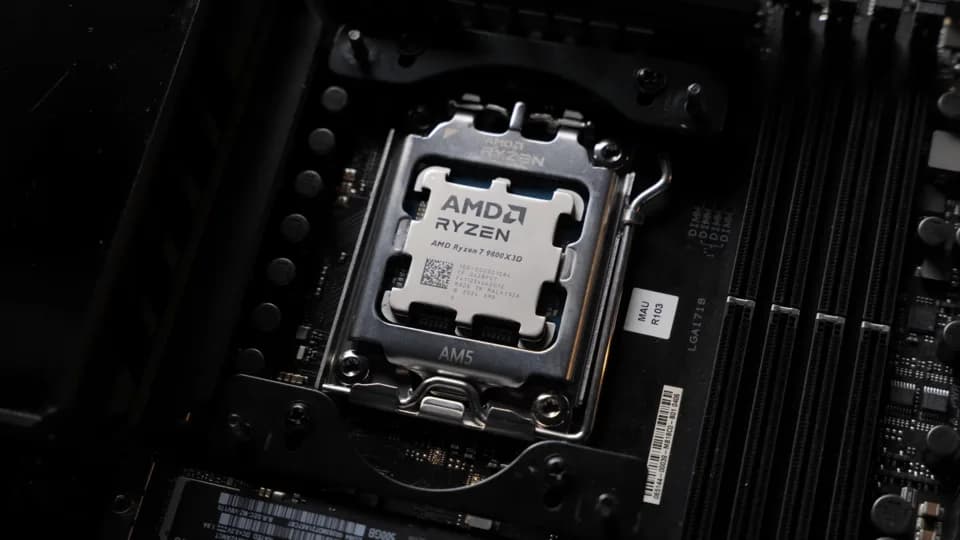
The AMD Ryzen 7 9800X3D stands as the definitive gaming processor of 2026, combining AMD's mature Zen 5 architecture with its revolutionary 3D V-Cache technology to deliver strong gaming performance. Built on TSMC's 4nm process, this 8-core, 16-thread chip reaches a 5.2 GHz boost clock at a 120W TDP, with a massive 96MB of stacked L3 cache that reduces latency bottlenecks. It posts leading single-core scores in Geekbench 6 and outperforms Intel's best desktop offerings in gaming-focused benchmarks. At $479 MSRP, it offers strong value for 1080p and 1440p gaming builds. AMD has committed to extended AM5 platform support, ensuring upgrade flexibility and cementing the 9800X3D as a benchmark for gaming processors.
Sourcesen.wikipedia.org - 0

The Intel Core Ultra X9 388H, codenamed Panther Lake, marks a historic inflection point as Intel's first commercial processor on its 18A node with Gate-All-Around transistors and backside power delivery. Announced at CES 2026, this 16-core laptop chip—with 4 Performance, 8 Efficiency, and 4 Low-Power Efficiency cores—achieves a single-core Geekbench 6 score of 3,057 and multi-core score of 17,687. Its 40% improvement in performance-per-watt compared to Arrow Lake delivers 27-hour battery life in standard productivity workloads. The integrated Arc B390 GPU and 50-60 TOPS NPU earn full Copilot+ certification for on-device AI.
- 0

This is among the fastest ARM chips available in a Windows laptop, with single-core performance that leads competing laptop chips in independent benchmarks. Eighteen custom Oryon cores are split between Prime and Performance tiers for strong multi-core throughput. Compared with Qualcomm's 2024 Snapdragon X Elite, it delivers a meaningful single-core performance gain while using notably less power — a generational jump substantial enough to matter even for recent buyers. Its Hexagon NPU runs AI tasks on-device without a cloud round-trip.
- 0

192 Zen 5c cores on a single socket makes the EPYC 9965 one of the densest server chips shipping in 2026, built for large-scale deployments where core density and throughput per socket matter most. Existing Genoa customers get a real reason to consider the upgrade too: AMD reports a meaningful IPC gain over the previous generation, enough to justify refreshing even recently deployed racks. At $8,000-15,000 per socket it's not cheap, but for large-scale deployments the performance-per-dollar and performance-per-watt math still comes out ahead.
Sourcesen.wikipedia.org - 0

The Apple M4 Max delivers workstation-class performance inside a fanless MacBook Pro chassis, an engineering feat unimaginable five years ago. Built on TSMC's second-generation 3nm process with 28 billion transistors, it delivers sustained throughput that eliminates bandwidth bottlenecks that throttle competing platforms. The 32-core GPU variant hits 410 GB/s memory bandwidth, with the top-tier config reaching 546 GB/s, figures no discrete GPU matches within the same power envelope. Unified memory scales to 128 GB, letting editors load 8K RAW timelines directly into CPU and GPU memory, avoiding copy overhead. Priced at a premium befitting its workstation-class capability, the M4 Max remains the default for professionals who refuse compromises.
Sourcesen.wikipedia.org - 0

Graviton4 is what happens when AWS builds a chip purely for what actually runs in its cloud: 96 Neoverse V2 cores post a 40% speedup for PostgreSQL and Redis, 45% for Java, and a 75% jump in memory bandwidth over Graviton3 — workload-specific gains a general-purpose chip rarely produces. It runs about 20% cheaper than equivalent x86 instances while using 60% less energy per unit of performance, which is why Netflix and SAP both report cost reductions in the 30-50% range after switching. Compared with the Apple M4 Max, it's playing a different game entirely — cloud-native throughput and cost-per-transaction over workstation power — but on those terms, it wins clearly.
- 0

Vera is NVIDIA's first custom-built CPU using its own microarchitecture rather than a licensed design, built to feed trillion-parameter models with substantially more memory bandwidth than the previous Grace Hopper platform offered, so the CPU doesn't become the bottleneck. It ships inside DGX Vera Rubin systems, built on a 3nm process alongside the Rubin GPU, with coherent, high-speed access between the two chips. Major cloud providers have begun offering access to Vera Rubin infrastructure, which matters more than the spec sheet: for anyone training at real scale, this is infrastructure they can rent today, not just a future promise.
Sourcesen.wikipedia.org - 0
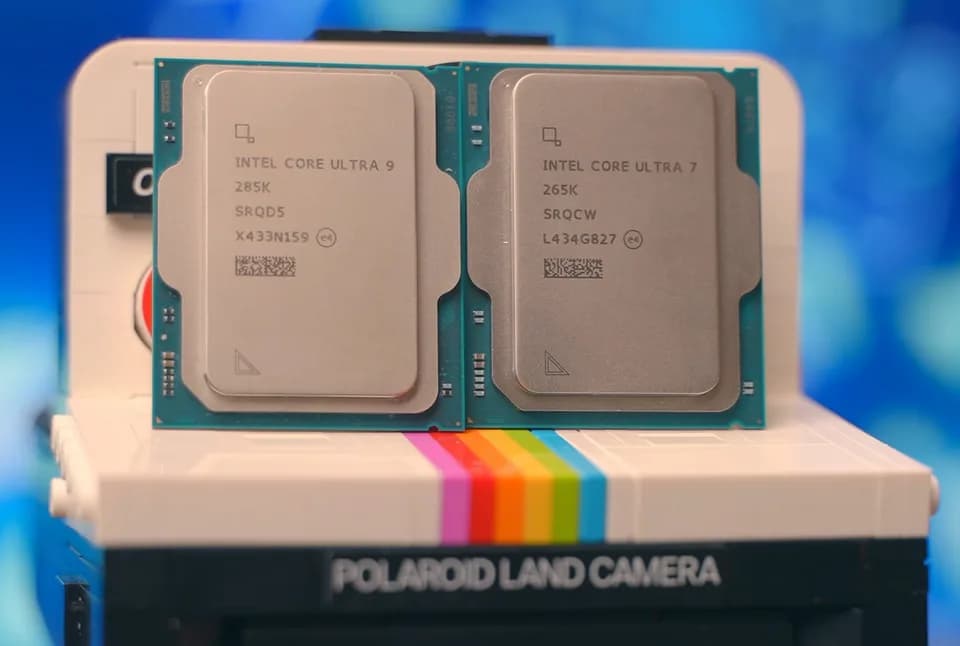
The Intel Core Ultra 9 285K introduces a disaggregated multi-tile design separating compute, graphics, I/O, and SoC functions, with the compute tile built on TSMC's N3B process rather than an Intel fab. It packs 8 Lion Cove performance cores and 16 Skymont efficiency cores for 24 cores and 24 threads, at a 125W base TDP. An integrated NPU handles AI inference tasks like code completion and video enhancement without leaning on the GPU. It launched at $589 MSRP with PCIe 5.0 support on Z890 motherboards, offering desktop-class performance without workstation-tier pricing.
Sourcesintel.com - 0
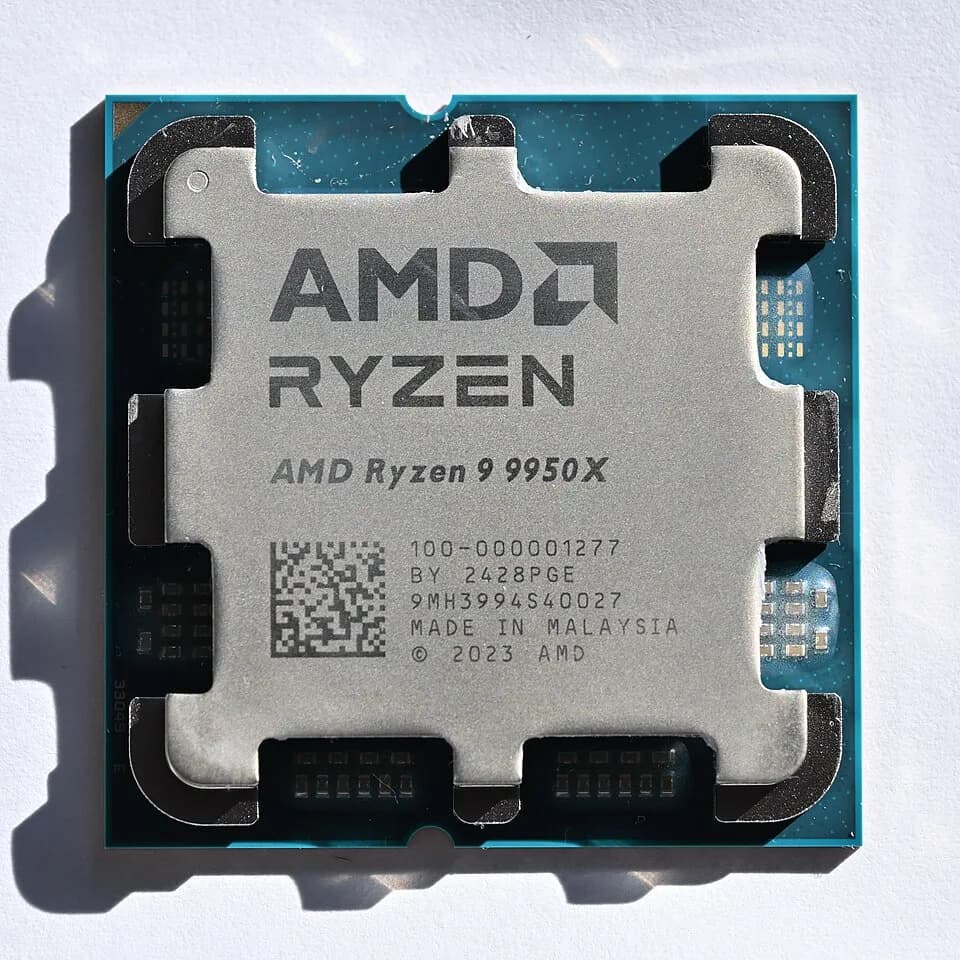
AMD's flagship desktop chip pairs 16 Zen 5 cores and 32 threads with a real generational IPC gain over Zen 4 — not just a clock bump. It's backed by DDR5-5600 support, finally keeping memory latency from throttling Ryzen the way it used to. AM5's roadmap extends for years to come, so today's buyers can drop in a future Zen 6 chip without a new motherboard. At $649, it's the pick for developers and creators who need every one of those 32 threads — an X3D variant with 96MB of stacked cache exists too, for anyone who'd rather optimize purely for gaming.
Sourcesen.wikipedia.org - 0#10

Arm Holdings hasn't built its own silicon in 35 years — it licensed the architecture and let partners handle manufacturing. That changed on March 24, 2026, with a 136-core chip built specifically for agentic AI: many independent inference processes competing for memory bandwidth at once, a different problem than a single heavy workload. Core density comes in at double equivalent x86 designs, and because it stays inside the Neoverse ecosystem, software already written for Graviton, Axion, and Azure Maia should run without modification. Meta is the confirmed first customer, targeting 2027 deployment — the strongest signal yet that a hyperscaler believes in the design. Whether Arm actually reaches its own projected 50% share of cloud compute by year's end is the number worth watching.
Picking by Workload, Not by Benchmark Chart
None of these ten processors is 'best' outside a specific job. A gaming rig wants AMD's 3D V-Cache silicon, which trades some multi-core throughput for the large on-chip cache that keeps frame-rate-critical data close to the CPU. A laptop bought for battery life and on-device AI features wants one of the ARM or Panther-Lake-class chips built around performance-per-watt rather than peak clock speed. A server buyer working within a fixed power budget in a datacenter cares about performance-per-watt and per-socket core density above almost everything else, which is why ARM designs have gained so much ground in cloud infrastructure even though they rarely top a raw single-thread benchmark. Match the category to the job before comparing numbers across categories — a laptop chip and a server chip are not competing for the same buyer.
What the ARM Shift Actually Means for Buyers
For most of the last two decades, 'processor' meant x86 — Intel or AMD, full stop. That's no longer true at any tier: Apple's laptop chips, Qualcomm's Windows-on-ARM silicon, and the custom ARM designs cloud providers now build for their own datacenters are all credible alternatives, not niche experiments. The practical effect for buyers is more choice and, in the cloud, generally lower cost per unit of compute for workloads that don't depend on legacy x86-only software. The trade-off is compatibility: some specialized enterprise and gaming software still assumes x86, so the right processor for a given buyer still depends on what has to run on it, not just which architecture benchmarks best in the abstract.
Image credits
- AMD Ryzen 7 9800X3D: ZMASLO / CC BY 3.0 (entity-adopted)
- Intel Core Ultra X9 388H (Panther Lake): Panther Lake (microprocessor) / Wikipedia
- Qualcomm Snapdragon X2 Elite Extreme: Adreno / Wikipedia
- AMD EPYC 9965 (Turin Dense): Zen 5 / Wikipedia
- Apple M4 Max: Apple silicon / Wikipedia
- AWS Graviton4: Bing Images / moorinsightsstrategy.com
- NVIDIA Vera CPU: Timeline of computing 2020–present / Wikipedia
- Intel Core Ultra 9 285K (Arrow Lake): MoreThanTech / CC BY 3.0 (entity-adopted)
- AMD Ryzen 9 9950X: 4300streetcar / CC BY 4.0 (entity-adopted)
- Arm AGI CPU: History of artificial intelligence / Wikipedia
Rank it your way
Remix this list into your own ranking, or head to the play hub for every game mode and community breakdown — blind mode, challenges, tier lists, and more.
You Might Also Like

Top 10 Cameras That Changed Photography Forever (From Brownie to iPhone)
Top 10 Cameras That Changed Photography Forever (From Bro...
Top 10 Best AI Coding Assistants
Top 10 Best AI Coding Assistants

Top 10 AI Tools Changing Everything in 2026
top AI tools changing everything

10 Robotics Research Breakthroughs of 2026: AI & Humanoid Robots
Robots Learning to Think: Cutting-Edge Robotics Research

Top 10 Swedish Technology Companies 2026
#1 Spotify · #2 Ericsson · #3 Klarna

Top 10 US Gaming Companies by Revenue
#1 Microsoft Gaming (Xbox + Activision Blizzard) · #2 Apple (App Store Gaming) · #3 Google (Play Store + YouTube Gaming)