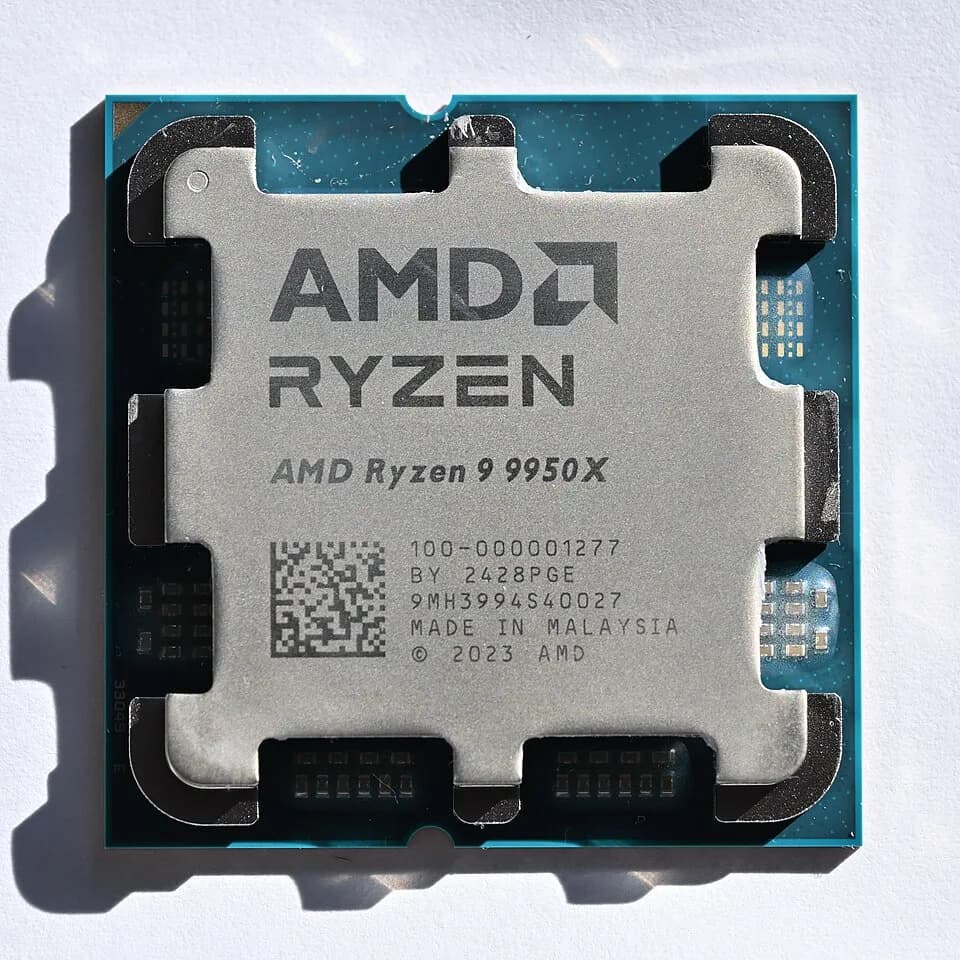
The AMD Ryzen 9 9950X stands as AMD's flagship desktop processor of 2026, combining 16 Zen 5 cores and 32 threads on TSMC's 4nm process node with a 170W TDP designed for users who demand maximum CPU throughput without compromise. The processor achieves a 16% IPC improvement over Zen 4, translating into tangible real-world performance gains across every workload category without requiring clock speed increases to justify the architectural upgrade. Cinebench R24 results of 139 single-thread and 2,340 multi-thread confirm leadership-tier rendering performance, while native DDR5-5600 memory support with Infinity Fabric running at 2,400MHz minimizes latency penalties that have historically limited Ryzen platforms in memory-sensitive applications. The AM5 platform roadmap explicitly extends through 2027 and beyond, ensuring that 9950X buyers can upgrade to future Zen 6 processors without motherboard replacement — a platform longevity commitment that meaningfully lowers total cost of ownership compared to competitors requiring socket changes with each generation. For users requiring even greater cache-sensitive performance in gaming or simulation workloads, an X3D variant adds 96MB of 3D V-Cache stacked L3 cache, creating the most cache-dense mainstream desktop processor available. The combination of 32 threads and leadership single-thread performance makes the 9950X particularly effective for hybrid workloads that blend parallelized compilation or rendering tasks with latency-sensitive interactive operations. Software development workflows benefit from simultaneous operation of multiple language servers, test runners, build systems, and virtualization environments without resource contention. Content creators working in DaVinci Resolve, Blender, or Adobe Premiere find the 9950X's thread count eliminates export queue bottlenecks. At $599 MSRP, the 9950X is positioned as AMD's definitive answer for professional creators and developers choosing a desktop platform in 2026.
Comments on "AMD Ryzen 9 9950X"
Create a free account or sign in to join the discussion.
Sign in to join the conversation