
Nvidia / Wikipedia
Top 10 Humanoid Robots for Consumers and Businesses 2026
The definitive buyer's guide to commercially available humanoid robots — ranked by deployment track record, ROI, and real-world capability
Top10Grid lets the community re-rank anything — this order comes from source research for now; use the buttons below to vote it up or down.

Compare by Dimension
Mobility capability and hand degrees of freedom — determines task versatility and precision
| Rank | Item | Score | Notes |
|---|---|---|---|
| #1 | Figure AI Figure 02 | 10.0 | 16-DOF hands are industry-best; 5mm precision tolerance validated in BMW production |
| #2 | Boston Dynamics Atlas (Electric) | 9.0 | 56 DOF and 50kg payload with full-body force feedback — most articulated production humanoid |
| #3 | Sanctuary AI Phoenix | 9.0 | 21-DOF hydraulic hands with 5mN sensitivity — highest tactile precision; locomotion less tested |
| #4 | Apptronik Apollo | 8.0 | 71 DOF enables complex assembly; limited by lack of published hand-dexterity benchmarks |
| #5 | Tesla Optimus Gen 2 | 7.0 | 9kg per hand with 28+ DOF — strong specs but unvalidated in external deployments |
| #6 | Unitree H1 | 7.0 | 3.3 m/s world's fastest humanoid locomotion; limited hand dexterity |
| #7 | Agility Robotics Digit | 6.0 | Reliable flat-surface locomotion; moderate dexterity — sufficient for tote handling but not precision assembly |
| #8 | NEURA Robotics MAiRA | 6.0 | Cognitive focus; locomotion and dexterity specs not fully disclosed |
| #9 | Unitree G1 | 5.0 | 2.0 m/s speed competitive but limited payload and dexterity vs industrial robots |
| #10 | 1X Technologies NEO | 4.0 | 5kg payload and limited DOF — designed for light household tasks only |
Current Rankings
- 0

Agility Robotics Digit is the benchmark for commercial humanoid robot deployment in 2026, logging over 100,000 tote movements at a single facility—more documented proof than any competitor. At 160 cm tall and 65 kg, with a 23 kg payload, Digit operates 8 hours on a single charge at 1.2 m/s, purpose-built for e-commerce tote-handling. GXO Logistics deployed Digit at its Flowery Branch, Georgia facility, achieving the industry's highest commercial validation. Amazon, Toyota Canada (7 units), and Mercado Libre have signed multi-year contracts, not pilot deals. Priced at $10–$30 per hour via RaaS, or roughly $250,000 to purchase, Digit outperforms the average warehouse labor cost of $15–$20/hour, reaching ROI in 18–24 months when running 8+ hours daily. Its Oregon plant can produce 10,000 units annually, with ISO 10218:2025 certification ensuring safe human-robot coexistence. The next-generation platform, boosting payload to 50 lb and autonomy, is in development, extending Digit's lead beyond current capabilities.
- 0

At 168 cm and 70 kg, with 25 kg payload, the robot has logged over 1,250 operational hours at BMW Spartanburg, contributing to 30,000 vehicles in one of North America's highest-volume plants—proving viability outside labs. The Helix VLA model runs at 200 Hz, enabling real-time adaptation to part variation without pre-programming. With 41 total degrees of freedom and 5-hour battery life, it handles complex assembly work that simpler designs cannot. Commercial lease pricing is approximately $130,000, positioning it in the enterprise tier. The company has raised $1.75 billion at a $39 billion valuation, and Figure 03, demonstrated with 8 autonomous cleaning skills, signals expansion beyond manufacturing.
- 0
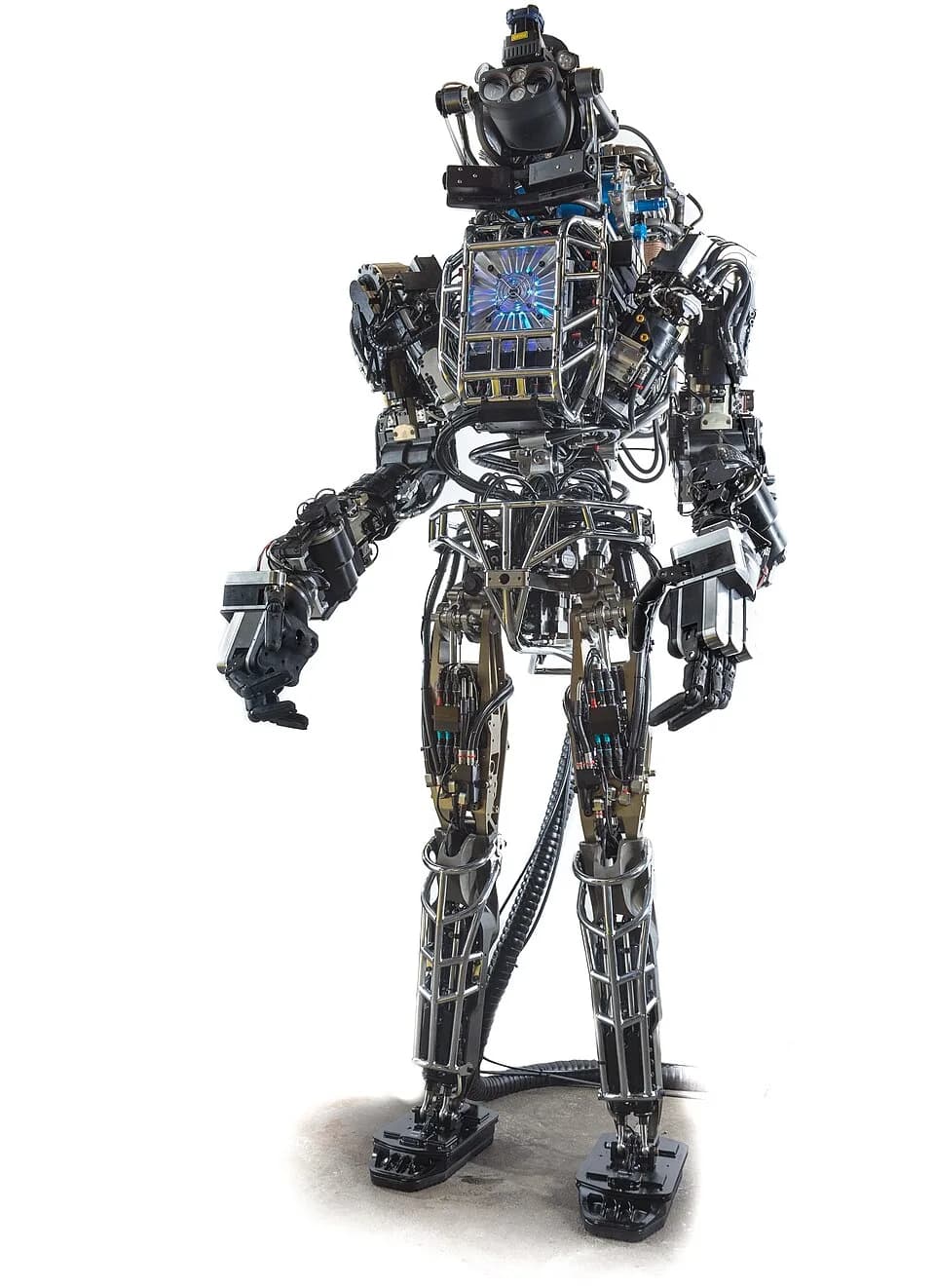
The electric version replaces hydraulic systems with self-swappable batteries removing the 5-hour operational ceiling, plus full-body force feedback for human-adjacent tasks. Hyundai Motor Group plans 30,000 units per year for automotive assembly by 2028, with the 2026 allocation fully committed to confirmed buyers like Hyundai and Google DeepMind. General availability opens in 2027 for enterprise buyers. Pricing ranges from $150,000 to $320,000 (€350,000 to €420,000 in Europe), targeting high-complexity, high-value tasks like heavy component assembly. Autonomous obstacle avoidance is standard; Hyundai's manufacturing backing provides a credible path to cost reduction over 2027–2029, but the premium price means ROI depends on tasks that leverage Atlas's articulation and lifting strength.
- 0

Standing 167 cm, it payloads 5 kg and runs 4 hours on battery, suited for laundry, tidying, and organizing. An onboard large language model handles conversational instructions, while Expert Mode supports remote teleoperation for complex tasks. First US deliveries begin in Q3 2026 in three colorways (Tan, Gray, Dark Brown); international availability follows in 2027. Founded in Norway in 2021, the company prioritized safety over industrial performance from the start, creating a robot that can share a kitchen without risk—a significant shift from the enterprise-focused designs above it.
- 0

Apptronik Apollo leads the market in continuous operation, capable of running up to 22 hours per day via hot-swappable batteries. This significantly outperforms most competitors, which typically offer only 4–8 hours of continuous use, by allowing Apollo to cover three manufacturing shifts without downtime. The hot-swap design facilitates battery replacement in under two minutes without powering down, a capability not matched by any other production humanoid. Standing at 173 cm and weighing 73 kg, Apollo boasts 71 degrees of freedom and a 25 kg payload capacity. With target pricing between $50,000 and $80,000, it undercuts the estimated costs of both Atlas and Figure 02 while offering comparable industrial capacity. Commercial deployments at major companies like Mercedes-Benz, Jabil, and GXO Logistics demonstrate its cross-industry versatility. Apptronik, tracing its lineage to NASA's Johnson Space Center, has secured over $935 million in total funding, including a $520 million Series A led by B Capital, Google, and Mercedes-Benz, achieving a $5.5 billion valuation.
- 0
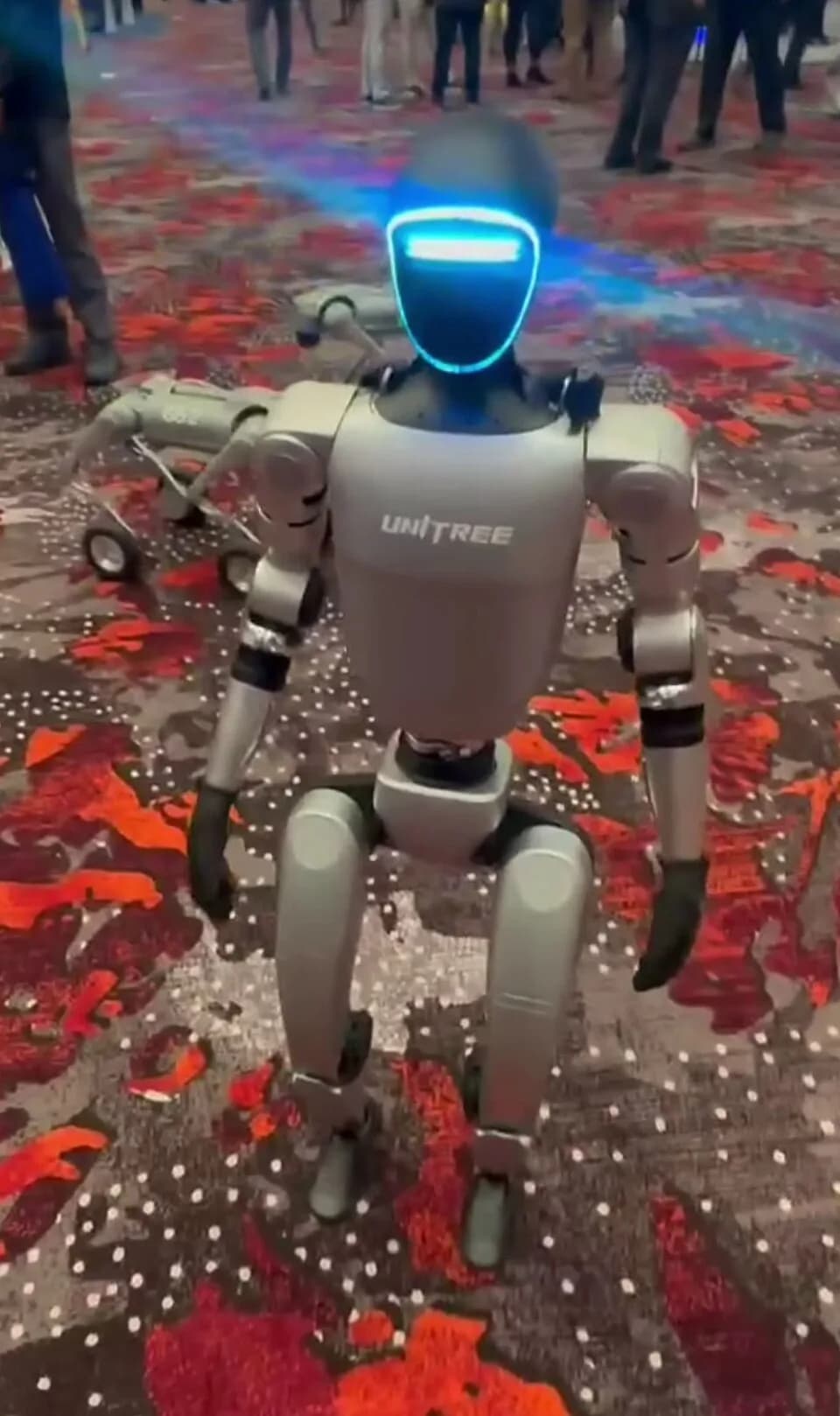
The Unitree G1 sets a new standard for affordability in humanoid robotics, with a base price of $16,000—approximately one-tenth the cost of an Atlas and one-eighth that of Figure 02. This aggressive pricing strategy has propelled the G1 to account for 40% of global humanoid unit shipments in 2025, with Unitree shipping over 5,500 units in 2025 and scaling to 20,000 in 2026. No other manufacturer operates at this high volume. The G1 stands 127 cm tall and weighs 35 kg, offering a walking speed of 2.0 m/s and a 2-hour battery life. While making deliberate trade-offs in payload (2 kg per arm) and hand dexterity in its base model, the G1 delivers an accessible platform for university labs, startups, and mid-size manufacturers. EDU editions, priced from $43,900–$53,900, include enhanced sensors and research-grade interfaces. The introduction of the $4,900 Unitree R1 further signals a trajectory toward smartphone-level commoditization in the humanoid market.
- 0

The Tesla Optimus Gen 2 is perhaps the most recognizable humanoid robot, though as of May 2026, it still lacks external commercial customers. Despite this, its hardware specifications are robust: it stands 173 cm tall, weighs 57 kg—making it lighter than many industrial humanoids like the 73 kg Apptronik Apollo—and features a top speed of 2.2 m/s (8 km/h), an 8-hour battery life, and an 18 kg payload capacity (9 kg per hand). The robot’s AI system leverages Tesla's FSD architecture, refined on billions of driving miles. Tesla aims for a near-term price of $30,000, with a long-term target below $20,000, which would significantly undercut every current enterprise humanoid. However, Optimus' development has faced repeated delays, with milestones consistently missed since its September 2022 AI Day unveiling. The ambitious 50,000-unit production target for 2026 was not met, and the robot currently operates exclusively within Tesla's Fremont factory. External sales are now projected for 2027 or later. Until these deployments yield validated customer results, Optimus remains a promising, yet unproven, product in the humanoid robotics landscape.
- 0

The Sanctuary AI Phoenix distinguishes itself with the finest tactile feedback of any humanoid robot available, featuring 21-DOF hydraulic hands capable of 5 mN sensitivity—a level matching the human hand's ability to handle delicate objects. This superior sensitivity enables precision tasks, such as pharmaceutical handling or medical device assembly, that visual systems alone cannot manage. Its Carbon AI control system is remarkably efficient, learning new tasks in approximately 24 hours, which is significantly faster than the weeks typically required for environment-specific programming. Phoenix stands 170 cm tall, weighs 70 kg, can carry a 25 kg payload, and operates for 8 hours per battery charge. Automotive trials at Magna International have validated the platform's capabilities. While no confirmed paying customers existed as of May 2026, estimated pricing of $100,000–$250,000 reflects the premium nature of its advanced hydraulic system. With over $140 million in funding from investors including Accenture, Magna, Verizon, and Workday, Sanctuary AI is well-positioned to target enterprise sectors, though its UK base presents some geographic limitations compared to North American and Asian deployment hubs.
- 0

The Unitree H1 holds the world record for walking speed among production humanoid robots shipping in 2026, reaching an impressive 3.3 meters per second (about 12 km/h). This exceptional pace not only exceeds the comfortable jogging speed of most adults but also outperforms every other bipedal platform currently available for purchase. This speed is the H1's defining capability and its clearest differentiator from Unitree's own G1, which has a top speed of 2 m/s and is priced between $13,500 and $25,000. Where the G1 prioritizes price accessibility for developers and SMBs, the H1, estimated at $90,000, targets research institutions and robotics companies studying bipedal locomotion at the hardware frontier, offering 360 N·m of knee torque. Unitree's established supply chain, which shipped over 5,500 G1 units in 2025, ensures parts availability and support. The H1's acknowledged limitation is hand dexterity, using basic end-effectors unsuitable for precision assembly—a trade-off when compared to Figure 02's 16-DOF manipulation system.
- 0

NEURA Robotics MAiRA is a pioneering cognitive cobot, developed and manufactured entirely in Metzingen, Germany, offering a GDPR-compliant alternative to US and Chinese platforms for European buyers. The company raised up to $1.4 billion in a Series C round in June 2026, led by Tether, Amazon, NVIDIA, and Qualcomm, valuing it at approximately €4 billion ($4.3 billion)—making it the most funded humanoid robotics company in Europe. This institutional confidence reflects strong demand for MAiRA's cognitive humanoid interaction, which includes natural language task instruction and context-aware collaboration in healthcare and elder care settings, processing sensory information from sight, hearing, and touch directly on the device. For industrial applications, MAiRA targets European automotive manufacturers facing data sovereignty constraints, where US platforms like Figure 02 cannot provide the same geographic supply chain assurance. However, deployment data remains limited; MAiRA is in the pilot stage as of May 2026, and its publicly verified commercial production deployments have not matched the scale of Digit or Apollo, which have thousands of deployed units. The $1.4 billion in fresh capital provides significant runway to bridge this gap, but buyers making 2026 procurement decisions should factor the deployment-proof gap into their evaluation timeline.
Image credits
- Agility Robotics Digit: Humanoid robot / Wikipedia
- Figure AI Figure 02: Didier Descouens / Wikimedia Commons (CC BY-SA 4.0)
- Boston Dynamics Atlas (Electric): DARPA / Public domain (entity-adopted)
- 1X Technologies NEO: Humanoid robot / Wikipedia
- Apptronik Apollo: Bing Images / s.yimg.com
- Unitree G1: Sayanesy / CC0 (entity-adopted)
- Tesla Optimus Gen 2: Tesla / Wikimedia Commons
- Sanctuary AI Phoenix: Characters of the Tekken series / Wikipedia
- Unitree H1: Unitree Robotics / Wikipedia
- NEURA Robotics MAiRA: Bing Images / neura-robotics.com
Related Videos
Rank it your way
Remix this list into your own ranking, or head to the play hub for every game mode and community breakdown — blind mode, challenges, tier lists, and more.
You Might Also Like

Top 10 Most Powerful AI Companies 2026
Top 10 Most Powerful AI Companies 2026

Top 10 Physical AI and Robotics Breakthroughs Transforming Industries in 2026
Top 10 Physical AI and Robotics Breakthroughs Transformin...

Top 10 Physical AI & Humanoid Robots Transforming Industries in 2026
robots transforming industries in 2026

Top 10 VPN Services in 2026
#1 ExpressVPN · #2 NordVPN · #3 Surfshark

Top 10 Cloud Storage Services in 2026
#1 Dropbox · #2 Google Drive · #3 Microsoft OneDrive

Top 10 E-Commerce Platforms in Indonesia
#1 Shopee · #2 Tokopedia (TikTok Shop) · #3 Lazada Indonesia