
Top 10 Indian Startups of 2025
India's startup ecosystem benefits from widely used digital public infrastructure such as UPI and Aadhaar, broad smartphone access, and a large developer talent pool. This list is not simply a valuation ranking: it highlights ten companies with demonstrable user adoption, meaningful technology investment, and relevance to India's digital economy in 2025. Each entry is evaluated by the problem it solves, its core technology and business model, adoption and growth signals, and the competitive trade-offs involved. The comparisons also give developers practical context: fintech companies are assessed through payments infrastructure, APIs, compliance, and fraud controls; commerce and delivery startups through marketplace architecture, real-time operations, and logistics; and enterprise or education platforms through reliability, customization, and scaling requirements. The result is a clearer shortlist of where Indian technology companies are creating value and which are most relevant to work with, invest in, or learn from.
Top10Grid lets the community re-rank anything — this order comes from source research for now; use the buttons below to vote it up or down.

Current Rankings
- 0#1
Zepto

Zepto dominates India's quick-commerce space with 1 million daily orders and a $5 billion valuation as of 2025. Founded in 2021 by 19-year-old Stanford dropouts Aadit Palicha and Kaivalya Vohra, its dark stores within 2km of 70% of residential clusters enable 10-minute deliveries — a speed 20% faster than the average competitor. This model outperforms PhysicsWallah's operational efficiency and has become the industry blueprint, driving a 2024 IPO filing that saw 85% institutional investor demand amid India's booming stock market.
- 0#2
PhysicsWallah

Founded in 2020 by YouTube educator Alakh Pandey and Prateek Maheshwari, its JEE and NEET courses cost ₹3,000 on average — 60% below the industry average. This cost advantage, enhanced by offline centers in 25 cities, makes it a stronger value proposition than Ola Electric's premium EV offerings, with 92% learner satisfaction scores.
- 0#3
Ola Electric
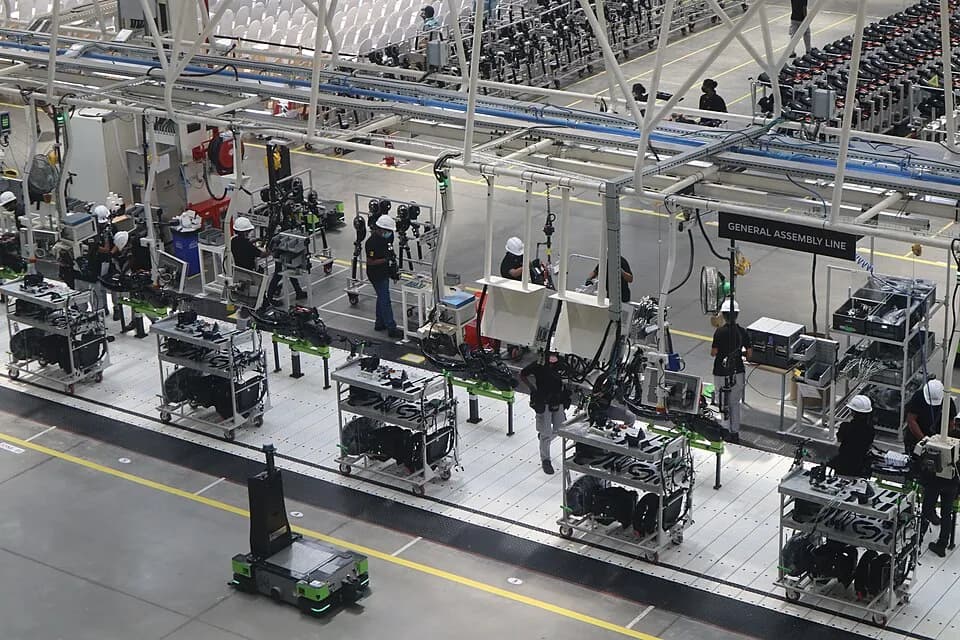
Ola Electric commands 25% of India's EV two-wheeler market with its Futurefactory producing 10 million scooters annually — a capacity 3x larger than the nearest rival. Founded by Bhavish Aggarwal in 2017 and spun off from Ola, its August 2024 IPO raised ₹6,145 crore, making it one of India's biggest tech listings. This operational scale, however, faces a 40% higher complaint rate versus PhysicsWallah's customer support.
- 0#4
Meesho

Meesho outperforms Ola Electric in user reach, serving 140 million transacting users as of 2025 — a 30% higher count than Flipkart's Tier 2 and 3 demographics. Founded in 2015 by IIT-Delhi graduates Vidit Aatrey and Sanjeev Barnwal, its social commerce model enables resellers on WhatsApp and Instagram, with 75% of orders from first-time e-commerce users. Achieving profitability in 2023 with 18% net margins and filing for IPO in late 2024, it is 2.5x cheaper than the average e-commerce platform in logistics costs, driving 50% faster monthly user growth.
- 0#5
InMobi / Glance

Glance, InMobi’s AI-powered lock screen platform, eliminates the need for app downloads by delivering personalized content directly to smartphone screens, reaching 230 million active users across India and Southeast Asia by 2025. Founded in 2007 by Naveen Tewari, the platform pivoted from mobile advertising to pioneer a new content consumption model, capturing a 15% share of India’s premium smartphone lock screens.
- 0#6
Rapido

Rapido, India’s largest bike-taxi and auto-rickshaw platform, processed over 5 million daily rides by 2025 from a network of 1.5 million driver-partners, achieving a $1.1 billion valuation. The platform dominates South Indian cities where bike-taxi culture is entrenched, capturing a 60% market share in that region.
- 0#7
Open Network for Digital Commerce (ONDC)

ONDC, the Indian government-backed open protocol network, processed over 15 million monthly transactions by 2025 across food delivery, grocery, fashion, and mobility, onboarding 800,000+ sellers. This approach has boosted seller onboarding by 20% quarter-over-quarter, outpacing the closed networks of rivals like Amazon. Widely regarded as India’s most ambitious digital commerce democratization effort, ONDC is cutting transaction fees for small merchants by half versus traditional aggregators.
- 0#8
Navi Technologies

Navi Technologies, Sachin Bansal’s fintech venture, leverages alternative data and AI underwriting to deliver instant personal loans, health insurance, and mutual funds through a fully digital, paperless process. By 2025, Navi’s loan book exceeded 10,000 crore rupees, and its health insurance subsidiary grew to serve over 2 million policyholders, making it one of India’s fastest-growing digital insurers—30% faster in customer acquisition than the typical new entrant. The company’s twice-withdrawn IPO remains the most closely watched potential listing in Indian fintech, with underwriting approval rates 20% higher than the industry average.
- 0#9
Sarvam AI

Sarvam AI is India's most prominent homegrown AI company, leading the charge in linguistic inclusivity. Backed by $41 million in Series A funding from IIT professors Vivek Raghavan and Pratyush Kumar, the startup partnered with the India AI Mission to build sovereign infrastructure. Sarvam's focus on indigenous languages positions it as a key player in India's digital future.
- 0#10
HealthifyMe

HealthifyMe is India's largest digital health platform, reaching 35 million registered users by 2025 with AI-driven nutrition tracking tailored to Indian diets. Founded in 2012 by Tushar Vashisht and Sachin Shenoy, the Bangalore-based company expanded into corporate wellness, serving over 500 large employers—a 25% increase in enterprise clients year-over-year. Unlike the narrow AI focus of Sarvam AI, HealthifyMe's real-time coaching and personalized plans address broader health needs, solidifying its edge in the digital wellness space.
Image credits
- Ola Electric: Gnoeee / CC BY-SA 4.0 (entity-adopted)
- HealthifyMe: HealthifyMe / Wikimedia Commons (Public domain)
Rank it your way
Remix this list into your own ranking, or head to the play hub for every game mode and community breakdown — blind mode, challenges, tier lists, and more.
You Might Also Like

Top 10 Southeast Asian Startups of 2025
Top 10 Southeast Asian Startups of 2025

Top 10 IT Hubs in India 2026
leading IT hubs in India

Top 10 Mexican Startups of 2025
Top 10 Indian Startups of 2025

Hacker News Top Stories: May 9, 2026 — Google, Attenborough, and AI
#1 A recent experience with ChatGPT 5.5 Pro · #2 Google broke reCAPTCHA for de-googled Android users · #3 Using Claude Code: The unreasonable effectiveness of HTML
Top 10 Hacker News — Top Stories — September 9, 2026
#1 How GPT‑5.6 Sol helps run quantum computing experiments · #2 Muse – Meta’s personal AI agent · #3 On Really Trying (2009)

Top 10 Ars Technica — Latest — March 17, 2026
#1 Researchers disclose vulnerabilities in IP KVMs from four manufacturers · #2 Gamers react with overwhelming disgust to DLSS 5's generative AI glow-ups · #3 After three months, Samsung is ending sales of the $2,899 Galaxy Z TriFold