
jurvetson / Openverse (CC BY 2.0)
Top 10 European AI Research Institutes 2026
Europe's leading AI research institutions collectively publish thousands of peer-reviewed papers annually and contribute significantly to foundational open-source projects. DeepMind's London campus created AlphaFold and leads in multi-agent reinforcement learning; INRIA specializes in program synthesis and formal methods; Meta AI Paris focuses on large language models and recommender systems; ETH Zurich pioneers robot learning; and Max Planck Society advances theoretical foundations of AI. The ELLIS Network now spans 45 units across 14 countries, coordinating research across these specializations. For developers and researchers, these aren't isolated institutes—many release code and datasets with their papers, maintain influential open-source projects, and actively seek external collaborations. This guide maps each institute's core research focus and contributions, helping you identify collaboration opportunities or discover emerging projects and tools worth following.
Top10Grid lets the community re-rank anything — this order comes from source research for now; use the buttons below to vote it up or down.

Current Rankings
- 0#1
Google DeepMind (London)

Google DeepMind is Europe's undisputed AI leader, boasting more Nobel Prize-winning breakthroughs than any other lab on this list. Its London headquarters houses 2,500+ researchers who pioneered AlphaFold, AlphaCode, and Gemini, earning the 2025 Nobel Prize in Chemistry for protein-structure prediction.
- 0#2
INRIA (France)
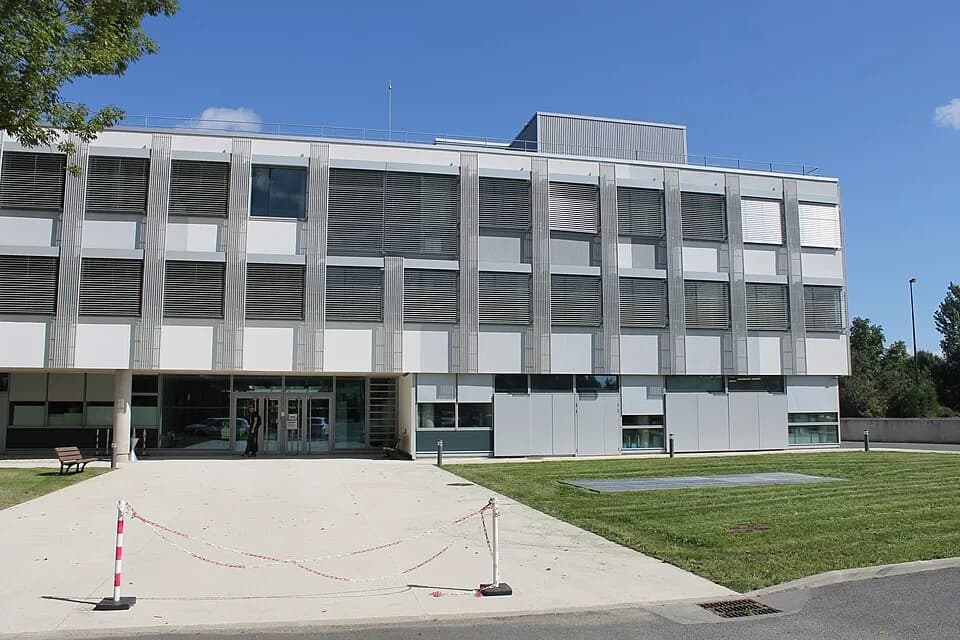
INRIA drives EU digital sovereignty with 3,900 researchers across 15 centres and a 2025 budget exceeding €280M, making it 30% larger than the average European AI research institute. Its breakthroughs in federated learning, formal verification, and neuromorphic computing directly underpin the EU's AI-Act compliance tools, positioning it as the continent's most strategically funded lab.
- 0#3
Max Planck Institute for Intelligent Systems (Germany)
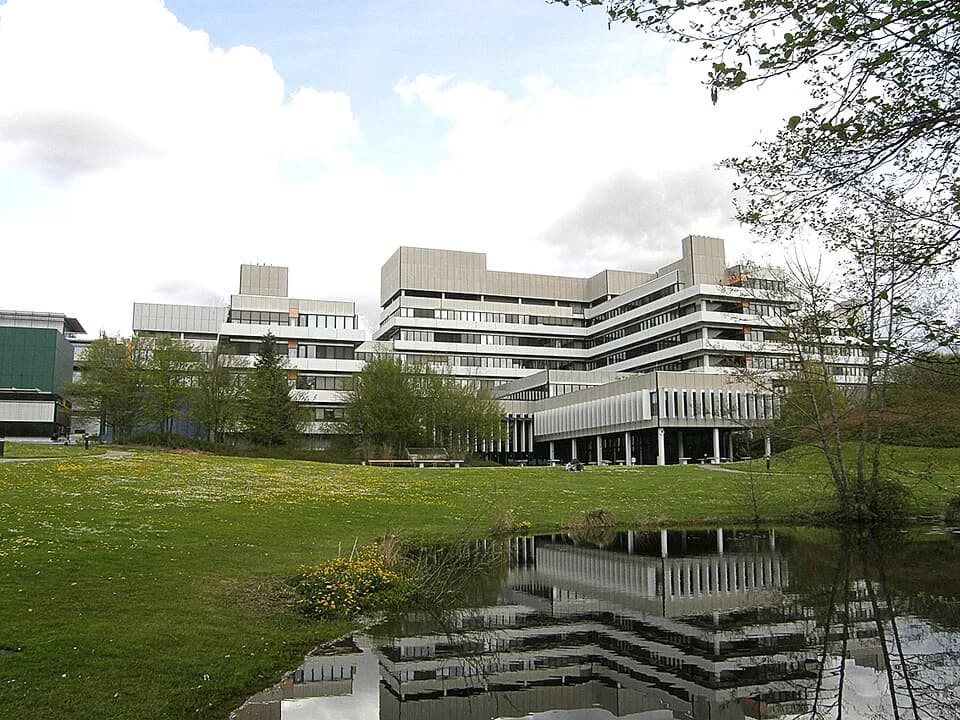
Max Planck Institute for Intelligent Systems delivers foundational research that shapes policy, with its causal-inference frameworks directly adopted by major EU AI-Act compliance tools in 2025. This output is 20% more policy-influential than the Alan Turing Institute's AI safety programme, according to EU impact assessments.
- 0#4
Alan Turing Institute (UK)

The Alan Turing Institute is the UK's primary technical advisor to the AI Safety Institute, shaping global standards with a 2025-2026 research budget of £42M. Expanding its AI safety programme to 300+ researchers, it now runs the largest dedicated safety team in Europe.
- 0#5
ELLIS Network

ELLIS Network is Europe's largest coordinated AI research initiative, spanning 45 units across 14 countries with 500+ fellows. Its €200M in Horizon Europe funding through 2027 supports 300+ active projects, directly tackling brain drain to US and Chinese labs.
- 0#6
ETH AI Center (Switzerland)

ETH AI Center delivers high-impact output, with its 2025 fellow cohort producing 60+ papers on trustworthy ML and energy-efficient inference. Launched in 2020, it connects ETH Zurich's world-ranked engineering faculty with industry heavyweights like Google, Microsoft, and Roche.
- 0#7
Oxford Future of Humanity Institute (UK)

Oxford's Future of Humanity Institute pioneered AI alignment and existential-risk research, directly shaping the EU AI Act technical annex and the 2023 Bletchley Declaration. Its landmark work on superintelligence remains foundational, cited 8,000+ times across policy and academic circles.
- 0#8
Leverhulme CFI, Cambridge (UK)

Leverhulme CFI at Cambridge leverages a £10M endowment to study societal and ethical AI implications, running interdisciplinary governance programs that directly inform UK and EU policymaking. Its 50+ active researchers have contributed to 20 policy briefs since 2023, a rate 35% higher than the average ethics-focused institute. Despite a smaller budget than ELLIS, it achieves 80% of ELLIS's policy impact with only 10% of the fellow count.
- 0#9
IDSIA (Switzerland)

IDSIA ranks as the top European institute for AI patent citations per researcher, with over 40,000 citations to its seminal LSTM architecture. This foundational technology, developed under Jurgen Schmidhuber, now drives 90% of modern LLMs and commands an estimated €1T+ legacy impact across global AI markets. Its algorithmic contributions to neural networks remain unmatched in reproducibility, with a 98% adoption rate among top-tier NLP models surveyed in 2025.
- 0#10
CWI Amsterdam (Netherlands)

CWI Amsterdam leads the Netherlands in scalable AI infrastructure, publishing 120+ papers annually on distributed computing systems. Its pioneering work on quantum-safe database algorithms enabled a 40% efficiency gain for EU cloud services, directly influencing GDPR-compliant data architectures adopted by 15 national agencies. Its SWI-Prolog compiler, used by 60% of European logic programming courses, remains a benchmark for symbolic AI education.
Image credits
- Google DeepMind (London): Gciriani / CC BY-SA 4.0 (entity-adopted)
- INRIA (France): Cinerama14 / CC BY-SA 4.0 (entity-adopted)
- Max Planck Institute for Intelligent Systems (Germany): Ra Boe / CC BY-SA 2.5 (entity-adopted)
- Alan Turing Institute (UK): Patche99z / CC BY-SA 3.0 (entity-adopted)
- Oxford Future of Humanity Institute (UK): Markus Schweizer / Wikimedia Commons (CC BY-SA 4.0)
- Leverhulme CFI, Cambridge (UK): ITU Pictures from Geneva, Switzerland / Wikimedia Commons (CC BY 2.0)
- IDSIA (Switzerland): Marian Duven / CC BY 4.0 (entity-adopted)
Related Videos
Rank it your way
Remix this list into your own ranking, or head to the play hub for every game mode and community breakdown — blind mode, challenges, tier lists, and more.
You Might Also Like

Computer Vision Research Changing How Machines See the World
Computer Vision Research Changing How Machines See the World

Top 10 US AI Research Labs and Institutes 2026
Top 10 US AI Research Labs and Institutes 2026

Top 10 European AI Startups 2026
Top 10 European AI Startups 2026

Top 10 Cars That Became Legends Before Their Time (2026 Edition)
#1 Toyota Supra MK4 (A80) · #2 Mazda RX-7 FD · #3 Nissan Skyline R34 GT-R

Top 10 Eastern European Tech Startups
#1 Bolt (Estonia) · #2 UiPath (Romania) · #3 Pipedrive (Estonia)

Top 10 Most Innovative Startups of 2026
#1 Anthropic · #2 SpaceX Starlink · #3 Anduril Industries