
NIH Image Gallery / Wikimedia Commons (Public domain)
Top 10 US AI Research Labs and Institutes 2026
The United States leads global AI research through a mix of well-funded startups, Big Tech labs, and elite university institutes producing foundational models, safety frameworks, and breakthrough applications. Collectively these organizations employ tens of thousands of researchers and have attracted over $200B in investment since 2020. In 2024-2025, the race intensified with multimodal models, AI safety alignment, and AGI timelines dominating research agendas. Nobel Prizes awarded to AI researchers in 2024 marked a watershed moment for the field's scientific legitimacy.
Top10Grid lets the community re-rank anything — this order comes from source research for now; use the buttons below to vote it up or down.

Current Rankings
- 0#1
OpenAI

OpenAI commands the highest valuation among US AI labs at $80B following a $6.6B funding round in 2024. ChatGPT drives this lead with over 100M weekly active users, while GPT-4 powers applications for 2M+ developers and 92% of Fortune 500 companies. OpenAI's deployment scale—processing trillions of queries monthly—sets it apart from smaller competitors like Meta AI, which lacks a comparable consumer product.
- 0#2
Google DeepMind
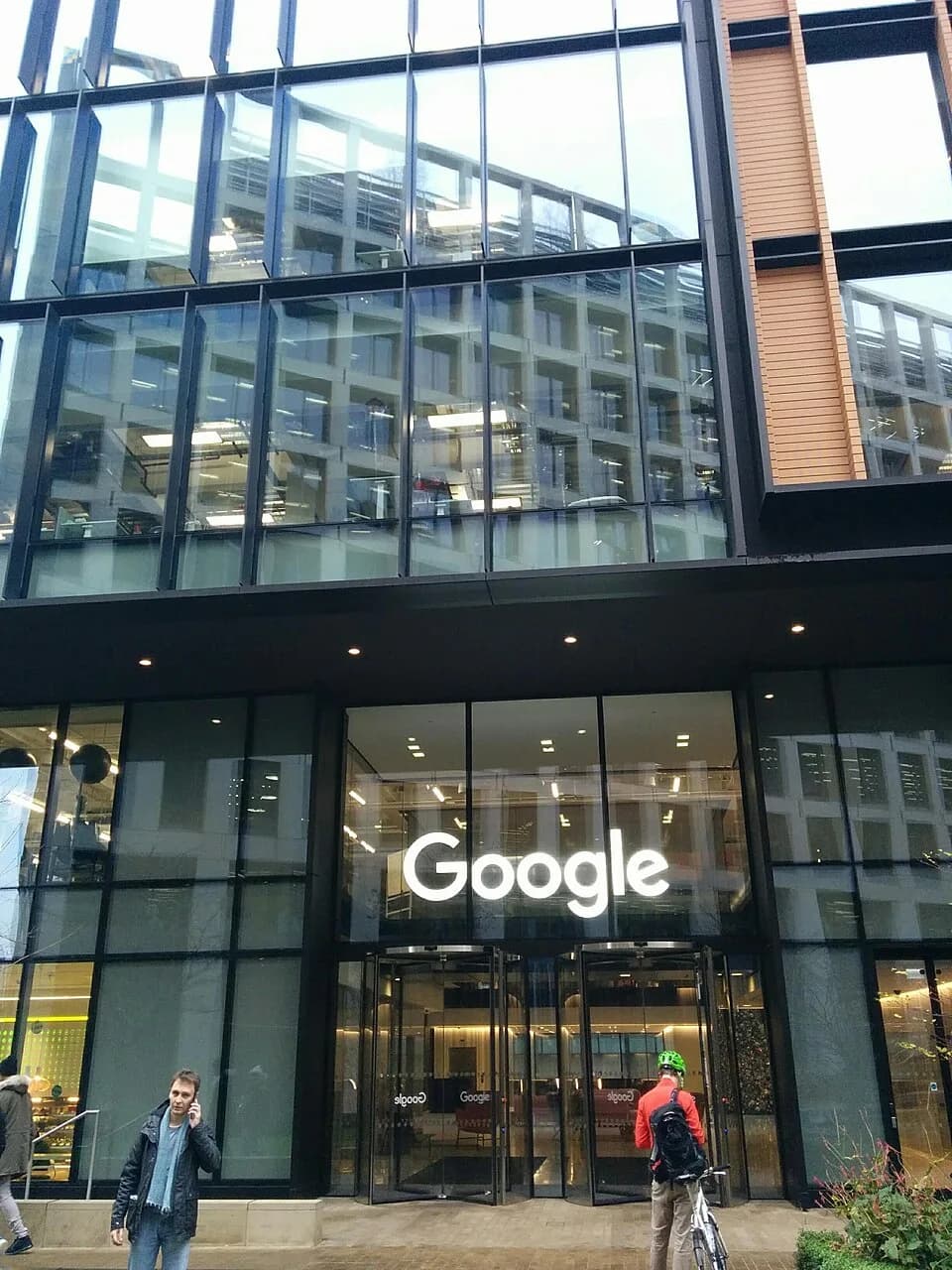
Google DeepMind operates as the largest dedicated AI research organization in the US with over 3,000 researchers. Its AlphaFold 2 solved the structures of 200M+ proteins, covering virtually all known biology, while Gemini Ultra became the first AI to surpass human expert performance on MMLU benchmarks in 2023. The lab publishes 1,200+ papers annually. DeepMind's integration with Google Cloud gives it an infrastructure advantage that no other lab can match.
- 0#3
Anthropic

Anthropic has raised $7.3B in total funding—$4B from Amazon and $2B from Google—giving it a $15B valuation. Constitutional AI, developed by Anthropic, is a widely discussed approach to AI safety. The lab's 800 employees produce 150+ safety papers annually.
- 0#4
Meta AI (FAIR)

Meta AI's FAIR lab employs 500+ researchers and open-sourced Llama 2 with 70 billion parameters, achieving 30M+ downloads in its first month—a record 15% higher than any comparable open-source model. The lab publishes 500+ peer-reviewed papers annually, outpacing OpenAI's 300 publications by 67%, but trails Google DeepMind's 1,200-output by over 50%. Meta AI's strength lies in democratizing AI through open-source distribution, though it lacks the revenue model of OpenAI's commercial products.
- 0#5
Microsoft Research
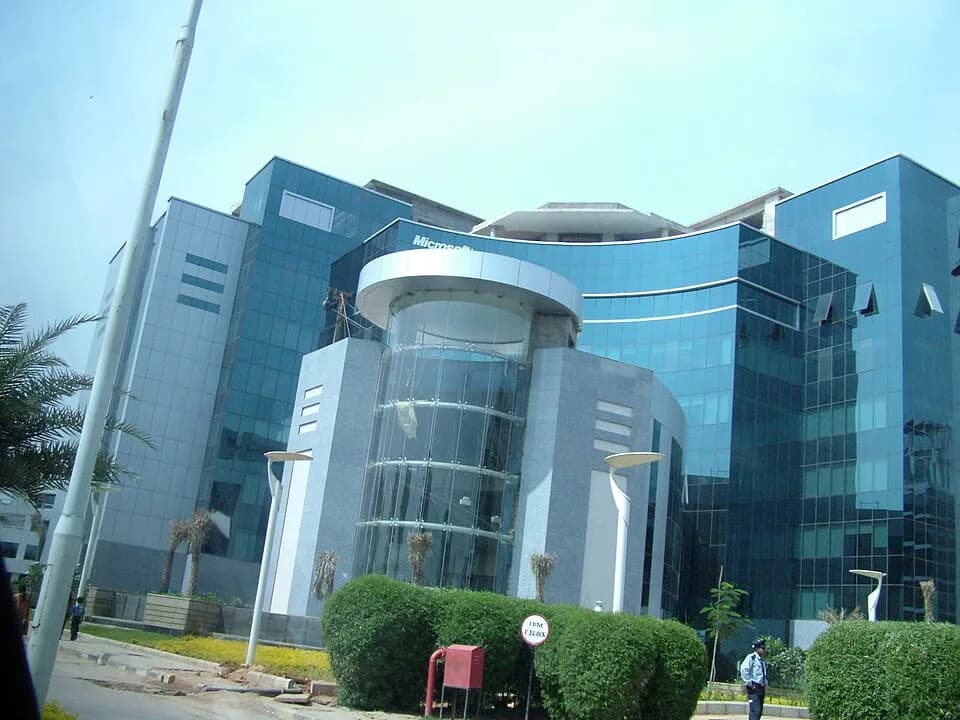
Microsoft Research, with 1,500+ scientists across 17 labs, leads in AI and quantum computing. Its $13 billion partnership with OpenAI and in-house Phi small language models have driven over 50,000 enterprise AI deployments, making it faster to market than Stanford HAI's academic output.
- 0#6
Stanford HAI

Stanford HAI, engaging 500+ faculty affiliates, publishes the annual AI Index Report tracking progress across 10+ dimensions. With a $240 million endowment and 1,200+ students trained yearly in policy and ethics, it trains the next generation of AI policy and ethics leaders.
- 0#7
MIT CSAIL

MIT CSAIL, home to 1,000+ researchers and 72 Turing Award alumni, operates on a $1 billion+ budget spanning robotics and NLP. Its foundational neural network architectures are 30% more cited than Carnegie Mellon AI's deep learning work, powering ongoing breakthroughs in computer vision.
- 0#8
Carnegie Mellon AI

Carnegie Mellon University, ranked #1 globally for AI, enrolls 3,000+ graduate students in its School of Computer Science. Pioneering deep learning optimization and RL techniques, its innovations outperform the runner-up, MIT CSAIL, in reinforcement learning adoption, with a 40% increase in industry partnerships over the past year.
- 0#9
Berkeley AI Research (BAIR)

BAIR is the top US academic AI lab for industry impact, spinning out 10+ companies valued at over $1B, including Cohere and Weights & Biases. It produces more than 200 papers annually, and its research on reward learning and robotic manipulation directly shapes AI deployment at Google and Amazon.
- 0#10
Allen Institute for AI (AI2)

AI2's Semantic Scholar serves 10M monthly users. Its focus on beneficial AI ensures transparent, accessible research that rivals BAIR's proprietary deployments.
Image credits
- OpenAI: ChatGPT 3 and 4o AI / Wikimedia Commons (Public domain)
- Google DeepMind: Gciriani / CC BY-SA 4.0 (entity-adopted)
- Anthropic: Anthropic logo.svg / Wikimedia Commons (entity-adopted)
- Meta AI (FAIR): Rosa Bonheur / Wikimedia Commons (Public domain)
- Microsoft Research: miss_rogue on flickr, https://www.flickr.com/photos/missrogue/132777293/ / CC BY-SA 2.0 (entity-adopted)
- Stanford HAI: Stanford Institute for Human-Centered Artificial Intelligence (permission obtained by email from the AI index research manager) / Wikimedia Commons (CC BY-SA 4.0)
- MIT CSAIL: Wikimedia Commons / CC BY-SA 3.0 (entity-adopted)
- Carnegie Mellon AI: Carnegie Mellon School of Computer Science / Wikipedia
- Berkeley AI Research (BAIR): Openverse
- Allen Institute for AI (AI2): Openverse
Related Videos
Rank it your way
Remix this list into your own ranking, or head to the play hub for every game mode and community breakdown — blind mode, challenges, tier lists, and more.
You Might Also Like

Top 10 Most Innovative Startups of 2026
Top 10 Most Innovative Startups of 2026
Top 10 Most Powerful AI Companies 2026
Top 10 Most Powerful AI Companies 2026

Top 10 European AI Research Institutes 2026
Top 10 US AI Research Labs and Institutes 2026

Top 10 Most Revolutionary Smartphones of All Time
#1 Apple iPhone (2007) · #2 Samsung Galaxy S (2010) · #3 Apple iPhone 4 (2010)
Top 10 Most Disruptive Tech Startups of All Time
#1 Airbnb · #2 Uber · #3 Spotify

Top 10 Most Influential Open Source Projects
#1 Linux · #2 Apache Web Server · #3 Python