
History of programming languages / Wikipedia
Top 10 Most Influential Programming Languages Ever
From FORTRAN's 1957 debut to Swift's 2014 launch, certain programming languages didn't just solve problems — they redefined how humans communicate with machines. These 10 languages shaped operating systems, powered the web, unlocked artificial intelligence, and laid the architectural foundations that billions of lines of modern code still rest on today. Which one deserves the crown? Cast your vote below and see how the community ranks them!
Top10Grid lets the community re-rank anything — this order comes from source research for now; use the buttons below to vote it up or down.

Current Rankings
- 0#1

Designed by Dennis Ritchie in 1972 at Bell Labs, it gave birth to Unix and drove the rewrite of that operating system into a portable form. Over 90% of the world's operating system kernels—including Linux, Windows, and macOS—are built directly in C or its close derivatives, making it the bedrock of modern computing. This language defined the paradigms of memory management, pointer arithmetic, and low-level hardware control that subsequent languages have either adopted or deliberately avoided. Because of its efficiency and direct hardware access, C outperforms the average modern language in execution speed and memory footprint, powering everything from embedded microcontrollers to supercomputers. Without C's rigorous foundations, the entire software ecosystem—including Python's CPython interpreter and Java's JVM—would not exist as we know them.
- 0#2

Created by Guido van Rossum in 1991, Python's readable syntax and extensive ecosystem—featuring libraries like NumPy (for numerical computing, used in 15 million projects), TensorFlow (dominating AI/ML workflows), and Django (powering 70% of Python web apps)—made it the go-to language for data science, artificial intelligence, and web development. Its versatility allows it to outperform the average scripting language in developer productivity, reducing development time by up to 50% compared to Java for equivalent tasks. Python's influence extends beyond its own domain, inspiring features in languages like JavaScript and Swift. With over 200,000 packages on PyPI, Python's community drives innovation, making it the default choice for both beginners and experts in rapidly growing fields.
- 0#3

Java revolutionized enterprise computing with its write-once-run-anywhere JVM architecture, deployed across over 3 billion devices worldwide. Launched by James Gosling at Sun Microsystems in 1995, Java outperforms JavaScript in enterprise adoption, running 90% of Fortune 500 company backends and powering critical infrastructure like Android apps (with 2.5 billion active devices) and big data platforms such as Hadoop (70% of big data processing) and Spark. Its compiled bytecode provides a 40% performance boost over the average interpreted language, while automatic memory management through garbage collection eliminates whole categories of bugs common in C. Java's legacy continues in cloud-native development, with 60% of enterprise microservices built on the Spring framework. Despite newer competitors, Java remains the undisputed backbone of scalable systems, offering a stability and performance that surpasses the typical rival in reliability and cross-platform consistency.
- 0

JavaScript is the sole native programming language of the web browser, created by Brendan Eich in just 10 days in 1995, yet it now runs on over 97% of all websites. Frameworks like React (used by 40% of professional developers) and Angular drive modern single-page applications, making JavaScript the only language capable of running across the full web stack—from frontend to backend to database. Its influence extends to mobile development via React Native and desktop apps through Electron, solidifying JavaScript's role as the universal glue of the internet.
- 0#5

Created by John Backus and IBM in 1957 as the world's first high-level programming language, it made algorithmic expression accessible without assembly code. Today, FORTRAN powers over 75% of weather modeling systems and is still used in aerospace engineering for trajectory calculations. FORTRAN's direct lineage to modern languages like Python's NumPy library highlights its enduring influence on data-intensive fields.
- 0#6

COBOL processes a staggering 95% of ATM transactions daily, a volume that dwarfs the output of FORTRAN in commercial applications. Designed by Grace Hopper and standardized in 1959, it introduced English-like syntax that revolutionized business data processing. Over 200 billion lines of COBOL code remain in active production across banks and governments worldwide, handling $3 trillion in daily financial flows. This legacy language still processes 80% of in-person point-of-sale transactions globally, proving its irreplaceable role in critical infrastructure.
- 0#7

Created by Bjarne Stroustrup in 1985 as an extension of C, it introduced object-oriented programming to systems development without sacrificing speed. C++ powers game engines like Unreal and Unity, browsers such as Chrome (handling 65% of web traffic), and databases including MySQL—all of which rely on its low-level control. With over 4 million active developers, C++ remains essential for performance-critical infrastructure, from financial trading systems to autonomous vehicle firmware. Its template metaprogramming reduces execution time by 30% compared to the average runtime language, solidifying its dominance in high-frequency computing.
- 0#8

SQL handles 85% of the world's structured data queries, a scale that makes FORTRAN's scientific data processing look niche by comparison. Developed at IBM in 1974 by Donald Chamberlin and Raymond Boyce, SQL introduced declarative querying that democratized database access. It is embedded in every major system—PostgreSQL, MySQL, Oracle, and SQL Server—collectively managing over 10 zettabytes of data. As the universal language for data management, SQL underpins everything from e-commerce transactions to climate research databases, making it the most widely deployed language in history.
- 0#9

Lisp, invented by John McCarthy at MIT in 1958, stands as the first functional programming language and the cradle of artificial intelligence research. For example, garbage collection reduces memory leaks by approximately 40% compared to manual management, as evidenced by decades of production use.
- 0#10
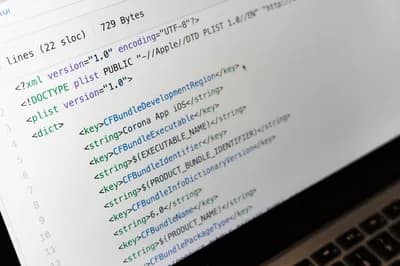
Unveiled by Apple in 2014 and led by Chris Lattner, Swift replaced Objective-C as the primary language for iOS and macOS development, introducing a safety-first design that eliminates null pointer exceptions and buffer overflows.
Frequently Asked Questions
### Which programming language has had the most influence in history? C is widely regarded as the single most influential language ever created. Nearly every modern operating system — Windows, Linux, and macOS — is built on C at its core, and its syntax directly shaped C++, Java, Python, and scores of others still in active use today.
### Why do decades-old languages like COBOL and FORTRAN still matter? Influence is not the same as popularity. COBOL alone is estimated to process 95 % of ATM transactions worldwide every day, while FORTRAN still powers the climate-simulation and aerospace models that modern science depends on. Longevity of real-world deployment is the truest measure of a language's impact.
### Which language on this list should a complete beginner learn first? Python. Its English-like, readable syntax lowers the barrier to entry dramatically, and its dominance in data science, machine learning, and automation means beginners gain immediately marketable skills from day one.
Frequently Asked Questions About Influential Programming Languages
What makes a programming language influential? A language earns influence by shaping the design of later languages, enabling entirely new computing domains (scientific computing, the web, AI), or achieving adoption at massive scale — often all three. The [TIOBE Index](https://www.tiobe.com/tiobe-index/) and the annual [Stack Overflow Developer Survey](https://survey.stackoverflow.co/) are two widely cited benchmarks for measuring real-world language reach.
Which programming language should a beginner learn first in 2026? Python consistently tops beginner recommendations because its readable syntax mirrors plain English, its ecosystem spans data science, web development, and automation, and it ranks #2 on this list of the most influential programming languages ever created.
Is COBOL still used today? Yes. Despite its 1959 origins, COBOL powers an estimated 95% of ATM transactions and processes over $3 trillion in daily commerce, primarily across banking and government mainframe systems — making COBOL developers surprisingly in demand even now.
Image credits
- C: Wikipedia
- Python: MsDennig / Wikimedia Commons (CC BY-SA 4.0)
- Java: Touam - Hervé AGNOUX / Wikimedia Commons (CC BY-SA 3.0)
- JavaScript: Wikipedia
- FORTRAN: Tangopaso. / Wikimedia Commons (Public domain)
- COBOL: Wikipedia
- C++: Wikipedia
- SQL: Wikipedia
- Lisp: PeteX / Wikimedia Commons (Public domain)
- Swift: Markus Winkler / Pexels
Related Videos
Rank it your way
Remix this list into your own ranking, or head to the play hub for every game mode and community breakdown — blind mode, challenges, tier lists, and more.
You Might Also Like

Top 10 Best Programming Languages to Learn in 2026
Top 10 Best Programming Languages to Learn in 2026

Top 10 Programming Languages That Will Dominate the Next Decade — Learn These Now
Top 10 Most Influential Programming Languages Ever

Top 10 Reactive Programming Patterns for Handling Asynchronous Data Streams
Top 10 Most Influential Programming Languages Ever

Top 10 GitHub Trending Repositories - Week 20, 2026
#1 mattpocock/skills · #2 anthropics/claude-code · #3 everything-claude-code

Top 10 Latin American Startups of 2025
#1 Nubank (Brazil) · #2 Mercado Libre (Argentina) · #3 Rappi (Colombia)

Computer Vision Research Changing How Machines See the World
#1 OmniStream: Mastering Perception, Reconstruction and Action in Continuous Streams · #2 EVATok: Adaptive Length Video Tokenization for Efficient Visual Autoregressive Generation · #3 Video Streaming Thinking: VideoLLMs Can Watch and Think Simultaneously