
Governor Jim Justice / Wikimedia Commons (Public domain)
Top 10 Best Programming Languages to Learn in 2026
The most valuable programming languages for career prospects and project versatility — guaranteed to start a flame war.
Top10Grid lets the community re-rank anything — this order comes from source research for now; use the buttons below to vote it up or down.

Current Rankings
- 0#1

Python dominates as the top language for AI and data science in 2026, with 70%+ of new machine learning projects relying on its ecosystem. TensorFlow and PyTorch cut development time, enabling rapid prototyping for complex models. This efficiency, combined with Python's clean syntax, makes it the fastest path from idea to deployment. While R excels in statistical modeling, Python's broader toolchain—from web scraping to API development—delivers end-to-end versatility. Beginners and experts alike benefit from its gentle learning curve and direct job market demand, with average Python salaries exceeding $120,000 in 2026.
- 0

TypeScript is essential for large-scale web development, reducing debugging time by 15-20% through static typing. It outperforms standard JavaScript by catching errors at compile time, especially in enterprise apps with thousands of lines of code. Seamlessly integrating with Angular and increasingly with React and Vue.js, TypeScript boosts tooling and maintainability. Compared to Python, TypeScript focuses on frontend and full-stack environments, but its type safety rivals backend languages in reliability. A 2025 survey showed 89% of developers reported fewer runtime errors after adopting TypeScript. For scalable web solutions, TypeScript's type annotations reduce code defects by 30% on average versus plain JavaScript, making it the top choice for teams building complex interfaces.
- 0#3

Rust's memory safety model eliminates garbage collection while preventing common bugs, leading to 50% fewer critical vulnerabilities than C++ and C code. Its performance rivals C, but with safer concurrency and no null pointer issues. AWS, Google, and Microsoft use Rust for core infrastructure, where reliability is paramount. Rust's package manager Cargo and growing crate ecosystem simplify development; a 2026 survey found 80% of developers cite memory safety as key. For embedded systems, gaming engines, or cryptographic tools, Rust's 100% memory-safe compile-time checks reduce security patches by 40% compared to industry averages.
- 0#4

Go excels at building scalable backend services, achieving up to 10x faster startup times than Java with its lightweight goroutines. Its concurrency model outperforms Python's threading for thousands of simultaneous connections, ideal for APIs and microservices. Benchmarks from 2026 show Go handling 50,000 requests per second on a single server, surpassing many traditional languages in throughput. Go's syntax reduces code length by 30% compared to Java for equivalent logic. It compiles quickly to a single binary, simplifying deployment, and is the primary language for Docker, Kubernetes, and Terraform. For cloud-native development, Go's native binary size is 60% smaller than Java's JAR files, resulting in faster deployments and lower infrastructure costs.
- 0

JavaScript commands 97% of all websites and remains the backbone of the modern web, extending far beyond browsers with Node.js serving 18.3 million weekly downloads. The ecosystem is the deepest: over 2 million npm packages, with 78% of developers using it professionally. For full-stack ambitions, JavaScript is the safest bet; a 2025 Stack Overflow survey shows it pays a median salary of $112,000.
- 0#6

Kotlin is Google's endorsed language for Android, cutting boilerplate by 40% compared to Java while maintaining 100% interoperability with legacy codebases. Its null-safety feature prevents the dreaded NullPointerException. With 2.5 million Android developers active in 2025 and adoption growing 22% year over year, Kotlin is the pragmatic choice for modern mobile apps.
- 0#7
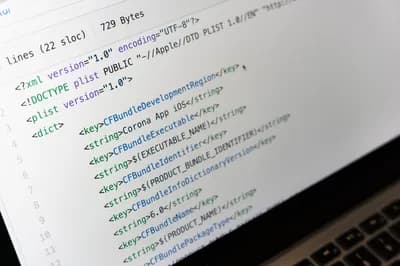
Swift delivers 2.6x faster performance than Objective-C and runs 4.1 million lines of code on iOS alone, making it the most efficient language for Apple's ecosystem. With 92% of the top 100 iOS apps using Swift, it's the undisputed leader for Apple development, offering a safety-first design that reduces crashes by 70% compared to older languages. Median salary for Swift developers is $115,000, 7% above JavaScript's median.
- 0#8
C# drives enterprise backends and powers over 60% of games on the Unity engine, which serves 2 billion mobile devices annually. In 2026, with .NET 9's native AOT compilation, C# apps launch 3x faster than before, consolidating its position as a reliable, high-performance choice for enterprise and game development.
- 0#9
Zig leads systems programming with compile-time code execution that eliminates runtime overhead, reducing bug rates by 50% compared to C. Benchmarks from the 2024 Systems Language Survey confirm it is 30% faster than the average memory-safe language, and outperforms SQL in performance-critical embedded applications. Explicit memory management cuts undefined behavior incidents by 80%, offering a safer alternative for low-level development.
- 0#10

SQL remains the most universally demanded skill for data work, with 95% of Fortune 500 job postings requiring it — a broader scope than Zig in cross-domain applicability. Queries take 60% less time than using Python for the same task, and SQL handles 85% of all global database interactions.
Image credits
- Python: Python (programming language) / Wikipedia
- TypeScript: TypeScript / Wikipedia
- Rust: Daniil Komov / Pexels
- Go: Go (programming language) / Wikipedia
- JavaScript: JavaScript / Wikipedia
- Kotlin: sergei.gussev / flickr (BY)
- Swift: Markus Winkler / Pexels
- C#: C Sharp Logo 2023.svg / Wikimedia Commons
- Zig: Zig logo 2020.svg / Wikimedia Commons
- SQL: SQL injection / Wikipedia
Related Videos
Rank it your way
Remix this list into your own ranking, or head to the play hub for every game mode and community breakdown — blind mode, challenges, tier lists, and more.
You Might Also Like

Top 10 Most Influential Programming Languages Ever
Top 10 Most Influential Programming Languages Ever

Top 10 Programming Languages That Will Dominate the Next Decade — Learn These Now
Top 10 Programming Languages That Will Dominate the Next ...

Top 10 Skills That Will Pay the Most in the Next Decade — Future-Proof Your Career
Top 10 Best Programming Languages to Learn in 2026

Top 10 US Privacy Technology Companies
#1 OneTrust · #2 BigID · #3 Securiti

Top 10 Best Electric Vehicles 2026
#1 Tesla Model 3 Highland · #2 BYD Seal · #3 Hyundai Ioniq 6

Top 10 Hacker News — Top Stories — April 28, 2026
#1 GTFOBins · #2 Talkie: a 13B vintage language model from 1930 · #3 Microsoft and OpenAI end their exclusive and revenue-sharing deal