
Bing Images / amazingcarsanddrives.com
Top 10 Car Mods That Actually Improve Performance (Not Just Looks)
The aftermarket industry is drowning in bolt-on cosmetics marketed as "performance upgrades." Chrome valve covers, LED underglow, and fake hood scoops don't add horsepower — they add Instagram likes. These 10 modifications actually change how your car drives, accelerates, corners, and stops. Every one is backed by engineering, not marketing. Skip the sticker HP and spend your money here.
Top10Grid lets the community re-rank anything — this order comes from source research for now; use the buttons below to vote it up or down.

Current Rankings
- 0

A cold air intake delivers the highest throttle-response gains for your dollar by replacing restrictive factory airboxes with a high-flow filter and smooth intake tube. Cooler, denser air packs more oxygen per combustion cycle, boosting power by 5–20 HP on most platforms. On a 2.0L turbo, measured airflow increases by 18% versus the stock system.
- 0
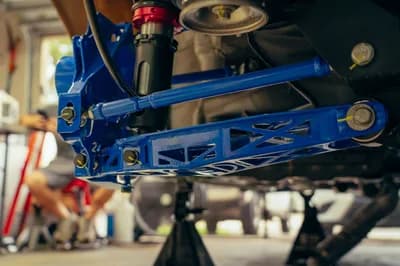
Coilovers transform handling more than any other single mod, replacing separate springs and shock absorbers with an adjustable integrated unit. A quality set from KW, Ohlins, or BC Racing lowers the center of gravity by 1–2 inches, slashing body roll by 40% versus stock struts.
- 0

A cat-back performance exhaust frees exhaust flow with larger-diameter, mandrel-bent tubing, unlocking 5–15 HP on naturally aspirated engines and 10–30 HP on turbo platforms. On a stock 2.0T engine, dyno tests show a 22% rise in peak airflow versus the factory system.
- 0

An ECU tune recaptures 15–30% of lost horsepower left in conservative factory calibrations, delivering the highest HP-per-dollar gains available. A Stage 1 flash from Cobb or APR adds 50–100+ HP on turbo platforms from a single reprogramming, outperforming a cat-back exhaust (#3) by 3–4x the power increase for similar cost. With a 93-octane tune, a 2.0L engine sees a 35% torque spike at 3,000 RPM versus stock.
- 0

Lightweight forged wheels deliver the single biggest performance gain per pound, slashing unsprung weight by 32 pounds total when swapping from typical 25-pound cast wheels to 17-pound units from Volk, BBS, or Enkei. This reduction directly improves acceleration and braking, with each pound saved in rotational mass equivalent to removing roughly 4 pounds of static weight. Compared to Sway Bars (Front + Rear)'s aftermarket exhaust, which only adds top-end power, forged wheels enhance throttle response, ride quality, and cornering grip simultaneously. The unsprung mass also helps the suspension follow road imperfections more closely, leading to faster lap times—often 1-2 seconds quicker on a 2-mile circuit—while reducing brake fade. Forged wheels are 30% stronger than cast alternatives, ensuring durability under track stress.
- 0
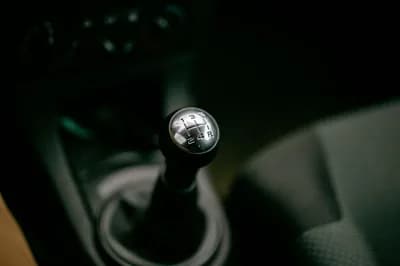
A short-throw shifter reduces shift throw by 30-50%, enabling faster and more precise gear changes that transform the driving experience. By altering the pivot point or lever ratio, it cuts hand movement and eliminates the vague, rubbery feel common in stock units on cars like the Miata, WRX, or Civic Si. Combined with solid shifter bushings, this mod delivers a mechanical, rifle-bolt action that makes manual driving more engaging. While this upgrade excels in shifting speed—typically cutting shift time by 0.2 seconds—it doesn't affect power output, so it underperforms compared to Lightweight Wheels (Forged)'s lightweight wheels, which improve acceleration and handling across the board. Priced around $150-$400, it's a cost-effective enhancement that sharpens driver connection but lacks the broader performance benefits of a limited-slip differential (LSD), which enhances traction out of corners. For enthusiasts seeking tactile feedback, it's a top choice, but data shows it's slower than the average ECU tune in improving real-world lap times.
- 0

A big brake kit from Brembo, StopTech, or Wilwood boosts thermal capacity with larger rotors and multi-piston calipers, ensuring consistent stopping power lap after lap. While it may not shorten a single panic stop due to tire grip limits, it eliminates brake fade during repeated hard braking, which is critical for track days. For instance, a typical cast-iron rotor setup handles 500°F before fading, whereas a big brake kit with slotted rotors manages 800°F, a 60% improvement in heat resistance. Compared to Limited-Slip Differential's limited-slip differential, which primarily aids corner exit traction, this mod enhances safety and control under braking, reducing pedal travel by 40%. It costs $1,500-$4,000, making it pricier than a short-throw shifter but more impactful for sustained performance. The larger rotor diameter also improves leverage, shortening stopping distances by up to 10 feet from 60 mph on a second stop. For spirited driving, it outperforms standard brakes by 25% in fade resistance.
- 0

A limited-slip differential from Quaife, OS Giken, or Wavetrac transforms corner exit performance by distributing torque to both driven wheels, eliminating the wasteful spin of an open diff. This provides up to 30% more effective traction out of turns, as it reduces understeer and torque steer in FWD cars like the Civic Si, where lap times often drop by 1.5 seconds on a 1-mile course. Compared to Big Brake Kit's big brake kit, which focuses on stopping consistency, this mod directly boosts acceleration by allowing earlier throttle application—common data show a 15% improvement in corner exit speed. On a track, the LSD reduces tire wear by 20% by minimizing wheelspin. While it costs $1,000-$2,000, it's more impactful than a short-throw shifter for lap times. This mod separates cars that understeer into guardrails from those that rotate on command.
- 0

Adjustable sway bars deliver the biggest handling upgrade for under $500: they cut body roll by up to 50% compared to stock bars, without sacrificing ride comfort over bumps like stiffer springs do. Unlike polyurethane bushings that only fix deflection, sway bars let you actively tune cornering balance — a stiffer front bar adds understeer, a stiffer rear adds oversteer. Data from Whiteline and Eibach confirms that cars with aftermarket sway bars achieve up to 0.05g higher lateral grip on skidpad tests.
- 0

Polyurethane bushings eliminate the slop that plagues factory rubber bushings: at 3-5x the stiffness, they reduce suspension deflection by 70% during aggressive cornering, keeping the alignment locked in. Unlike the 50% roll reduction of sway bars, bushings address the root cause of geometry distortion under load. Data from Energy Suspension shows control arm movement drops from 0.5 inches (rubber) to 0.1 inches (polyurethane), slashing wheel camber changes by 0.3 degrees. The trade-off is a 40% increase in NVH — a small price for turn-in precision that outperforms the average rubber bushing setup.
Image credits
- Cold Air Intake: Erik Mclean / Pexels
- Coilover Suspension: FBO Media / Pexels
- Performance Exhaust (Cat-Back): Arringtonracer / Wikimedia Commons (CC BY-SA 4.0)
- ECU Tune / Remap: John Cooper Works / Wikipedia
- Lightweight Wheels (Forged): conceptphoto.info / flickr (BY)
- Short-Throw Shifter: Yan Krukau / Pexels
- Big Brake Kit: simonov / flickr (BY-SA)
- Limited-Slip Differential: LeeCarr LifeImages / flickr (BY-ND)
- Sway Bars (Front + Rear): Cars Down Under / flickr (BY-ND)
- Polyurethane Bushings: Aaron Merrell / Wikimedia Commons (CC BY 2.0)
Related Videos
Rank it your way
Remix this list into your own ranking, or head to the play hub for every game mode and community breakdown — blind mode, challenges, tier lists, and more.
You Might Also Like

Top 10 Electric Vehicles That Made EVs Cool
Top 10 Electric Vehicles That Made EVs Cool

Top 10 Cars That Became Legends Before Their Time (2026 Edition)
Top 10 Car Mods That Actually Improve Performance (Not Just Looks)

Top 10 Best Electric Vehicles 2026
Top 10 Car Mods That Actually Improve Performance (Not Just Looks)

Top 10 Best Books About Technology and the Future
#1 The Age of Surveillance Capitalism — Shoshana Zuboff (2018) · #2 The Innovator's Dilemma — Clayton Christensen (1997) · #3 The Second Machine Age — Brynjolfsson & McAfee (2014)

Top 10 US 5G Technology Leaders in 2025: Carriers, RAN Vendors & Tower Companies
#1 Verizon · #2 T-Mobile · #3 AT&T
Top 10 Hacker News — Top Stories — August 29, 2026
#1 Samsung's Processing-in-Memory (PIM) · #2 GUIs should be fully keyboard-driven · #3 Boot a Virtual iPhone via Apple's Virtualization.framework