
Pedro Ribeiro Simões from Lisboa, Portugal / Wikimedia Commons (CC BY 2.0)
Top 10 European Autonomous Vehicle Companies 2026
Europe is at the forefront of autonomous and advanced driver-assistance technology, with its automotive Tier 1 suppliers investing collectively tens of billions in ADAS, LiDAR, and software-defined vehicle platforms. The EU's regulatory push toward Level 3 and Level 4 autonomy by 2030 is accelerating commercialisation. In 2026, European companies supply critical perception and mapping technology to virtually every major automaker globally. These ten companies lead the continent's autonomous vehicle revolution.
Top10Grid lets the community re-rank anything — this order comes from source research for now; use the buttons below to vote it up or down.

Current Rankings
- 0#1
Valeo

Valeo built the first LiDAR to reach automotive series production — the SCALA, which shipped in the 2017 Audi A8 — and its sensors underpin the two Level 3 systems certified for public roads, Honda's Traffic Jam Pilot and Mercedes-Benz Drive Pilot. The group turned over about €21 billion in 2024, most of it from conventional automotive components rather than autonomy.
- 0#2
Continental

Continental powers autonomous driving across multiple global automakers with its Automotive division generating €18B+ annually in sensors, ADAS, and vehicle software. The ContiGuard safety suite and autonomous driving software are integrated into vehicles from BMW, Volkswagen, and Ford, deploying over 40 million radar sensors cumulatively by 2024.
- 0#3
Bosch Mobility

Bosch Mobility dominates European autonomous driving with its mobility division generating over €56B annually, developing radar, ultrasonic sensors, and central compute platforms for ADAS across 50+ vehicle models. Its Highway Pilot system achieved regulatory approval for Level 3 autonomy in Germany in 2023.
- 0#4
HERE Technologies

HERE Technologies provides high-precision HD mapping for autonomous vehicles, owned by BMW, Daimler, and Audi, with its HD Live Map covering 80+ countries with real-time updates. The map delivers centimetre-precision lane data, updating road changes within minutes of detection, positioning HERE for Level 3 systems.
- 0#5
ZF Friedrichshafen

ZF Friedrichshafen is a German Tier 1 supplier with roughly €43 billion in annual revenue and about 160,000 employees. Its 2020 acquisition of WABCO gave it commercial-vehicle braking and control systems, and its ProAI compute platform pairs with ZF's own radar, lidar and camera sensors to supply automated driving stacks to truck and car makers.
- 0#6
TomTom
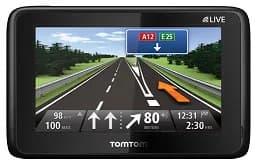
TomTom has shifted from selling consumer satnav units to licensing maps, traffic data and navigation software to other companies — Microsoft's Azure Maps, Uber and a range of carmakers all build on its data. Its Orbis map, launched on open data from the Overture Maps Foundation that TomTom co-founded with Amazon, Meta and Microsoft, is the company's bid to stay competitive with Google's mapping stack.
- 0#7
Mobileye

Mobileye supplies the EyeQ family of camera-based driver-assistance chips to most major automakers, and its Road Experience Management system builds maps from data crowd-sourced off those production cars rather than from a dedicated survey fleet. Its SuperVision package is hands-off but eyes-on, and first shipped on Zeekr vehicles in China. The company is headquartered in Jerusalem; Intel bought it in 2017 and returned it to the public market in 2022.
- 0#8
Volkswagen CARIAD

CARIAD is Volkswagen Group's in-house software company, created in 2020 to build one operating system and one driver-assistance stack across VW, Audi, Porsche and the rest of the group instead of a separate one per brand. Its delays became the group's most public engineering problem: they pushed back several Audi and Porsche launches, cost the unit's leadership their jobs in 2023, and led VW to buy into Rivian's software architecture instead.
- 0#9
Aptiv

Aptiv was created in 2017 when Delphi Automotive split, keeping the electrical architecture business — wiring, connectors and the signal-and-power backbone that software-defined vehicles depend on — alongside advanced safety systems. It formed the Motional robotaxi joint venture with Hyundai in 2020, then stepped back from funding it in 2024, leaving Hyundai as the controlling partner.
- 0#10
Einride

Einride runs electric and autonomous freight operations for shippers in Sweden, Germany and the US, pairing its cab-less Pod with a planning platform that schedules charging and routing for electric fleets. It was among the first companies cleared to operate an autonomous electric truck on a Swedish public road, and is backed by investors including EQT Ventures and Temasek.
Image credits
- TomTom: Tt live 1000.jpg / Wikimedia Commons
- Mobileye: Mobileye / Wikipedia
- Einride: Self-driving truck / Wikipedia
Related Videos
Rank it your way
Remix this list into your own ranking, or head to the play hub for every game mode and community breakdown — blind mode, challenges, tier lists, and more.
You Might Also Like

Top 10 US Autonomous Vehicle Companies 2026
Top 10 US Autonomous Vehicle Companies 2026

Top 10 Dutch Technology Companies 2026
Top 10 Dutch Technology Companies 2026

Top 10 European Quantum Computing Companies 2026
leading European quantum computing companies

Top 10 Turkish Innovations & Inventions 2026
#1 Bayraktar TB2 Drone · #2 TOGG Electric Vehicle · #3 TCG Anadolu Drone Carrier

Top 10 Ars Technica — Latest — September 7, 2026
#1 The complex corporate web behind a $3.2 billion AI data center · #2 German company becomes first in Europe to launch fully commercial orbital rocket · #3 Farmed salmon may not be as nutritious as it once was, new research suggests

Top 10 Most Hyped Technologies That Actually Delivered on Every Promise — And Then Some
#1 The Internet · #2 Smartphones and Mobile Internet · #3 Cloud Computing