
Openverse
Top 10 US Autonomous Vehicle Companies 2026
The autonomous vehicle industry has absorbed $100B+ in cumulative investment, yet only one company runs a fully driverless commercial service at scale in 2026. From Waymo's San Francisco robotaxis to Tesla's FSD fleet and Aurora's Class 8 trucks, the race to Level 5 autonomy is reshaping transportation, logistics, and urban mobility.
Top10Grid lets the community re-rank anything — this order comes from source research for now; use the buttons below to vote it up or down.

Current Rankings
- 0#1
Waymo
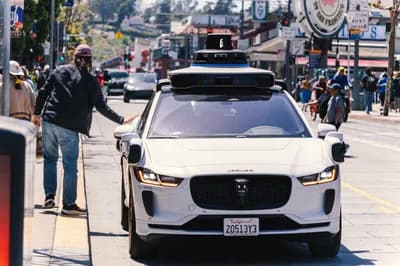
The only fully commercial driverless robotaxi service in the world, completing 50,000+ paid trips per week in San Francisco and Phoenix with no safety driver. Backed by $45B+ in Alphabet investment, Waymo has driven 20M+ fully autonomous miles. Its Waymo One app is expanding to Los Angeles and Austin in 2026.
- 0#2
Tesla Autopilot / FSD
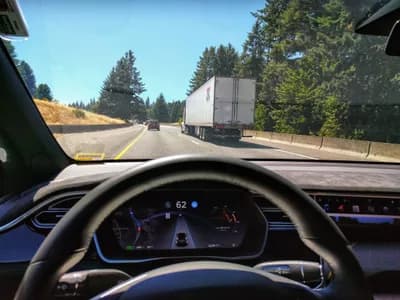
The largest autonomous driving fleet in existence with 5M+ FSD-equipped vehicles on roads and 300M+ cumulative FSD miles driven. Generated $1.4B in FSD software revenue in 2023 at $12,000 per vehicle or $199/month. Tesla's camera-only approach and in-house Dojo supercomputer training pipeline position it as the volume-scale AV leader.
- 0#3
Cruise (GM)
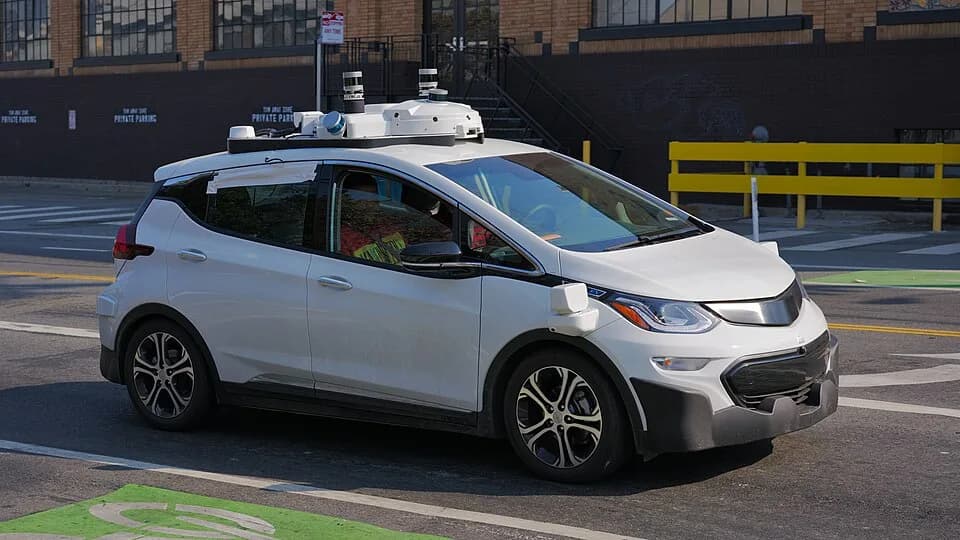
General Motors invested $10B+ in its Cruise AV subsidiary, which pioneered urban robotaxi operations in San Francisco. After a 2023 incident led to a permit suspension and a companywide pause, GM scaled back Cruise's robotaxi ambitions in late 2024, shifting the team's focus toward personal-vehicle driver-assistance technology rather than continuing to build out a standalone robotaxi service.
- 0#4
Zoox (Amazon)

Acquired by Amazon for $1.2B in 2020, Zoox is developing a bidirectional purpose-built robotaxi with no steering wheel or pedals. Its unique square vehicle design allows passenger-facing seating and 360-degree field of view. Operating a 2024 test fleet in Las Vegas and San Francisco, Zoox targets Amazon delivery and airport transportation.
- 0#5
Motional

A $4B joint venture between Hyundai and Aptiv launched in 2020, with a commercial robotaxi target of 2026 using the Ioniq 5-based IONIQ 6 AV platform. Partners with Lyft in Las Vegas for paid autonomous rides and has accumulated 1M+ test miles. Combines Aptiv's AV software stack with Hyundai's manufacturing scale.
- 0#6
Aurora Innovation

A self-driving trucking company valued at $13B in 2021 that is deploying its Aurora Driver on Class 8 Kenworth and PACCAR trucks, completing 10,000+ autonomous miles per week on Texas highways. Backed by Amazon, FedEx, and PACCAR, Aurora's commercial freight launch targets 2025 on Dallas-Houston corridors.
- 0#7
Embark Trucks (Applied Intuition)

After accumulating 1,000+ test miles weekly on US highway trucking routes, Embark Trucks was acquired by Applied Intuition in 2023 when its SPAC valuation collapsed. Applied Intuition is integrating Embark's highway autonomy stack into its simulation-led AV development platform serving Tier-1 auto OEMs.
- 0#8
Nuro

The last-mile delivery robot startup valued at $8.4B that partnered with Kroger and Walmart to autonomously deliver groceries in Houston and Mountain View. Its R3 vehicle is purpose-built with no human occupant and a front-mounted crumple zone for pedestrian safety. Raised $600M+ and holds California's first driverless delivery permit.
- 0#9
Argo AI (closed)
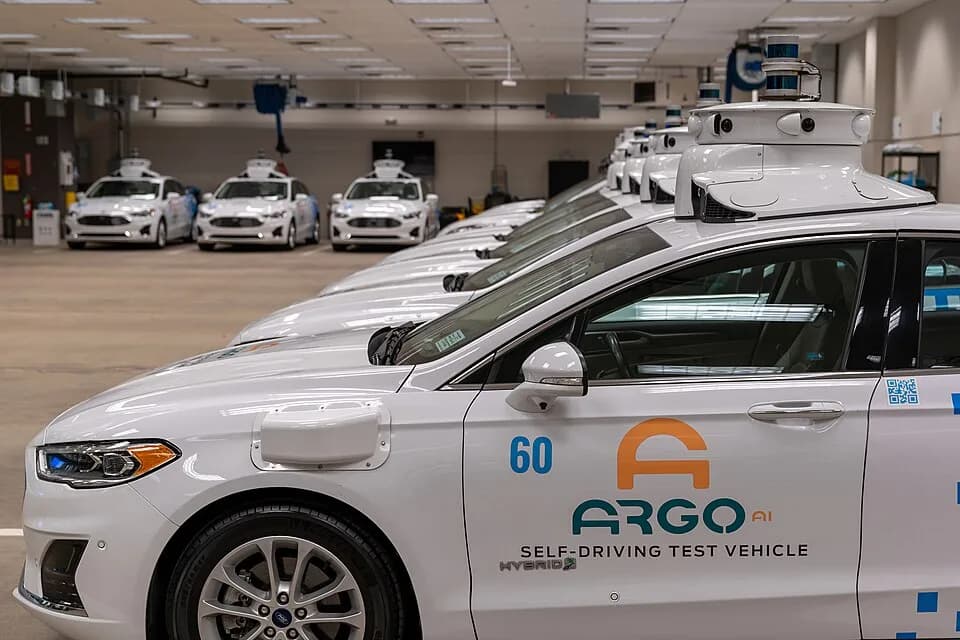
A cautionary tale in AV capital allocation: Ford and VW jointly invested $2B+ into Argo AI before shutting it down in 2022 when a path to profitability proved elusive. Its 800 engineers and lidar IP were absorbed by Ford and VW separately. Argo's closure showed that autonomous driving requires either massive patient capital or a clear commercial wedge.
- 0#10
Mobileye

The leading ADAS chip and software provider spun out of Intel in a 2022 IPO that valued it at $17B. Mobileye's EyeQ chips are in 125M+ vehicles across 50+ OEM brands, making it the eyes of the global automotive fleet. Its SuperVision hands-free driving system and REM mapping platform position it as the bridge from driver assistance to full autonomy.
Autonomous Vehicle Companies — Frequently Asked Questions
What do the SAE autonomy levels mean? Self-driving vehicles are graded on a 0–5 scale set by the Society of Automotive Engineers (SAE). Level 0 means no automation at all. Level 4 means fully self-driving within a defined area — which is where Waymo operates today. Level 5 means fully self-driving anywhere, in any weather or road condition, with no human needed — no company has reached this yet.
Which US self-driving company is furthest ahead in 2026? Waymo leads in real-world driverless deployment, running paid robotaxi rides in San Francisco, Phoenix, Los Angeles, and Austin. Tesla has the largest semi-autonomous fleet by vehicle count. Aurora Innovation is the front-runner in autonomous long-haul trucking, having launched commercial freight operations on US highways.
Have any major autonomous vehicle companies failed? Yes — Argo AI shut down in 2022 after Ford and Volkswagen jointly pulled $2B+ in funding, showing that even well-capitalised programmes can collapse before reaching commercial scale. It remains a cautionary tale and is covered in item #9 on this list.
"Autonomous" Doesn't Mean the Same Thing for Every Company Here
Waymo and Zoox operate Level 4 systems: within their mapped service area, no human driver is needed at all. Tesla's FSD is a driver-assistance system — it still legally requires an attentive driver at the wheel everywhere it runs. Grouping both under "autonomous vehicle company" obscures a real regulatory and safety-case difference between "no driver needed, ever, here" and "driver still legally responsible, everywhere."
Trucking Autonomy Is a Different Race Than Robotaxis
Aurora and Embark (now part of Applied Intuition) aren't competing with Waymo or Tesla for city robotaxi riders; they're targeting highway freight — a more constrained driving environment with mostly interstate miles and far fewer pedestrians and intersections than a downtown robotaxi route. Progress in trucking autonomy doesn't necessarily predict progress in dense urban service, and vice versa.
This Industry Has Already Produced Real Failures
Argo AI's 2022 shutdown, after $2B+ in combined Ford and Volkswagen backing, and GM's own retreat from Cruise's robotaxi ambitions both show that neither automaker backing nor billions in funding guarantees a path to commercial AV deployment. Being on this list is not the same as having a proven, durable business model yet.
Image credits
- Waymo: Abhishek Navlakha / Pexels
- Tesla Autopilot / FSD: Ian Maddox / Wikimedia Commons (CC BY-SA 4.0)
- Cruise (GM): Dllu / CC BY-SA 4.0 (entity-adopted)
- Zoox (Amazon): TDelCoro / flickr (BY-SA)
- Embark Trucks (Applied Intuition): Self-driving truck / Wikipedia
- Nuro: Nuro logo.svg / Wikimedia Commons (entity-adopted)
- Argo AI (closed): U.S. Department of State / Public domain (entity-adopted)
- Mobileye: Alexander Migl / Wikimedia Commons (CC BY-SA 4.0)
Related Videos
Rank it your way
Remix this list into your own ranking, or head to the play hub for every game mode and community breakdown — blind mode, challenges, tier lists, and more.
You Might Also Like

Top 10 Most Innovative Tech Companies of 2025
Top 10 Most Innovative Tech Companies of 2025

Top 10 US Robotics Companies 2026
Top 10 US Robotics Companies 2026

Top 10 US Electric Vehicle Technology Companies
Top 10 US Electric Vehicle Technology Companies

Top 10 European Autonomous Vehicle Companies 2026
leading autonomous vehicle companies in Europe

Top 10 Productivity Apps That Actually Changed How People Work
#1 Notion · #2 Slack · #3 Obsidian

Top 10 US Computer Vision Companies
#1 NVIDIA · #2 Scale AI · #3 Landing AI