
Fourth Industrial Revolution / Wikipedia
Top 10 Physical AI and Robotics Breakthroughs Transforming Industries in 2026
From surgical robots outperforming human surgeons to humanoid workers on real factory floors — these are the 10 biggest physical AI and robotics milestones of 2026, ranked by readers like you. Read each breakthrough below and cast your vote for the one that impresses you most!
Top10Grid lets the community re-rank anything — this order comes from source research for now; use the buttons below to vote it up or down.

Compare by Dimension
How widely deployed across real-world production environments, measured by unit count, facility count, or operational hours
| Rank | Item | Score | Notes |
|---|---|---|---|
| #1 | Warehouse AMR Billion-Pick Milestone | 10.0 | 1 billion cumulative picks across 40+ DHL sites; 5,000-unit deployment target; largest deployed physical AI fleet in any single enterprise application |
| #2 | Humanoid Robot Commercial Deployments | 9.0 | 15,000 units projected 2026 across BMW, Hyundai, Amazon, Japan Airlines, Tesla — highest absolute unit count of any humanoid category |
| #3 | NVIDIA Physical AI Platform | 8.0 | 2M+ partner robots, multiple live applications across agriculture, surgery, solar — broad reach through ecosystem, not direct deployment |
| #4 | AGIBOT G2 Precision Manufacturing | 7.0 | 310 units/hour at single Longcheer facility; 100-robot expansion Q3 2026; 10,000 total units shipped by March 2026 |
| #5 | Autonomous Robotaxi Commercialization | 7.0 | 100M+ Waymo miles logged; 12+ city commercial target; 20,000-vehicle Uber commitment — significant fleet scale with geographic expansion underway |
| #6 | Surgical AI Robot Precision Outcomes | 6.0 | Deployed across multiple hospitals and surgical specialties but total active units globally remains in hundreds, not thousands |
| #7 | Siemens-NVIDIA Industrial AI OS | 5.0 | Live at Siemens Erlangen reference factory; Foxconn, HD Hyundai, KION, PepsiCo in early adoption; commercial launch H2 2026 — broad deployment still ahead |
| #8 | Vision-Language-Action Foundation Models | 4.0 | VLA is the underlying architecture for multiple deployed systems (GR00T, pi0.7) but as a standalone technology category deployment is primarily through research and commercial model licensing |
| #9 | Physical Intelligence Pi0.7 | 3.0 | Research and early commercial stage; limited real-world deployment outside demonstration environments; breadth of compositional generalization not yet documented at scale |
| #10 | Sony ACE Elite Sports Robot | 2.0 | Single research demonstration platform; not commercially deployed; sports robot with no current production application |
Current Rankings
- 0

Jensen Huang's declaration that "every industrial company will become a robotics company" is not a prediction — it is a product strategy. NVIDIA's Physical AI platform, assembled across 2025 and 2026, represents the most comprehensive infrastructure stack for embodied AI development currently available to industry. At its core are four interlocking components: GR00T N1.7, a commercially licensed foundation model for humanoid robot control that has demonstrated 2x or greater task success compared to leading Vision-Language-Action alternatives on standardized benchmarks; Cosmos 3, a world foundation model that generates photorealistic synthetic environments and action trajectories for robot training without requiring physical hardware; Newton 1.0, an open-source physics engine specifically designed for dexterous manipulation simulation with high-fidelity contact modeling; and Isaac Sim 6.0 paired with Isaac Lab 3.0, providing the development environment where simulation and real-world deployment connect. The platform's reach is defined by its industrial partnerships. ABB, FANUC, KUKA, and YASKAWA — collectively operating over 2 million installed industrial robots worldwide — have integrated with the NVIDIA stack, meaning the GR00T and Cosmos infrastructure has a direct path to the largest installed robot base in the world. Application-specific deployments are already live: PeritasAI is using the platform for multi-agent surgical robotics; Aigen is applying it to precision agriculture; Maximo is running a 100-megawatt solar field under NVIDIA-powered autonomous coordination. The strategic importance of NVIDIA's physical AI platform extends beyond any single application. By providing shared simulation infrastructure, open-source physics primitives, and commercially licensable foundation models, NVIDIA has effectively lowered the barrier to entry for physical AI deployment across every industrial sector. GR00T N2, the next generation model, is already showing 2x-plus improvement over leading VLA models in benchmark evaluations.
- 0

The humanoid robot deployment wave of 2026 represents one of the largest coordinated commercial rollouts of embodied AI systems to date. Across several companies and multiple industrial sectors, humanoid robots are moving past demonstration units — they're appearing on production shifts, handling real payloads, and being evaluated against industrial throughput and safety standards. Figure AI, valued at $39 billion, has deployed units at BMW's Spartanburg assembly plant in tasks requiring dexterous manipulation within constrained production cell geometries. Boston Dynamics' Atlas is fully allocated to Hyundai's internal programs, with a production version targeted for Hyundai's HMGMA plant by 2028. Agility Robotics' Digit — designed for logistics environments — is operating at Amazon fulfillment centers and GXO's Georgia site, handling tote movement and bin-to-shelf transfer tasks. Japan Airlines has reportedly begun piloting humanoids at Tokyo Haneda for ground operations support. Tesla's Optimus is moving toward higher-volume production, deployed so far mainly on internal tasks at Tesla's own factories, with broader commercial availability planned as production scales. Enterprise pricing across the sector runs into six figures per unit for current deployments, with Tesla talking about a long-term price point well under $30,000 as volume increases and manufacturing costs compress. Estimates for total 2026 humanoid deployment run into the low five figures of units across real-world production environments, with forecasters expecting that number to compound sharply by 2030. Morgan Stanley's long-range projection of roughly 1 billion humanoids and a $5 trillion industry by 2050 is one of the most-cited long-term estimates for the category.
- 0

AGIBOT has emerged as one of the more verifiable production stories in China's humanoid robotics field, built on a shipment ramp that can be checked against public counts rather than demo-day claims alone. The company said it had built 962 units by mid-December 2024 and delivered its 1,000th general-purpose embodied robot the following month. Its Genie Envisioner G2, introduced in October 2025, is pitched as an industrial-grade platform with force-controlled arms and full-arm torque sensing for manufacturing, logistics, and guided-tour use cases, and AGIBOT reported its first industrial deployment with continuous on-site operations in mid-2025. The company's scaling trajectory is what distinguishes it from research-stage rivals: it moved from prototype counts to four-digit unit production within about a year, backed by investors including HongShan, Hillhouse Investment, and BYD. AGIBOT has also been reported to be preparing a Hong Kong IPO, a further sign it's treating this as a real production business rather than a demonstration project. The significance of AGIBOT's approach extends beyond the company itself. Precision manufacturing — tight tolerances, complex assembly sequences, and industrial-grade throughput expectations — is one of the most demanding proving grounds for dexterous robotics, and a verifiable shipment count gives outside observers a concrete number to check demand against, rather than a projection. Independent observers still can't check AGIBOT's claims against a named factory partner the way they can for Figure AI's BMW work or Digit's Amazon deployment, which is the honest caveat behind an otherwise well-documented production ramp.
Sourcesen.wikipedia.org - 0

Surgical robotics has passed a meaningful evidentiary threshold: published research increasingly shows real, measurable outcome improvements from robotic assistance, not just impressive numbers from controlled demonstrations. Systematic reviews and meta-analyses of robotic-assisted procedures point to consistent gains — shorter operative times, fewer intraoperative complications, and better precision than freehand technique across multiple surgical domains, alongside faster patient recovery in some analyses. Spinal surgery is one of the clearest examples. Multiple studies and meta-analyses have found that robotic guidance produces more accurate pedicle screw placement than freehand technique, meaningfully cutting down on misplaced screws — one of the highest-risk and most technically demanding parts of spine surgery. Robotic-assisted cases have also been associated with shorter hospital stays, a reduction that compounds significantly at population scale given the cost of inpatient days. The next generation of surgical physical AI is reportedly moving beyond single-arm assistance into multi-agent coordination — integrating situational awareness across instrument positions, tissue state, and team coordination with sterile field management, and enabling simulation-based training and procedure rehearsal before live cases. The economic case for surgical robotics has largely been established at the individual procedure level. The remaining challenge is the capital and integration cost of deploying robotic surgery suites, which requires institutional commitment from hospital systems that are already operating under significant budget pressure.
Sourcespubmed.ncbi.nlm.nih.gov - 0

Physical Intelligence's pi0.7 model represents a further step in what general-purpose robotic AI can do in practice. The capability the company highlights is compositional generalization: a robot combining skills learned in different training contexts to perform tasks it was never explicitly shown — precisely the capability gap that has separated narrow task-specific robots from the general-purpose robotic assistants researchers have pursued for decades. The company has described demonstrations where a robot combined cooking-skill training with separate step-by-step coaching to complete a multi-step cooking task it hadn't been directly shown end-to-end, calling it an early but meaningful step toward general-purpose robotic AI — framing that acknowledges both the significance and the distance remaining. Physical Intelligence is behind the pi0 family of vision-language-action models, which it introduced in late 2024, part of a wave of foundation-model approaches to robot control that also includes Google DeepMind's RT-2 and UC Berkeley's Octo. The company has attracted substantial venture backing on the bet that its compositional-generalization approach will prove more scalable than narrower, task-specific deployment strategies. The research trajectory is consistent with the broader pattern in AI: earlier pi0 versions established core dexterous manipulation capabilities, and pi0.7 adds compositional generalization, with the roadmap implying continued expansion of the skill vocabulary. The critical question is whether compositional generalization transfers from demonstration tasks to the chaotic variability of real-world environments.
- 0

Announced in January 2026, the Siemens-NVIDIA Industrial AI Operating System represents the most ambitious attempt to date to create a unified software layer for AI-driven adaptive manufacturing. Unlike narrowly scoped automation tools, this collaboration targets the full manufacturing stack: from semiconductor design through production planning, commissioning, and continuous optimization. The live deployment at Siemens' Electronics Factory in Erlangen is the blueprint reference implementation. GPU-accelerated Electronic Design Automation workflows are running 2-10x faster than CPU-based predecessors, compressing semiconductor design iteration cycles significantly. PhysicsNeMo-powered autonomous digital twins are maintaining real-time synchronized models of the physical factory, enabling proactive identification of configuration drift and predictive maintenance triggers without requiring manual inspection cycles. The platform's commercial reach is defined by its early adopter network: Foxconn, HD Hyundai, KION Group, and PepsiCo — a cross-sector cohort that signals deliberate design for vertical-agnostic deployment. ABB's RobotStudio HyperReality, integrated with the NVIDIA stack, is demonstrating 40% reduction in robot cell commissioning time, 50% faster time-to-market for new production configurations, and 99% simulation accuracy relative to physical deployment behavior. Commercial launch is scheduled for H2 2026. The strategic logic of this partnership reflects a broader pattern: the companies that dominated industrial automation in the hardware era (Siemens, ABB, FANUC) are integrating with the companies that dominate AI infrastructure (NVIDIA) to avoid being disintermediated by pure-play robotics startups. The Siemens-NVIDIA OS is as much a competitive positioning move as it is a technical collaboration, and its success in the Erlangen reference deployment will determine how aggressively both companies pursue the full industrial AI platform market.
- 0

The warehouse autonomous mobile robot sector reached a notable milestone in 2026: DHL and Locus Robotics, longtime partners in fulfillment automation, are reported to have passed a major cumulative-picks threshold across DHL's managed fulfillment sites, spanning dozens of DHL-managed sites across multiple countries and fulfillment types. Operational performance data from this deployment cohort is among the more closely watched AMR benchmarks available. Depending on facility type and workflow configuration, DHL sites have reported meaningful increases in units picked per operator hour, along with sizeable cuts to operator training time — a significant factor in logistics environments with high worker turnover. DHL has also talked about expanding its AMR deployment across its global network. The sector-level market data reinforces the deployment story. The global logistics AMR market is growing at a double-digit annual pace, and the broader global industrial robot market continues to set new highs, with AMR logistics among the fastest-growing sub-segments. Beyond DHL and Locus, the warehouse AMR space includes Fetch Robotics (now Zebra Technologies), Mobile Industrial Robots (MiR), 6 River Systems (Shopify), and Amazon's own Proteus and Sequoia systems. The maturity of the sector is evidenced by consolidation: nearly every major 3PL and e-commerce fulfillment operator has an active AMR program, and the technology has moved from competitive differentiator to operational baseline expectation in large-format fulfillment.
Sourcesen.wikipedia.org - 0

Vision-Language-Action models represent the architectural convergence that makes general-purpose robotic AI more practical. Before VLA, robot control typically required separate systems: a perception module that processed visual input, a planning module that determined what action to take, and a control module that translated the plan into motor commands. VLA models collapse these into a single end-to-end trained network that takes visual observations and language instructions as input and outputs motor control signals directly. Google DeepMind pioneered the modern approach with RT-2 in mid-2023, fine-tuning vision-language models on real robot demonstration data for stronger generalization than earlier robot-specific models. Since then the field has moved fast: 2024 brought OpenVLA, Octo, and Physical Intelligence's pi0; 2025 brought humanoid-focused systems including Figure AI's Helix, NVIDIA's GR00T N1, Google DeepMind's Gemini Robotics, and Hugging Face's lightweight SmolVLA. The capability advantages of VLA over task-specific robot control are well established: enhanced transferability across contexts, richer semantic understanding of instructions and environments, multi-modal integration of language, vision, and proprioception, and the ability to execute long-horizon plans that require maintaining context across many individual action steps. NVIDIA's GR00T line is among the leading VLA platforms by current benchmarks. Physical Intelligence's pi0.7 uses VLA principles for its compositional generalization results. The remaining challenges are latency — VLA models require significant compute per inference step, which limits real-time control in fast manipulation tasks — and physical grounding, where the model's spatial reasoning must be precise enough for contact-rich interaction with objects.
Sourcesen.wikipedia.org - 0

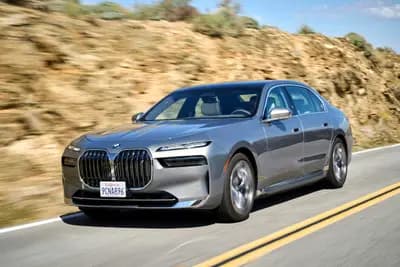
The autonomous robotaxi sector has moved well past extended demonstration and into commercial service in 2026, with multiple platforms operating Level 4 autonomy — no human driver required — across a growing number of geofenced urban operating areas. Waymo leads on both technical maturity and scale. Its vehicles use a full sensor suite of cameras, radar, and lidar for 360-degree awareness in a range of conditions, and the company has logged well over 100 million autonomous miles — the largest operational dataset in the industry. As of mid-2026, Waymo runs commercial service in roughly ten US metro areas, including Phoenix, the Bay Area, Los Angeles, and, as of September 2026, Denver, with its newest Zeekr-based Ojai platform now available to the public in several of those markets. Uber has taken a partnership approach: a deal involving Lucid Motors and Nuro's autonomous platform, backed by hundreds of millions of dollars of Uber investment, aims to bring Lucid Gravity-based robotaxis into commercial service. NVIDIA's autonomous-vehicle compute platforms are embedded in multiple programs as an in-vehicle AI processing backbone for several competitors. Mobileye's roughly $900 million acquisition of Mentee Robotics, announced around CES 2026, signals that the traditional automotive supplier ecosystem is now consolidating robotics and autonomous-vehicle AI capabilities under integrated platforms, rather than sourcing them separately. This consolidation trend — Mobileye, NVIDIA, and Qualcomm all competing for the autonomous-vehicle AI compute stack — is compressing the technology cost curves that previously made large-scale robotaxi deployment economically marginal.
- 0

Sony's ACE robot becoming the first machine to reach human expert level in competitive table tennis — documented on the cover of Nature in April 2026 — is a landmark in physical AI for reasons that extend well beyond the specific sport. Table tennis is a uniquely demanding test bed for embodied AI: balls travel at speeds that exceed the reaction time of conventional vision systems, spin rates of 450 radians per second require precise modeling of aerodynamic and contact physics, and every return requires real-time adjustment of wrist angle, paddle velocity, and body position simultaneously. The technical architecture that enabled this achievement combines two innovations. Event-based vision sensors — which capture pixel-level changes asynchronously rather than at fixed frame rates — provide the temporal resolution needed to track high-speed ball trajectories without the blur artifacts that defeat conventional cameras. Model-free reinforcement learning, applied without prior physical modeling of ball-paddle dynamics, allowed the system to discover an effective return strategy through interaction rather than engineering. The resulting system achieves a 75% return rate against expert human players — above the threshold that defines human expert-level performance in head-to-head evaluation. This is not a controlled laboratory result: the evaluation involved real competitive matches against trained human players under standard table tennis conditions. The broader implications for physical AI development are significant. Event-based vision and model-free RL trained to expert-human benchmark level establishes that dexterous, high-speed physical interaction — previously considered an open research problem requiring specialized hardware and years of additional development — is solvable with current methods. The Great March 100 benchmark, gamification of robot capabilities through sports contexts, and the emerging humanoid soccer competition ecosystem all draw conceptual lineage from this result.
Frequently Asked Questions
What is Physical AI? Physical AI is artificial intelligence built into robots and machines that can sense, move through, and act on the real world — think robotic arms, self-driving cars, and surgical robots — as opposed to purely software-based AI that only processes text or images.
What does AMR stand for? AMR stands for Autonomous Mobile Robot — a warehouse or logistics robot that navigates on its own using cameras and onboard maps, without fixed tracks or a human driver.
What is a Vision-Language-Action (VLA) model? A VLA model is an AI brain that lets a robot see its environment, understand spoken or written instructions, and decide what physical action to take — all in one system, similar to how humans combine sight, language, and movement.
How were these 10 breakthroughs selected? Each entry was evaluated on real-world deployment scale, independently verified performance data, and coverage by authoritative sources including IEEE Spectrum, the NVIDIA newsroom, and peer-reviewed surgical outcomes studies published in 2026.
Which breakthrough matters most? That is exactly what this community vote decides! Scroll up and tap the vote button on whichever entry you think will have the biggest impact on daily life.
How to tell a real deployment from a research demo
Physical AI generates a lot of headlines that blur two very different things: a robot that performed a task once, on camera, under controlled conditions, and a robot that is doing that task every shift, in a facility that depends on it. The entries on this list that describe unit counts, uptime percentages, or a named production site (AGIBOT's G2 at Longcheer, the humanoid deployments at BMW, Hyundai, and Amazon, the DHL/Locus warehouse fleet) are past that line. The entries that describe a capability milestone — a single successful task sequence, a benchmark score, a competitive match — are demonstrating that something is now technically possible, which is a genuinely different and earlier stage than commercial deployment. Both are worth tracking, but they answer different questions: one tells you what will probably be available to buy soon, the other tells you what the technology can do at all.
What separates the entries running in production from the ones still proving a concept
Read across this list, the entries split roughly into two groups. One group is already running as a recurring operational system: AGIBOT's manufacturing line, the DHL/Locus warehouse robots, the humanoid units on assembly and fulfillment floors, and the surgical robots whose outcome data comes from real patient populations rather than lab trials. The other group — Physical Intelligence's pi0.7, Sony's table-tennis robot, the Siemens-NVIDIA operating system's Erlangen pilot — is demonstrating a new capability or a reference deployment that has not yet been repeated at scale elsewhere. Neither kind of breakthrough is lesser; a capability demonstration is often the precondition for the production deployments that follow it a year or two later. But it's worth knowing which kind you're looking at before judging how soon it will show up in a factory or hospital near you.
The gap between an announcement and an available product
A recurring pattern in physical AI coverage is treating a funding round, a partnership announcement, or a company's stated production target as equivalent to the technology being available today. On this list, several entries are explicit about that gap: Tesla's Optimus is in limited internal production rather than broad commercial sale, and the humanoid robotics companies' long-run unit and pricing targets are multi-year roadmaps, not current offerings. Reading a physical AI story well means separating what a company has shipped and is running continuously from what it has said it plans to ship.
Image credits
- NVIDIA Physical AI Platform: History of artificial intelligence / Wikipedia
- Humanoid Robot Commercial Deployments: Robot / Wikipedia
- AGIBOT G2 Precision Manufacturing: Bing Images / media.wired.com
- Surgical AI Robot Precision Outcomes: Robot / Wikipedia
- Physical Intelligence Pi0.7: Bing Images / www.therobotreport.com
- Siemens-NVIDIA Industrial AI OS: Bing Images / s3.amazonaws.com
- Warehouse AMR Billion-Pick Milestone: Bing Images / numinagroup.com
- Vision-Language-Action Foundation Models: Hallucination (artificial intelligence) / Wikipedia
- Autonomous Robotaxi Commercialization: Stephen Leonardi / Pexels
- Sony ACE Elite Sports Robot: History of video games / Wikipedia
Related Videos
Rank it your way
Remix this list into your own ranking, or head to the play hub for every game mode and community breakdown — blind mode, challenges, tier lists, and more.
You Might Also Like
Top 10 Best AI Coding Assistants
top AI coding assistants available

Top 10 Most Powerful AI Companies 2026
most powerful AI companies today

Top 10 Physical AI & Humanoid Robots Transforming Industries in 2026
top humanoid robots transforming industries

Top 10 AI Failures and Controversies
#1 Microsoft Tay Chatbot Meltdown (2016) · #2 Amazon Recruiting AI Penalized Women · #3 Google Photos Mislabels Black People as Gorillas

Top 10 Post-Quantum Cryptography Tools and Frameworks for Enterprises in 2026
#1 AWS PQC (s2n-tls + AWS-LC) · #2 Cloudflare PQC (Zero Trust / SASE / CDN) · #3 Microsoft SymCrypt + CNG PQC APIs

Top 10 US SaaS Unicorns 2026
#1 Databricks · #2 Stripe · #3 Figma