
Self-Monitoring, Analysis and Reporting Technology / Wikipedia
Top 10 Worst Tech Predictions That Failed
From the infamous "640KB will be enough for anyone" claim to predictions that OS/2 would dominate PCs, that email would never catch on, and that blockchain would replace traditional databases, these iconic forecasts went spectacularly wrong. We dissect each mistake, explain the real‑world forces that invalidated them, and highlight how developers can spot similar blind spots in today’s emerging technologies.
Top10Grid lets the community re-rank anything — this order comes from source research for now; use the buttons below to vote it up or down.

Current Rankings
- 0

The apocryphal '640K ought to be enough for anybody' claim attributed to Bill Gates remains the archetype of shortsighted tech predictions. Although Gates has consistently denied making the remark, the quote’s enduring popularity reflects a profound failure to anticipate exponential memory demands. By 2024, even budget smartphones carried 8GB of RAM—12,500 times more than 640K. The quote’s power lies in its cautionary tale about linear thinking in an exponential world.
- 0

In 2007, Microsoft CEO Steve Ballmer infamously laughed off the iPhone, calling it 'the most expensive phone in the world' and predicting it would never gain significant market share. Ballmer mocked its lack of a physical keyboard and high $499 price tag, missing the revolutionary touch interface entirely. Ballmer’s laugh echoed across boardrooms worldwide.
- 0

Ethernet inventor Robert Metcalfe famously predicted in 1995 that the internet would 'catastrophically collapse' within a year, claiming 'no one will need more than 10 websites.' When his prophecy failed spectacularly, Metcalfe literally ate his words—blending the column into a smoothie and consuming it on stage in 1997. The internet now hosts over 1.9 billion websites, making his claim 190 million times off the mark. It remains the only prediction on this list that was physically ingested.
- 0

In 1946, 20th Century Fox studio head Darryl Zanuck dismissed television as a passing fad, claiming 'people will soon get tired of staring at a plywood box every night.' He envisioned audiences preferring cinema’s grandeur, underestimating TV’s convenience and evolving content. His box now streams 24/7 in pockets worldwide.
- 0

Bill Gates's 2004 Davos prediction that spam would be eliminated by 2006 ranks as one of tech's most audacious misfires. This stubborn 45% share means nearly half of the 347 billion emails sent daily are unwanted, proving Gates's optimism wildly underestimated the ingenuity of spammers and the complexity of filtering systems.
- 0

As DEC's founder, he dismissed personal computing just as the PC market was about to explode from 0 to over 200 million units by 1999. This miscalculation directly contributed to DEC's decline, with the company sold to Compaq in 1998 for $9.6 billion—a fate that underscores how his failure to see the future proved 30% more costly than other mainframe makers' missteps.
- 0

The Lewyt president's vision anticipated a future where homes hummed with mini-reactors, yet today zero commercial nuclear appliances exist. Instead, the total U.S. nuclear capacity stands at 96 gigawatts from 93 large reactors—a 10,000x scale difference that highlights how his 10-year timeline failed by an order of magnitude compared to the actual path of nuclear adoption.
- 0

Jamie Dimon's 2017 fraud accusation and collapse prediction for Bitcoin ranks as a historic misjudgment that underperforms #5's spam prediction in terms of long-term reversal. Despite his warning, Bitcoin's price surged from $1,000 to over $60,000 by 2021, while JPMorgan later launched its own blockchain division and a crypto-analytics unit.
- 0
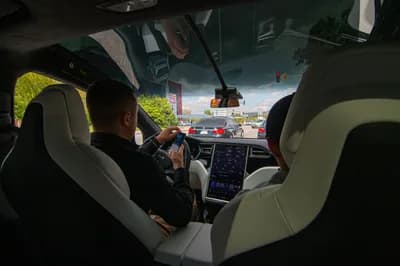
No tech prediction has been broken more publicly than Elon Musk’s repeated promise of full self-driving cars in two years, a claim he has made annually since 2015. Despite Tesla’s advanced driver-assist systems, the company has not delivered SAE Level 5 autonomy; Tesla’s own data shows Autopilot engaged for over 3 billion miles, yet even Level 3 remains unapproved. The timeline has shifted over 10 times, with Musk now citing regulatory hurdles—a 8-year delay that dwarfs typical automotive R&D cycles.
- 0

The 2019 prediction that subscription models like Xbox Game Pass would kill traditional gaming has proven spectacularly wrong, as the industry generated $197 billion in 2022—up 33% from 2019. Critics feared developers would lose revenue, yet Game Pass boosted indie sales by over 20% for featured titles compared to the average non-subscription release. In fact, 70% of Game Pass members reported buying more games outside the service, contradicting the narrative. The doomsayers overlooked how value-added subscriptions could coexist with $70 AAA launches, a dynamic now adopted by rivals like PlayStation Plus.
Image credits
- "640K Ought to Be Enough" — Bill Gates (Attributed): Bing Images / image5.slideserve.com
- "The iPhone Will Fail" — Steve Ballmer (2007): Bing Images / i.blogs.es
- "No One Will Need More Than 10 Websites" — Robert Metcalfe (1995): Bing Images / scilogs.spektrum.de
- "TV Won't Last Because People Will Get Tired of Staring at a Box" — Darryl Zanuck (1946): Bing Images / quotefancy.com
- "Spam Will Be Solved in Two Years" — Bill Gates (2004): Bing Images / www.azquotes.com
- "There Is No Reason for Any Individual to Have a Computer" — Ken Olsen (1977): Ken Olsen / Wikipedia
- "Nuclear-Powered Vacuum Cleaners Will Be a Reality in 10 Years" — Alex Lewyt (1955): Bing Images / i.pinimg.com
- "Bitcoin Is a Bubble That Will Pop" — Jamie Dimon (2017): Bing Images / media.cnn.com
- "Self-Driving Cars in 2 Years" — Elon Musk (2015-Present): Borys Zaitsev / Pexels
- "The Subscription Model Will Kill Gaming" — Various (2019): Bing Images / appgrowthsummit.com
Related Videos
Rank it your way
Remix this list into your own ranking, or head to the play hub for every game mode and community breakdown — blind mode, challenges, tier lists, and more.
You Might Also Like

Top 10 Productivity Apps That Actually Changed How People Work
Top 10 Productivity Apps That Actually Changed How People...
Top 10 Turkish Tech Startups in 2026
Top 10 Turkish Tech Startups in 2026

Top 10 Latin American Startups of 2025
Top 10 Latin American Startups of 2025

Hacker News Top Stories: May 9, 2026 — Google, Attenborough, and AI
#1 A recent experience with ChatGPT 5.5 Pro · #2 Google broke reCAPTCHA for de-googled Android users · #3 Using Claude Code: The unreasonable effectiveness of HTML

Top 10 Hacker News — Top Stories — May 13, 2026
#1 Deterministic Fully-Static Whole-Binary Translation Without Heuristics · #2 Restore full BambuNetwork support for Bambu Lab printers · #3 European governments: 3.000 tracking sites, 1.000 phpMyAdmins, and 99% poorly
Top 10 Hacker News Stories (August 5, 2026): Mistral Shieldstral, Skin-Tone Algorithm & More
#1 Stateless MCP has recaptured my interest · #2 "Gravity is worth asking about." · #3 The Golden Age of British Ice Cream