
Science and technology in Israel / Wikipedia
Top 10 Turkish Tech Startups in 2026
Turkey’s tech scene has exploded in the past decade, transforming from a nascent market into a global contender. In under ten years, the country went from having no billion-dollar tech companies to boasting powerhouses like Trendyol, valued at $16.5 billion, Getir at $11.8 billion, and Dream Games at $2.75 billion. These aren't just big numbers; they represent a seismic shift in a market many Western VCs overlooked as recently as 2015. Istanbul, a bustling city of 15 million, acts as the primary engine. Its young, smartphone-native population and strategic position—bridging European capital and Middle Eastern consumer demand—create a unique launchpad for innovation. This 2026 list highlights the ten startups that best exemplify Turkey's tech narrative. We’ve weighed several critical factors to compare them fairly: current valuation or acquisition price, market reach (from Turkey-only focus to multinational footprints), the maturity of their sector, and the resilience of their revenue models—whether they thrive on recurring software contracts, transaction fees, or logistics volume. You'll notice two distinct clusters: consumer logistics platforms like Trendyol, Getir, Hepsiburada, and Martı, all built on speed and fulfillment density, and software or intellectual property plays such as Dream Games, Peak Games, Insider, Iyzico, Param, and Armut, where the core advantage lies in code rather than cold-chain capacity. Both types are scaling rapidly, and understanding them is key to anticipating Turkey's next unicorn.
Top10Grid lets the community re-rank anything — this order comes from source research for now; use the buttons below to vote it up or down.

Current Rankings
- 0#1

Founded in 2010 and headquartered in Istanbul, Trendyol achieved decacorn status in 2022 with a $16.5 billion valuation, significantly bolstered by Alibaba’s strategic investment four years prior. The platform operates across fashion, electronics, groceries, and quick-commerce, mirroring Amazon’s broad scope rather than a single-category focus. Trendyol Express, its dedicated logistics arm, ensures control over delivery speed and quality in a market where fulfillment standards can vary. For most Turkish consumers, Trendyol is the go-to online shopping destination, much like Amazon in the US or Mercado Libre in Latin America. If you're looking for the company that truly defines Turkey's global tech ambition, this is it.
- 0#2

Getir pioneered the 10-minute grocery delivery model in Istanbul in 2015, years before the concept gained traction with services like DoorDash Dash Mart or Gopuff in Western markets. Its operational model relies on strategically located dark stores, each stocking around 2,000 SKUs, and professional couriers operating within tight delivery radii. After expanding into multiple European countries and the United States, Getir strategically pulled back from several Western markets in 2023 due to a global shift in investor appetite for cash-intensive logistics. The refocused Getir continues to dominate the rapid delivery category it created, and its robust Istanbul unit economics demonstrate that rapid delivery can be sustainable with disciplined execution.
- 0

Dream Games, founded in Istanbul in 2019, has quickly become a global force in mobile gaming, particularly with its flagship title, Royal Match. This puzzle game consistently ranks among the top-grossing mobile games worldwide, showcasing the studio's ability to create engaging and sticky intellectual property. Unlike some studios that rely on a broad portfolio, Dream Games has honed its focus, dedicating substantial resources to refining Royal Match and its live-ops. This focused approach, combined with a deep understanding of player psychology, has allowed Dream Games to achieve a reported valuation of $2.75 billion, making it a formidable player in the competitive mobile casual gaming market.
- 0

Peak Games definitively proved Istanbul's capacity to produce world-class mobile game intellectual property, well before the city's broader tech reputation was established. Founded in 2010, the studio developed Toon Blast and Toy Blast into highly successful franchise-level hits, each consistently maintaining tens of millions of monthly active users. In 2020, Zynga acquired Peak Games for $1.8 billion, marking one of the largest mobile gaming acquisitions of that year. Even years after their initial launch, Peak's titles remain prominently featured in top-grossing puzzle charts, a testament to the Istanbul team's strong live-operations discipline. The acquisition provided Zynga—and subsequently Take-Two Interactive, which acquired Zynga for $12.7 billion in 2022—with a consistently profitable mobile gaming engine in a segment that many major American studios had previously underestimated.
- 0

Hepsiburada has been a cornerstone of Turkish e-commerce since its inception in 2000, making it the oldest and arguably most resilient company on this list, having navigated multiple currency crises. In July 2021, it became the first Turkish tech company to list on NASDAQ under the ticker HEPS, opening the sector to international institutional investors. The platform offers a comprehensive range of products including electronics, home goods, fashion, and groceries, all fulfilled through its proprietary HepsiJet logistics network. Its HepsiPay digital wallet and buy-now-pay-later products transform a simple shopping relationship into a broader financial services touchpoint. Having adapted to numerous cycles of lira depreciation and inflation since 2000, Hepsiburada’s proven ability to adjust its pricing and logistics models to macroeconomic turbulence provides a competitive moat that newer entrants have not yet faced.
- 0#6

Founded in Istanbul in 2012, Insider is a B2B AI marketing platform that directly competes with industry giants like Salesforce Marketing Cloud and Adobe Experience Cloud within the enterprise segment. It provides personalization, cross-channel journey orchestration, and campaign automation for over 1,200 enterprise clients across more than 100 countries, giving it a multinational footprint that significantly surpasses any other company on this list. Insider achieved unicorn status with a valuation exceeding $1 billion, backed by prominent investors including Sequoia Capital's growth fund. The platform's core advantage lies in its unified customer data layer; unlike legacy point solutions that often require months of IT integration, Insider seamlessly connects web, mobile, email, push, and SMS channels into a single orchestration engine right out of the box. For enterprise buyers in retail, finance, and travel, this speed of integration is the primary driver for choosing Insider over established Western competitors.
- 0#7

Param carved out its niche by addressing a critical gap left by larger banks and established processors: providing modern digital payment infrastructure to Turkish small and mid-sized businesses without the complexity or cost associated with enterprise-grade solutions. The platform offers payment acceptance, digital wallet services, and business financial management tools specifically tailored for SMEs. Turkey consistently ranks among Europe's highest-volume markets for contactless payment transactions, providing Param with a strong, unlikely-to-reverse macro tailwind. This distinction makes the two companies complementary rather than direct substitutes within Turkey's evolving payments ecosystem. Param's growth trajectory is closely linked to the country’s broader SME digitization wave, which significantly accelerated after 2020 as pandemic pressures pushed offline businesses towards rapid digital payment adoption.
- 0#8

Iyzico launched in 2013 with a clear mission: to simplify online payment acceptance for Turkish merchants, bringing it to the same standard as in Germany or the UK. By the time PayU, a global payments group backed by Naspers, acquired the company in 2019, Iyzico had become the go-to payment gateway for Turkish e-commerce startups. Its developer-friendly API dramatically reduced integration times from weeks to just days. Operating today under the PayU umbrella, Iyzico continues to support Turkish merchants with checkout optimization, installment payment tools that boost conversion in a high-card-usage market, and scalable fraud protection infrastructure that keeps pace with increasing e-commerce volume.
- 0#9

Armut—Turkish for 'pear'—is Turkey’s leading home services marketplace, expertly connecting consumers with a vast array of service professionals, including electricians, plumbers, cleaners, and tutors. It operates in the same vein as Angi in the US or Checkatrade in the UK, establishing a crucial layer of trust through verified reviews in a market where quality assurance for tradespeople has historically relied solely on word-ofmouth. Founded in 2014, Armut has curated a network of thousands of verified professionals across Turkey’s major urban centers. Its supply side is built on a lead-generation revenue model rather than subscriptions; service providers pay per confirmed job lead, directly aligning platform incentives with completed work and maintaining a low barrier to entry for independent tradespeople. As Turkish consumers increasingly manage household logistics via mobile, Armut’s category—characterized by high-frequency interactions and resistance to pure-price competition—has proven more resilient than comparable models in product e-commerce.
- 0#10
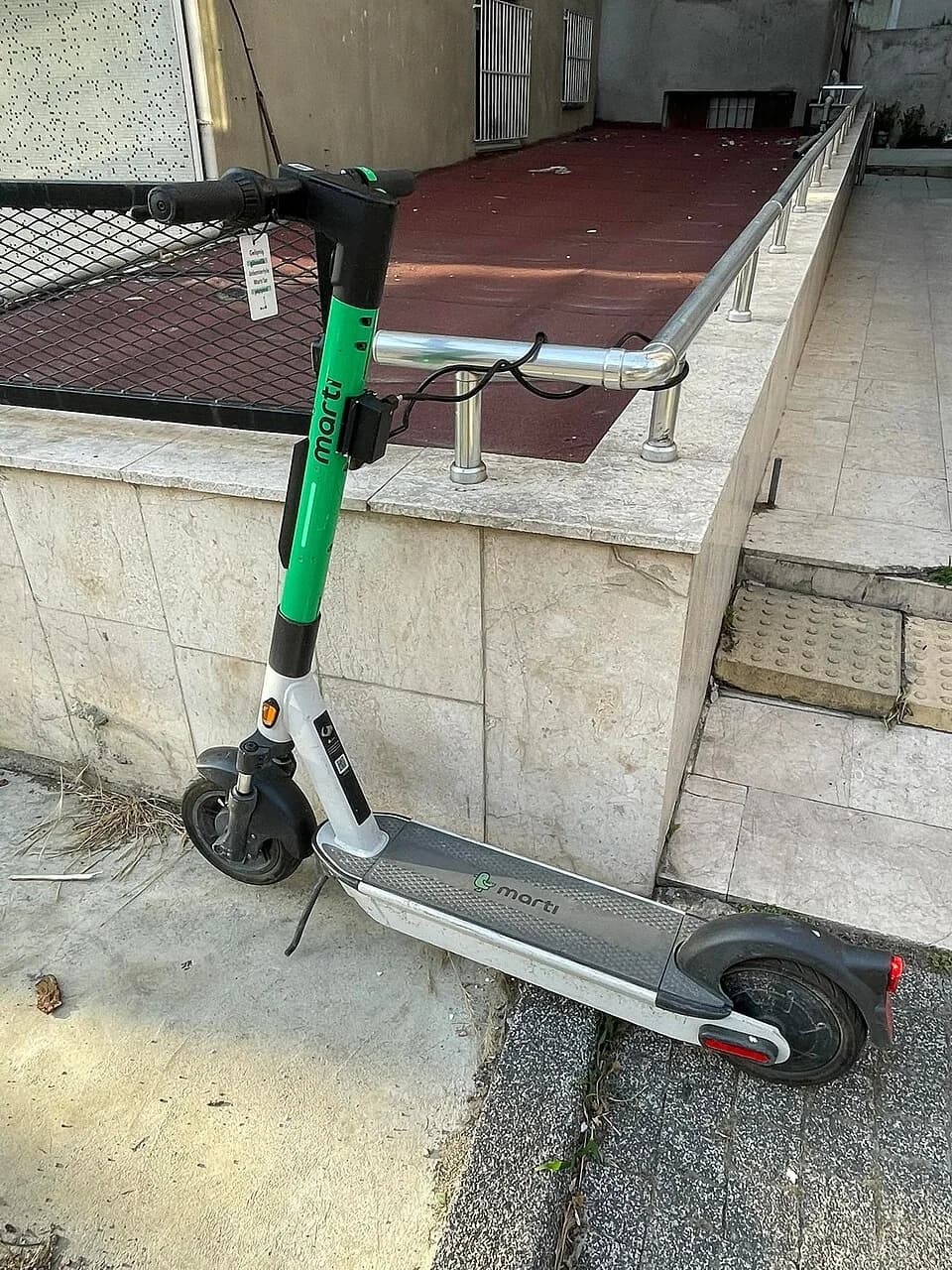
Martı introduced Turkey's first licensed e-scooter service in Istanbul in 2019 and has since grown into the country’s dominant micro-mobility operator across multiple cities. Unlike single-mode scooter companies such as Lime or Bird, Martı expanded its application to include ride-hailing, strategically positioning itself as a comprehensive urban transport layer. Turkey's dense, traffic-heavy cities and a national median age of approximately 32 years provide Martı with more favorable unit economics than many Western micro-mobility operators, where usage often skews towards tourists rather than daily commuters. By 2024, the platform had facilitated millions of rides and was actively exploring electric moped and cargo logistics verticals as adjacent revenue streams. For investors monitoring Turkey's mobility sector, Martı represents the clearest opportunity in urban transport digitization within a country of 85 million people, whose infrastructure is particularly well-suited for short-distance electric mobility.
Frequently Asked Questions About Turkish Tech Startups in 2026
What is the most valuable Turkish tech startup? Trendyol is currently Turkey's most valuable tech company, with a valuation of $16.5 billion — making it the country's first decacorn.
How many unicorns does Turkey have? As of 2026, Turkey has produced several billion-dollar startups including Trendyol, Getir, Dream Games, and Peak Games, establishing Istanbul as one of Europe's leading tech hubs.
What sectors are Turkish startups disrupting? Turkish startups are leading across e-commerce (Trendyol, Hepsiburada), quick commerce (Getir), mobile gaming (Dream Games, Peak Games), fintech (Iyzico, Param), and green urban mobility (Martı).
Which Turkish startup should I vote for? Scroll back up and tap the vote button next to your favourite — every vote helps surface the best of Turkish tech!
Image credits
- Trendyol: Trendyol / Wikipedia
- Getir: Onur / Pexels
- Dream Games: ₡ґǘșϯγ Ɗᶏ Ⱪᶅṏⱳդ / flickr (CC0)
- Peak Games: Peak Games / Wikipedia
- Insider: The Insider (film) / Wikipedia
- Param: Param Sundari (film) / Wikipedia
- Iyzico: Barbaros Özbugutu / Wikipedia
- Martı: 0EminEren / CC BY-SA 4.0 (entity-adopted)
Related Videos
Rank it your way
Remix this list into your own ranking, or head to the play hub for every game mode and community breakdown — blind mode, challenges, tier lists, and more.
You Might Also Like

Top 10 Tech Billionaires Who Dropped Out and Won
Top 10 Turkish Tech Startups in 2026

Top 10 Southeast Asian Startups of 2025
Top 10 Southeast Asian Startups of 2025

Top 10 Worst Tech Company Practices
Top 10 Turkish Tech Startups in 2026

Top 10 Best Bible Study Apps and Tools
Top 10 Turkish Tech Startups in 2026

Top 10 Worst Tech Predictions That Failed
Top 10 Turkish Tech Startups in 2026

Top 10 Biggest Tech Product Launches of 2025
Top 10 Turkish Tech Startups in 2026