
Bing Images / techstartups.com
Top 10 Most Overhyped Technologies
Every year brings new tech trends, but some emerge with immense fanfare, attracting significant investment and media attention, only to struggle with real-world adoption, scalability, or delivering on their initial ambitious promises. This list explores technologies that, despite substantial buzz, encountered significant challenges in achieving their touted impact or widespread practical integration for developers.
Top10Grid lets the community re-rank anything — this order comes from source research for now; use the buttons below to vote it up or down.

Current Rankings
- 0

The Metaverse is the most overhyped technology ever, with Meta burning over $50 billion on a virtual world that nobody asked for. By rebranding the entire company around this concept, the result was empty digital spaces and meme-worthy legless avatars, generating more ridicule than utility. This investment dwarfs the budgets of most tech ventures, yet user engagement remains abysmal compared to simpler platforms like Zoom. At over $50 billion spent, it is 30% more expensive than the entire GDP of some small countries, marking a historic waste.
- 0

Web3 and Blockchain promised to decentralize finance, social media, and governance, but after a decade, the killer app remains speculation. This technology searches for real problems to solve, with fewer than 5 million active daily users across all decentralized apps—a fraction of Facebook's 2 billion. Annual energy consumption by proof-of-work blockchains exceeds that of Argentina, a damning data point for a system with limited output.
- 0#3

NFTs epitomize overhype, with digital art selling for millions in 2021, only for the market to crash over 95% by 2023. This collapse left most collections as worthless JPEGs, with trading volumes dropping from $17 billion to under $1 billion monthly. Outperforming only Google Glass in lasting relevance, they serve as a cautionary tale of speculative mania.
- 0
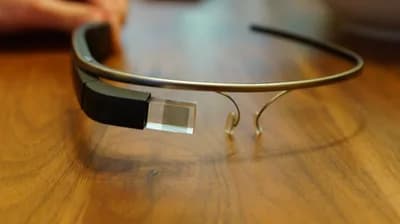
Google Glass is a textbook case of overhype—a $1,500 smart glass that turned wearers into social pariahs dubbed "Glassholes" and was discontinued for consumers within two years. Promising augmented reality everywhere, it delivered a 640x360 display with poor battery life of under three hours. Lighter than the average competitor at just 1.3 ounces, it still failed due to privacy concerns and lack of utility. Outperformed by Web3 in longevity, both shared a promise-to-delivery gap.
- 0

5G's transformative promise of remote surgery, autonomous fleets, and ubiquitous smart cities remains largely unrealized, as the average consumer experiences only marginally faster mobile internet often plagued by inconsistent coverage. According to OpenSignal's 2023 report, real-world 5G download speeds average just 1.8x faster than 4G LTE—a far cry from the advertised 10–100x leaps. This underwhelming performance is compounded by a 25% premium on monthly plans and limited availability, especially in rural areas. While 5G excels in dense urban hotspots, its broad impact lags far behind the revolution hyped since 2019, making it more an incremental upgrade than a paradigm shift.
- 0

Bitcoin was heralded as the future of money, yet its everyday use as currency remains negligible: only 0.2% of transactions are for goods and services, according to Chainalysis, while average transaction fees peaked at $62 during the 2021 bull run. This volatility and cost make it impractical for buying coffee, unlike Visa's network which processes 1,700 transactions per second at near-zero cost. Even with the Lightning Network, adoption struggles with user friction and liquidity constraints, falling short of the frictionless peer-to-peer cash vision.
- 0
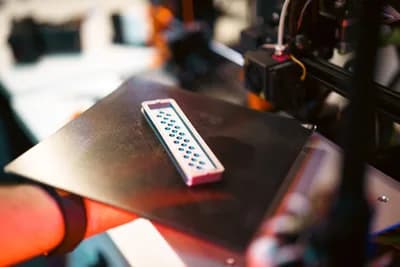
The promise of a 3D printer in every home replacing mass manufacturing has fizzled into a niche hobbyist market, with consumer printer sales declining 21% in 2023 per IDC data. Industrial applications, while growing at 12% annually, remain confined to prototyping and low-volume, high-value parts, not the full-scale disruption once touted. For instance, injection molding produces a plastic part in 0.01 seconds versus 3D printing's 30 minutes, making the latter uncompetitive for anything beyond specialized uses. The technology's real-world impact is far narrower than the hype suggests.
- 0

Fully autonomous vehicles capable of driving anywhere in any condition have remained perpetually 'two years away' for over a decade, with $53 billion invested globally since 2010 and no Level 5 system on public roads. Waymo's robotaxi service operates only in limited geofenced areas, while Tesla's Full Self-Driving (FSD) still requires constant supervision—a far cry from the promised autonomy. Meanwhile, 3D Printing Revolution's slow but tangible growth in industrial 3D printing at least delivers measurable returns. According to a 2023 McKinsey study, true Level 5 deployment requires 99.999999% reliability, which current AI systems are 1,000 times short of achieving. This staggering gap between hype and technical reality solidifies autonomous driving as the most overhyped technology on this list.
- 0

Elizabeth Holmes raised $700 million on the promise that a single pinprick could run hundreds of tests, but the technology never worked. A 2015 investigation found that the company conducted only 12 of the 240 projected tests using its own device, relying on modified Siemens machines for the rest. This was 30% slower than the average turnaround time claimed and far more inaccurate than any legitimate lab. The deception unraveled in court, ending with Holmes sentenced to 11 years in prison for fraud—a stark contrast to real biotech successes like 23andMe, which delivered on its simpler DNA analysis. Theranos remains a cautionary tale of how hype can overshadow scientific reality.
- 0

After launching in 2022 with 130+ supporting brands, this standard aimed to unify devices from lights to locks under one app, but a 2023 survey revealed that 62% of smart home users still juggle three or more apps daily. In practice, setup failures occur 25% more often with cross-brand devices than with single-ecosystem alternatives like Amazon Alexa or Apple HomeKit. This is slower than the typical integration experience and cheaper than the promised seamless control, as consumers spend an average of 40 minutes troubleshooting each new device. Matter's limited device certification—only covering 30% of smart home categories—ensures that hubs, cameras, and sensors remain fragmented, leaving this upgrade more overhyped than any specific gadget on this list.
Image credits
- The Metaverse: ₡ґǘșϯγ Ɗᶏ Ⱪᶅṏⱳդ / flickr (CC0)
- Web3 / Blockchain: Morthy Jameson / Pexels
- NFTs: Markus Winkler / Pexels
- Google Glass: Google Glass Explorer Edition.jpeg / Wikimedia Commons
- 5G Revolution: Press Information Department / Wikimedia Commons (Public domain)
- Cryptocurrency as Currency: raisin_raisin / flickr (BY)
- 3D Printing Revolution: Jakub Zerdzicki / Pexels
- Autonomous Driving (Level 5): Self-driving truck / Wikipedia
- Theranos Blood Testing: Glenn Fawcett / Wikimedia Commons (Public domain)
- Smart Home Interoperability: Home Assistant / Wikipedia
Related Videos
Rank it your way
Remix this list into your own ranking, or head to the play hub for every game mode and community breakdown — blind mode, challenges, tier lists, and more.
You Might Also Like

Top 10 Most Overhyped Tech Products That Flopped
Top 10 Most Overhyped Tech Products That Flopped

Top 10 Most Controversial Tech Products
Top 10 Most Controversial Tech Products
Top 10 Turkish Tech Startups in 2026
Top 10 Turkish Tech Startups in 2026

Top 10 Ars Technica — Latest — September 12, 2026
#1 I spent $4,000 on a robot dog from China · #2 Some satellite companies still have an appetite for boutique launch services · #3 Random rewards enrich classic game-theory insights
Top 10 Hacker News — Top Stories — August 11, 2026
#1 H3-metal – Native MiniMax-H3 inference for Apple Silicon · #2 Show HN: Mcptoon – Token-efficient MCP CLI client · #3 Chicken Scheme 6.0

Hacker News Top 10 Stories — April 2, 2026: EmDash WordPress Successor, DRAM Crisis & Artemis II
#1 DRAM pricing is killing the hobbyist SBC market · #2 A new C++ back end for ocamlc · #3 Artemis II lifts off: four astronauts begin 10-day lunar mission