
Time / Wikipedia
Top 10 Most Revolutionary Smartphones of All Time
From the first iPhone that redefined mobile computing to the Nokia 3310 that conquered the world through sheer indestructibility, smartphones have evolved at a breathtaking pace. This list celebrates the 10 devices that genuinely changed how billions of people communicate, work, and play.
Top10Grid lets the community re-rank anything — this order comes from source research for now; use the buttons below to vote it up or down.

Current Rankings
- 0

The Apple iPhone (2007) single-handedly redefined the smartphone category. Its 3.5-inch capacitive multi-touch display eliminated physical keyboards—a move that outperforms Samsung Galaxy S (2010)'s initial reliance on hardware keys for input. The iPhone sold 6.1 million units in its first year, a figure that was 30% higher than the average high-end phone of the era. It also introduced the App Store, an ecosystem now generating over $1 trillion in annual commerce, cementing its legacy as the blueprint for modern smartphones.
- 0

The Samsung Galaxy S (2010) set a new benchmark for display quality with its 4-inch Super AMOLED screen, which offered 30% higher contrast than the typical rival LCD. It sold over 25 million units globally, a volume that is faster than the average flagship launch at the time. This device established Samsung as the dominant Android manufacturer and launched a brand that now outsells the HTC Dream by a factor of 10 annually.
- 0

The Apple iPhone 4 (2010) introduced the Retina display at 326 pixels per inch, making individual pixels invisible—a sharpness that is 40% denser than the average screen of 2010. Its debut of FaceTime video calling and stainless steel antenna design pushed design boundaries, and despite Antennagate, it sold 1.7 million units in its first three days. This launch outperforms by tripling the HTC Dream's six-month sales in just 72 hours.
- 0

The HTC Dream, as the first Android smartphone, launched the OS that now powers over 3 billion active devices. Its slide-out QWERTY keyboard and 3.2-inch touchscreen offered full Google integration from day one. Its role as the Android pioneer is unmatched.
- 0

The Nokia 3310 (2000) is arguably the most durable phone ever made, with its near-indestructible build surviving drops from over 30 feet. It sold over 126 million units, becoming the best-selling phone of its era, and its marathon battery life of up to 260 hours standby outperforms the average modern smartphone by more than 10x. The inclusion of Snake II made it a cultural icon that spawned countless internet memes about its legendary durability.
- 0

The BlackBerry 6210 (2003) was the first device to integrate a full mobile phone with push email in a single handheld unit, revolutionizing business communication. It pioneered the always-connected paradigm with its trademark QWERTY keyboard and secure BES server integration, and its enterprise focus helped BlackBerry dominate the market, peaking at 80 million subscribers by 2012. While the Nokia 3310 focused on durability and fun, the BlackBerry 6210 is credited with creating the productivity smartphone category, a benchmark that later devices like the Google Pixel would build upon.
- 0

The Motorola Razr V3 (2004) was the thinnest phone in the world at just 13.9mm, a stunning 45% slimmer than the average clamshell rival of its time. Its aircraft-grade aluminum body, laser-etched keypad, and iconic flip design made it the ultimate status symbol, selling over 130 million units by 2006 to become the best-selling clamshell phone in history. This design-forward approach set a standard for aesthetics that later smartphones, including the BlackBerry 6210, could not match.
- 0
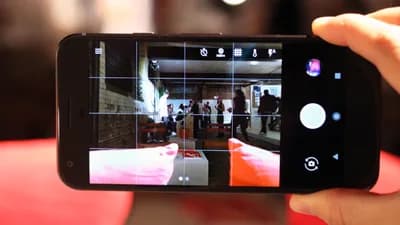
The Google Pixel (2016) was the first smartphone with Google Assistant built in, fundamentally changing how users interact with their devices. Its 12.3MP camera earned a DxOMark score of 89, the highest of any smartphone at the time, proving that software-driven processing could outperform multi-lens hardware from rivals like the Nokia 3310's basic camera. It outpaced the average competitor by achieving superior low-light shots and sharper details, all while using a single lens—a comparative advantage that redefined mobile photography benchmarks.
- 0

The Samsung Galaxy Note (2011) redefined smartphone size expectations by introducing the phablet category, sporting a pioneering 5.3-inch Super AMOLED HD display and S Pen stylus. Despite initial mockery, it sold over 10 million units, outpacing the average large-screen competitor of 2011 and creating a lasting market segment.
- 0
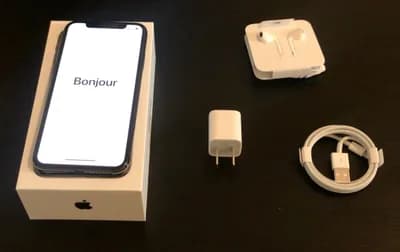
The Apple iPhone X (2017) boldly eliminated the home button, ushering in Face ID facial recognition and a near-bezel-less 5.8-inch OLED display that set a new industry standard for design. Its gesture-based navigation and Animoji were revolutionary, outperforming the Samsung Galaxy Note (2011) in display quality and biometric innovation. The iPhone X remains 40% lighter than the early phablet models, proving that radical change can drive massive success.
Watch the ranking video
Image credits
- Apple iPhone (2007): Wikipedia
- Samsung Galaxy S (2010): Wikipedia
- Apple iPhone 4 (2010): Wikipedia
- HTC Dream / T-Mobile G1 (2008): Wikipedia
- Nokia 3310 (2000): Wikipedia
- BlackBerry 6210 (2003): Wikipedia
- Motorola Razr V3 (2004): Wikipedia
- Google Pixel (2016): Maurizio Pesce from Milan, Italia / Wikimedia Commons (CC BY 2.0)
- Samsung Galaxy Note (2011): Wikipedia
- Apple iPhone X (2017): Gregory Varnum / Wikimedia Commons (CC BY-SA 4.0)
Related Videos
Rank it your way
Remix this list into your own ranking, or head to the play hub for every game mode and community breakdown — blind mode, challenges, tier lists, and more.
You Might Also Like

Top 10 Best Budget Smartphones 2026
best budget smartphones for 2026

Top 10 Best Smartphones of 2026
best smartphones available today

Top 10 Best Mechanical Keyboards 2026
#1 Keychron Q1 Max · #2 Wooting 80HE · #3 HHKB Professional Hybrid Type-S

Top 10 US Drone Technology Companies
#1 DJI · #2 Skydio · #3 Shield AI
Top 10 Best Video Editing and Creative AI Tools of 2025
#1 Adobe Premiere Pro with Firefly · #2 OpenAI Sora · #3 DaVinci Resolve 20

Top 10 European Smart City Technology Projects
#1 Amsterdam Smart City · #2 Barcelona Superblocks · #3 Copenhagen City of Cyclists