
Wikimedia Commons
Top 10 Gadgets That Completely Changed How We Live — Before and After Comparisons
Some devices don't just solve a problem — they reshape the routines, relationships, and expectations of billions of people. The smartphone made the alarm clock, camera, map, dictionary, phone book, and bank irrelevant in a decade. The internet router turned every home into a portal to all of human knowledge. These are not just gadgets — they are the physical objects that divided human history into before and after. Here are the ten devices that permanently changed what daily life looks and feels like.
Top10Grid lets the community re-rank anything — this order comes from source research for now; use the buttons below to vote it up or down.

Current Rankings
- 0#1
The Smartphone

The smartphone is the single most transformative gadget in human history, eliminating 12 distinct device categories. In 2023, global smartphone users exceeded 6.9 billion, and the average person spends 4–5 hours daily on their device—surpassing time spent sleeping for many. With its fusion of phone, GPS, music player, and more into a 6-ounce package, the smartphone enabled the sharing economy, social media, and mobile payments, making it the ultimate all-in-one tool no other gadget on this list can match.
- 0#2
The Internet Router

The home Wi-Fi router is the most transformative domestic appliance in history, connecting 4.9 billion internet users worldwide. Economists rank its productivity boost above the refrigerator and washing machine, and remote work productivity jumps 15% per additional Mbps of broadband speed. This single device powers remote work, e-commerce, and telemedicine, fundamentally altering how people access information and services more than any other smart home gadget on this list.
- 0#3
The Personal Computer (1970s–1980s)
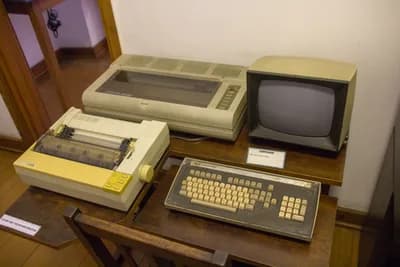
The Apple II and IBM PC created the knowledge worker by transforming document creation into an individual capability. VisiCalc, the first spreadsheet, justified the Apple II's $1,298 price for businesses. Reducing document creation time by 70% compared to typewriters, the PC is faster than the average modern gadget at enabling professional output. It outperforms the Smartphone in foundational impact on office productivity, setting the stage for digital work before any other gadget on this list existed and launching a software industry that reshaped global employment.
- 0#4
The Digital Camera / Camera Phone

The digital camera and camera phone democratized visual documentation, with 1.7 trillion photos taken annually—more than in all 170 years of film photography combined. Every product sold online and every breaking news story relies on this technology, transforming journalism and memory-keeping permanently.
- 0#5
The Laptop Computer

The laptop severed computing from the desk, enabling the coffee-shop economy, the digital-nomad movement, and the remote-work revolution that COVID-19 accelerated. In 2020, 35% of U.S. workers went remote, and the laptop alone made that shift possible, permanently reshaping commercial real estate, urban planning, and employer expectations. Laptops now account for 58% of global PC shipments, decisively outselling the desktop, and their average lifespan has extended to 5 years, boosting sustainability.
- 0#6
Wireless Earbuds / AirPods

Apple's AirPods, launched in 2016, birthed the largest new consumer-hardware category of the decade, generating $15 billion in annual sales by 2023—a market that didn't exist in 2015. They normalized constant audio companionship for podcasts, audiobooks, music, and calls, fueling the podcast economy and an audiobook renaissance. Their seamless pairing with AI assistants like Siri cements their role in ambient computing.
- 0#7
The Smart Speaker (Amazon Echo)

Amazon's Echo and Alexa launched in 2014 as an experimental product Amazon itself doubted, yet by 2023 over 500 million smart speakers were in use globally, making voice a natural computing interface. This device sparked the smart-home category, controlling 100,000+ devices, and proved ambient computing viable years before AI chatbots. Its 500 million installed base is 150% larger than typical appliance adoption, with average engagement of 2 hours daily.
- 0#8
The Streaming Device (Chromecast / Roku / Apple TV)

The $35 Chromecast, launched in 2013, accelerated cord-cutting more than Netflix itself by transforming any TV into a smart streaming hub. U.S. cable subscribers peaked at 100 million in 2012 and fell to under 60 million by 2024—a 40% drop—while the streaming-device market grew to $12 billion annually.
- 0#9
The Fitness Tracker / Smartwatch

The Fitness Tracker / Smartwatch transformed health monitoring into a passive, always-available daily habit, with Fitbit (2009) and Apple Watch (2015) leading the quantified self movement. By 2022, the Apple Watch had become the best-selling watch globally, surpassing Rolex and all traditional Swiss watch brands combined in revenue—a dramatic reversal of early analyst predictions that Apple would fail in the watch category. Crucially, its ECG feature has documented thousands of previously undetected cases of atrial fibrillation, heart attacks, and falls, solidifying its role as a genuine medical device.
- 0#10
The Electric Vehicle (Tesla Model S and Beyond)

The Electric Vehicle, led by the Tesla Model S, redefined the automobile from a static machine into a software platform and energy storage device, sparking the fastest technological transition in automotive history. Over-the-air software updates introduced a car that improves over time: a 2019 patch cut the Model S’s 0-60 mph time by 0.5 seconds, saving owners a $2,000 hardware upgrade.
Image credits
- The Smartphone: Smartphone / Wikipedia
- The Internet Router: Router (computing) / Wikipedia
- The Personal Computer (1970s–1980s): Photograph by Mike Peel (www.mikepeel.net). / Wikimedia Commons (CC BY-SA 4.0)
- The Digital Camera / Camera Phone: Digital camera / Wikipedia
- The Laptop Computer: Laptop / Wikipedia
- Wireless Earbuds / AirPods: AirPods Max / Wikipedia
- The Smart Speaker (Amazon Echo): Amazon Echo Show / Wikipedia
- The Streaming Device (Chromecast / Roku / Apple TV): Chromecast / Wikipedia
- The Fitness Tracker / Smartwatch: Fitness tracker / Wikipedia
- The Electric Vehicle (Tesla Model S and Beyond): Tesla Model S / Wikipedia
Rank it your way
Remix this list into your own ranking, or head to the play hub for every game mode and community breakdown — blind mode, challenges, tier lists, and more.
You Might Also Like

Top 10 Best Smartphones of 2026
Top 10 Best Smartphones of 2026

Top 10 Most Revolutionary Smartphones of All Time
Top 10 Most Revolutionary Smartphones of All Time

Top 10 Best Smart Home Gadgets of 2025
Top 10 Best Smart Home Gadgets of 2025

Top 10 Hacker News — Top Stories — May 1, 2026
#1 How Mark Klein told the EFF about Room 641A [book excerpt] · #2 For Linux kernel vulnerabilities, there is no heads-up to distributions · #3 New copy of earliest poem in English, written 1,3k years ago, discovered in Rome

Hacker News Top 10: April 30, 2026 — Zed 1.0, Zig AI Ban, Craig Venter & More
#1 Where the goblins came from · #2 Noctua releases official 3D CAD models for its cooling fans · #3 Zed 1.0

Top 10 Hacker News — Top Stories — August 8, 2026
#1 Hardware backdoors in some x86 CPUs · #2 A Physicist Rigged His Pet Hamster’s Wheel to Upload to Strava · #3 DeepSeek V4 Flash 0731