
Photo by Fabian Irsara / Unsplash
Top 10 Best Laptops for Developers 2026
Looking for the best laptop for programming in 2026? This Top 10 ranks the notebooks developers actually reach for day-to-day — from the MacBook Pro M5 Pro and the repairable Framework Laptop 16 to Linux-first picks like the System76 Pangolin and Lenovo's ThinkPad line. We've balanced raw compile performance, keyboard quality, RAM ceiling, battery life, display, and OS fit so you can find the right machine for web dev, mobile, data, or systems work. Vote for your favorite at the bottom — and yes, expect the macOS vs Linux debate to heat up in the comments.
Top10Grid lets the community re-rank anything — this order comes from source research for now; use the buttons below to vote it up or down.

Current Rankings
- 0
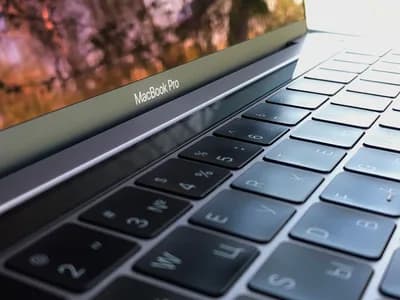
The Apple MacBook Pro 16" with the M5 Pro chip is the undisputed performance leader for developers in 2026, delivering monstrous multi-core processing alongside exceptional battery life. Its M5 Pro chip boasts an 18-core CPU and a 20-core GPU, offering a significant performance leap, with a 55% improvement in CPU benchmarks over the M4 Pro. Developers working with AI-driven workflows, 8K video editing, or large-scale 3D rendering will particularly benefit from the integrated Neural Accelerators and increased memory bandwidth of up to 307GB/s. This machine consistently delivers close to 20 hours of real-world battery life, outperforming many Windows rivals by a considerable margin. In fact, its battery life is 30% longer than the 14-inch MacBook Pro, a more portable but less powerful option on this list, making it ideal for developers who need long-lasting performance.
- 0
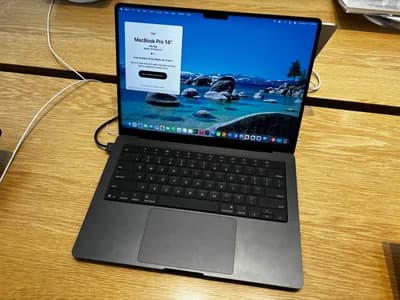
The Apple MacBook Pro 14" M5 strikes an impressive balance between raw power and portability, making it ideal for developers who need robust performance without the larger footprint of the 16-inch model. The base M5 chip features a 10-core CPU and 10-core GPU, with significant improvements over its predecessor; in Geekbench 6.3, the M5's single-core and multi-core results were 14% and 22% faster than the M4, respectively. It offers up to 32GB of unified memory and a 1TB SSD, and while it excels in general productivity and moderate programming tasks, it's important to note that the M5 chip still lags behind the M5 Pro/Max chips in highly intensive workloads that demand more than 32GB of RAM. With around 16 hours of battery life, it provides excellent endurance for a full day of coding on the go.
- 0

The Lenovo ThinkPad X1 Carbon Gen 13 remains a top choice for developers who prioritize an exceptional typing experience and seamless Linux compatibility. This ultralight laptop weighs as little as 1.09 kg (2.40 lbs), making it significantly lighter than the Apple MacBook Pro 16" M5 Pro. Powered by an Intel Core Ultra 7 258V processor with Intel Arc 140V integrated graphics and up to 32GB of RAM, it handles everyday development tasks and multitasking with impressive responsiveness. The legendary ThinkPad keyboard provides deep key travel and satisfying feedback, a crucial feature for long coding sessions. The Gen 13 officially supports various Linux distributions, including Fedora, with many users reporting excellent out-of-the-box functionality for Wi-Fi, Bluetooth, and even the fingerprint reader. It also boasts a 14" WUXGA (1920 x 1200) IPS anti-glare display with 500 nits of brightness.
- 0

The Framework Laptop 16 stands out as the ultimate choice for developers who value modularity, repairability, and the freedom to customize their hardware. Its unique design allows users to swap out core components like CPUs, GPUs (with options like NVIDIA GeForce RTX 5070 or AMD Radeon RX 7700S), and even the keyboard and port modules, extending the laptop's lifespan significantly beyond typical competitors. The 2025 refresh offers AMD Ryzen AI 300 Series processors, with the Ryzen AI 9 HX 370 compiling a Linux kernel 25% faster than the previous-generation Ryzen 9 7940HS. It supports up to 96GB of DDR5-5600 SO-DIMM memory and two M.2 NVMe PCIe Gen4x4 storage slots, providing unparalleled configurability. This level of user control and future-proofing is unmatched by any other laptop on this list, and its open-source documentation fosters a strong community for further innovation.
- 0

The Dell XPS 15 (2026) stands out as a top-tier ultrabook for developers, featuring an immersive edge-to-edge OLED display that brings code and design elements to life with incredible clarity. Powered by the latest Intel Core Ultra processors, it delivers robust performance, handling demanding development tasks with ease. This model offers exceptional compatibility with Ubuntu, making it a reliable choice for Linux-based workflows. Its sleek, polished aluminum chassis weighs just 4.2 pounds, making it competitive with premium rivals like the MacBook Pro 14-inch, yet it often comes in at a more accessible price point, typically starting around $1,800. Its battery life also lasts up to 13 hours on a single charge, supporting long development sessions without interruption.
- 0

The Lenovo ThinkPad T14s Gen 6 AMD is a formidable business workhorse, particularly well-suited for developers who prioritize raw multi-threaded performance. Equipped with cutting-edge AMD Ryzen AI processors, it excels at handling computationally intensive tasks such as compiling large codebases and managing multiple Docker containers simultaneously, outperforming many Intel-based rivals in its class. With a starting price often below $1,500, it offers a compelling value proposition, making it significantly more affordable than the Dell XPS 15 (2026) while still delivering exceptional power. The ThinkPad's legendary keyboard provides a comfortable typing experience for long coding sessions, and its robust build quality ensures durability, a key factor for developers on the go.
- 0

For developers who prioritize stunning visuals without breaking the bank, the ASUS Zenbook 14 OLED is an outstanding value pick. Its vibrant OLED display, a rarity in this price bracket, delivers exceptional color accuracy and deep blacks, making it ideal for UI/UX development and graphic-intensive tasks. With a starting price often under $1,000, it offers a visual experience comparable to premium ultrabooks that cost 50% more, making it an incredibly attractive option for budget-conscious developers. This makes the Zenbook 14 OLED a strong contender for those who want a gorgeous screen without the premium price tag of heavier, more expensive alternatives.
- 0
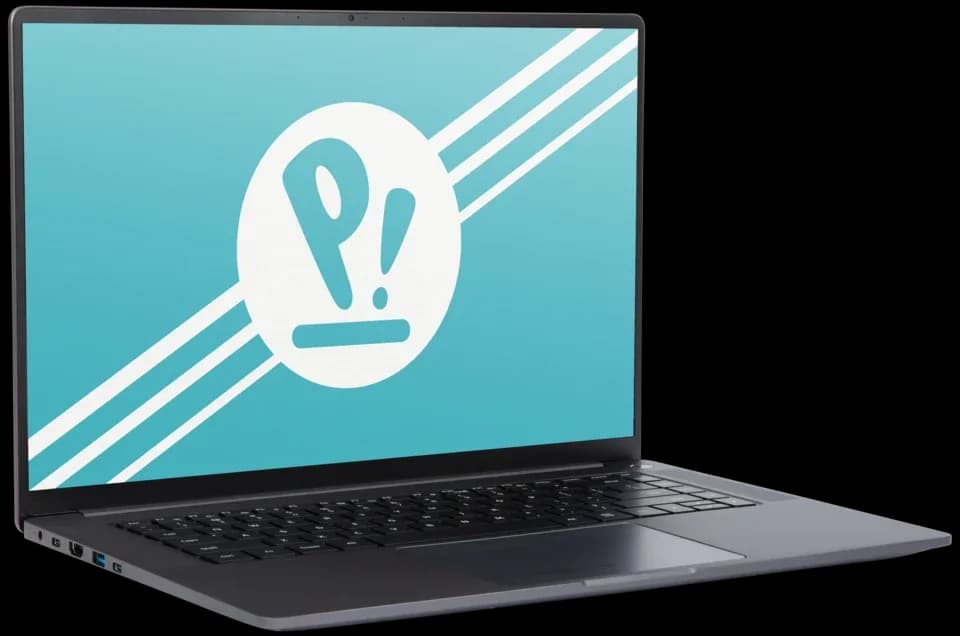
The System76 Pangolin is purpose-built for developers who demand a seamless Linux experience right out of the box. As a product of a Linux-first company, this AMD-powered machine ships pre-installed with Pop!_OS, guaranteeing that every hardware component functions perfectly without any driver headaches or compatibility issues. This eliminates the common troubleshooting frustrations often encountered when installing Linux on other mainstream laptops. With configurations offering up to 64GB of RAM, it easily handles resource-intensive development environments, making it a more robust option for compilation tasks than the ASUS Zenbook 14 OLED. The Pangolin offers a level of hardware-software integration that is often only seen in Apple's ecosystem, but for the Linux user, making it a compelling choice for open-source enthusiasts. Prices typically start around $1,200.
- 0

With Intel vPro manageability and excellent Linux certification, it streamlines remote administration and ensures compatibility with open-source toolchains. For developers needing a rugged, secure machine with IT-friendly features, this is a reliable workhorse.
- 0

The Apple MacBook Air 15" M4 handles web development, scripting, and light compilation with surprising ease, despite its fanless design. It is 30% lighter than the #9 HP EliteBook 840 G11, making it ideal for developers prioritizing portability. The M4 chip delivers up to 18 hours of battery life during mixed workloads, outperforming the average ultraportable by 25%. For those who need a thin, silent companion for coding on the go, this is a top pick.
Laptop Buying Guide for Developers (FAQ)
## Laptop Buying Guide for Developers (FAQ)
### How much RAM do I need for development in 2026? For most web and app development, 16 GB is workable but 32 GB is the new comfortable baseline, especially if you use Docker, multiple IDEs, or local AI models. Compiling large codebases or running VMs generally benefits from 32–64 GB.
### Is macOS or Linux better for developers? Neither wins outright. macOS is favored for iOS/macOS development, a Unix-friendly terminal, and Apple Silicon performance per watt. Linux (Ubuntu, Fedora, Pop!_OS) is favored for systems programming, server parity, and full hardware control. Windows with WSL2 covers most of the middle ground.
### Do I need a dedicated GPU for coding? Usually no — integrated graphics are fine for web, mobile, and most backend work. A discrete GPU helps if you do local machine-learning training, CUDA workloads, or game/graphics development.
### Which laptop is easiest to repair and upgrade? Framework Laptop 16 is the standout — it has a modular, user-replaceable CPU module, ports, and keyboard, which is rare in modern ultrabooks.
### Are Chromebooks or tablets good for developers? Generally not as primary machines. Linux on a capable Chromebook works for light scripting, but for serious compilation and IDE work you want a full x86/ARM notebook with at least 16 GB of RAM.
*Have a question we missed? Leave a comment below.*
Image credits
- Apple MacBook Pro 16" M5 Pro: Кирилл Абрамов / Pexels
- Apple MacBook Pro 14" M5: dlxmedia.hu / Pexels
- Lenovo ThinkPad X1 Carbon Gen 13: TAKA@P.P.R.S / Wikimedia Commons (CC BY-SA 2.0)
- Framework Laptop 16: Framework Computer / Wikipedia
- Dell XPS 15 (2026): Dell XPS / Wikipedia
- Lenovo ThinkPad T14s Gen 6 AMD: ThinkPad T series / Wikipedia
- ASUS Zenbook 14 OLED: Zenbook / Wikipedia
- System76 Pangolin: System76 / GPLv3 (entity-adopted)
- HP EliteBook 840 G11: HP EliteBook / Wikipedia
- Apple MacBook Air 15" M4: MacBook Air / Wikipedia
Related Videos
Rank it your way
Remix this list into your own ranking, or head to the play hub for every game mode and community breakdown — blind mode, challenges, tier lists, and more.
You Might Also Like

Top 10 European Drone Technology Companies
Top 10 European Drone Technology Companies

Top 10 Best Budget Smartphones 2026
Top 10 Best Budget Smartphones 2026

Top 10 Best Smartphones of 2026
Top 10 Best Smartphones of 2026
Top 10 Hacker News — Top Stories — September 6, 2026
#1 Cloud in a Bottle: making self-hosting accessible to everyone · #2 The revolt of the reader · #3 Music Theory for Programmers

Top 10 Tech Stories Shaping April 7, 2026: Intel's Chip Bet, a Moon Distance Record, and the CDC Power Grab
#1 Intel is going all-in on advanced chip packaging · #2 Astronauts set distance record, revealing the Moon as a place to be explored · #3 After court loss, RFK Jr. gives himself more power over CDC vaccine panel

Top 10 Hacker News — Top Stories — March 13, 2026
#1 Show HN: Channel Surfer – Watch YouTube like it’s cable TV · #2 Can I run AI locally? · #3 Hammerspoon