
Eva Rinaldi / Wikimedia Commons (CC BY-SA 2.0)
Top 10 US Robotics Companies 2026
The global robotics market reached $70 billion in 2025 and is growing at 15%+ annually. The United States leads in software-defined and AI-enabled robotic systems, with these companies reshaping manufacturing, surgery, logistics, and even household chores through intelligent automation.
Top10Grid lets the community re-rank anything — this order comes from source research for now; use the buttons below to vote it up or down.

Current Rankings
- 0

The iconic robotics lab acquired by Hyundai for $1.1B in 2021. Atlas humanoid and Spot quadruped robots have become global symbols of advanced locomotion, with deployments across construction, inspection, and entertainment.
- 0

ABB's US robotics operation, centred on its Auburn Hills campus in Michigan, sells and supports the group's industrial arms — heavy six-axis units for automotive body shops down to small SCARA and dual-arm machines for electronics assembly. ABB has shipped more than half a million robots since introducing the microprocessor-controlled IRB 6 in 1974.
- 0

The $8B-revenue medical robotics company whose da Vinci system has performed over 10 million surgeries worldwide, with 8,600+ systems installed in hospitals globally. Much of its profit comes not from the roughly $2M console but from the instruments and accessories, which are locked out after a set number of uses and have to be replaced.
- 0#4
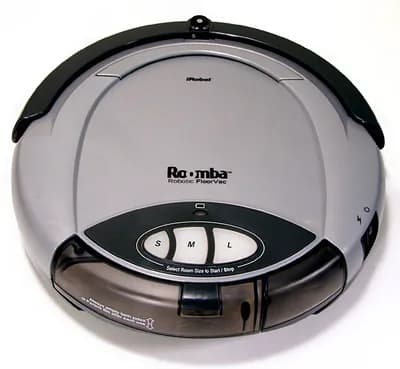
iRobot brought robot vacuums into the mainstream with the Roomba, launched in 2002, and has sold more than 40 million home robots. Amazon abandoned its agreed acquisition in January 2024 after European regulators signaled opposition, leaving iRobot independent and under pressure from lower-priced rivals such as Roborock and Ecovacs.
- 0#5

Symbotic is a warehouse automation company whose robots and software rebuild retail distribution centers around case-level handling instead of traditional pallet-based storage, using swarms of autonomous robots that move through a dense structural grid to store and retrieve inventory. Walmart is by far its largest customer and is also a major shareholder, and the two companies' relationship has been central to Symbotic's growth since it went public through a SPAC merger in 2022. Symbotic has also partnered with SoftBank on GreenBox, a joint venture offering its automation technology as a service to other retailers and logistics companies.
- 0

Berkshire Grey builds robotic picking and sorting systems for warehouses, using machine vision so a robot can handle an unfamiliar item without being reprogrammed for it - the genuinely hard part of fulfillment automation. Founded by a former iRobot chief technology officer, it went public through a SPAC in 2021 and was taken private by SoftBank in 2023.
- 0#7

Nuro was founded in 2016 by two former Waymo engineers to build a small driverless pod that carries goods rather than people; its R2 was the first vehicle granted a US federal exemption from having a steering wheel and pedals, in 2020. It ran deliveries with Kroger, Domino's and others, and has since shifted toward licensing its autonomy stack to carmakers instead of operating its own fleet.
- 0

Figure AI is a humanoid robot startup that raised $675M at a $2.6B valuation in 2024 from investors including Microsoft, Nvidia and the OpenAI Startup Fund. Its Figure robots have been trialled at BMW's Spartanburg plant on real production tasks, making it one of the more advanced commercial humanoid programmes running today.
- 0

The UT Austin spin-off that raised $350M to deploy its Apollo humanoid robot in Mercedes-Benz factories. With NASA collaboration in its DNA, Apptronik is designing humanoids for both terrestrial manufacturing and future space applications.
- 0#10

Machina Labs is an aerospace-focused startup that raised roughly $32 million to develop AI-guided robotic arms that shape sheet metal through an incremental forming process, effectively 'sculpting' parts directly rather than relying on the expensive, single-purpose dies and tooling that traditional metal stamping requires. That die-less approach lets the company produce complex aerospace and defense components on demand, compressing lead times from months down to days and making small production runs economically viable in an industry usually built around large, fixed tooling investments.
Image credits
- Boston Dynamics: DARPA / Wikimedia Commons (Public domain)
- ABB Robotics (US Operations): Flickr
- Intuitive Surgical: Nimur at English Wikipedia / Wikimedia Commons (CC BY-SA 3.0)
- iRobot: Roomba / Wikipedia
- Symbotic: Symbotic / Wikipedia
- Berkshire Grey: American robotics / Wikipedia
- Nuro: Nuro logo.svg / Wikimedia Commons
- Figure AI: Figure-ai-logo.svg / Wikimedia Commons
- Apptronik: Howard L. Morgan / Wikipedia
Related Videos
Rank it your way
Remix this list into your own ranking, or head to the play hub for every game mode and community breakdown — blind mode, challenges, tier lists, and more.
You Might Also Like

Top 10 US Autonomous Vehicle Companies 2026
Top 10 US Autonomous Vehicle Companies 2026

Top 10 European Robotics Companies 2026
Top 10 European Robotics Companies 2026

Top 10 US Semiconductor Companies 2026
Top 10 US Semiconductor Companies 2026

Top 10 US Logistics Tech Companies
Top 10 US Robotics Companies 2026

Top 10 Best AI Coding Assistants
#1 GitHub Copilot · #2 Cursor · #3 Claude Code

Top 10 European Fintech-Tech Crossover Companies
#1 Klarna · #2 Revolut · #3 Adyen